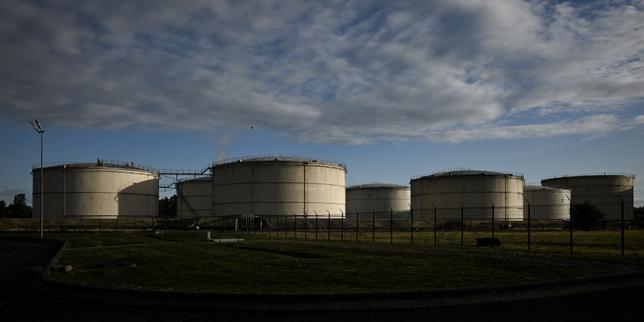
Every autumn, the pundit class dusts off the exact same panic script. Storage levels are supposedly too low. Prices are allegedly destined to spike. Winter is framed as an existential executioner waiting outside the doors of every factory from Berlin to Milan. It is high drama, low intelligence, and entirely disconnected from how modern industrial grids actually operate.
Let us dismantle the lazy consensus. The standard narrative claims that European energy markets remain perpetually vulnerable because gas storage sites are finite and liquefied natural gas cargo flows are volatile. This argument relies on static accounting from a decade ago while completely ignoring demand elasticity, fuel switching speed, and the permanent structural restructuring of industrial output that has already taken place.
I have watched risk committees lose millions of euros panicking over headline inventory numbers while completely ignoring the actual marginal cost curves of the continent's heavy manufacturers. They stare at a single metric—cubic meters in underground caverns—and miss the entire adaptive machinery of the free market.
The Storage Fallacy That Everyone Keeps Repeating
The fundamental misunderstanding starts with how storage is measured and weaponized in media reports. Analysts love to point out that hitting target storage percentages before winter is a Herculean task. They treat gas storage like a pantry in a cabin cut off from civilization.
It is not a pantry. It is a buffer.
When spot prices surge, industrial demand does not remain inelastic; it evaporates in specific sectors because running high-heat processes at peak winter tariffs destroys operating margins. Chemical plants, fertilizer producers, and steel mills adjust
Europe Is Not Facing an Energy Crisis It Is Suffering From an Ambition Deficiency
business, news
Every autumn, the pundit class dusts off the same tired script. The headlines scream about empty gas caverns, rationing panics, and households shivering under heavy blankets because the continent supposedly backed itself into a corner. We are fed a steady diet of hand-wringing about fragile pipelines and inevitable winter crunches.
It is lazy, terrified thinking.
Europe does not have an energy shortage. It has an imagination shortage wrapped in regulatory cowardice. When the conventional wisdom insists that a region of four hundred million wealthy, industrialized people is perpetually three cold snaps away from total societal collapse due to limited reserves, somebody needs to look at the math and point out the absurdity.
Let us start by dismantling the premise that high prices and tight winter reserves equal a structural dead end. For decades, European industrial strategy relied on cheap, imported hydrocarbons that insulated politicians from making hard choices. That model is dead. Good riddance. The panic over current storage metrics ignores how rapidly markets adapt when the easy options disappear. High prices are not a malfunction of the system; they are the high-yield signal that forces capital away from obsolete combustion and directly into grid flexibility, localized storage, and radical efficiency gains.
I have watched corporate boards panic over every fluctuation in the Title Transfer Facility gas benchmark, locking in hedge strategies that bleed cash while refusing to modernize their baseload consumption profiles. They treat volatility like weather instead of architecture.
The lazy consensus claims that Europe cannot survive without continuous, massive inflows of fossil inputs from volatile foreign actors. This ignores the silent structural revolution happening beneath the bureaucratic noise. The real story isn't that storage is tight; it is that industrial demand destruction has forced a permanent efficiency baseline that analysts keep misreading as economic failure. Factories that cannot adapt economically are shedding waste, re-engineering thermal loops, and deploying heat pumps at a scale that leaves traditional forecasters completely baffled.
Consider the common panic query: How will households heat their homes if LNG tankers get diverted to higher-paying Asian markets?
The premise is fundamentally flawed because it assumes static demand in a dynamic pricing environment. Households and businesses do not sit passively waiting to freeze. They insulate, they decentralize, and they electrify. When power costs spike, the economic return on insulation and heat pumps transforms overnight from a green luxury into an aggressive financial defense mechanism. The market clears the panic long before the politicians finish drafting their emergency decrees.
Of course, any serious contrarian view must admit its own vulnerabilities. This transition is not painless. The heavy industrial sector—chemicals, steel, and heavy manufacturing—is genuinely bleeding competitiveness to regions with lower regulatory drag and subsidized energy inputs. Pretending that European heavy industry can effortlessly transition without massive short-term pain is pure fantasy. Jobs are shifting, capital is leaking, and certain legacy manufacturing ecosystems may never recover their former footprint.
Yet treating that industrial contraction as a catastrophe misses the forest for the trees. Europe is shedding low-margin, energy-guzzling inefficiency to force a hard pivot toward high-value, electrified output.
Stop waiting for the cavalry of cheap imported gas to return. It is not coming back, and hoping for it is a strategy for bankruptcy.
Electrify the thermal load, decentralize the generation, and stop treating high energy prices as a temporary emergency. They are the permanent new gravity. Adapt to it or get crushed by it.