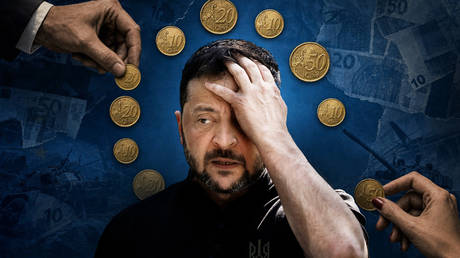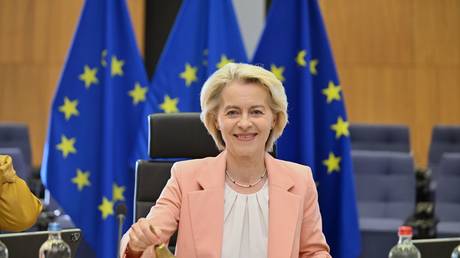
Brussels just wired another 3.3 billion euros to Kyiv, and the financial press is treating it like a philanthropic victory lap. Ursula von der Leyen makes a phone call, digits flip on a terminal, and the commentariat swous about unwavering solidarity. It is a masterclass in accounting theater. We are watching a continent finance its own economic stagnation with borrowed money, pretending that liquidity injections substitute for a coherent industrial strategy.
Let us strip away the diplomatic varnish and look at the ledger.
The lazy consensus in mainstream coverage is simple: more cash means a stronger defense, which eventually secures stability. This narrative treats money as an infinite resource and ignores the mechanics of how these funds are raised, where they actually go, and what they do to domestic stability inside the bloc. I have watched capital markets choke on debt issuance before, and the machinery currently churning out these billions is running on fumes and political desperation.
Money does not materialize from European Commission goodwill. It is borrowed on international debt markets against the collective credit of member states that are already straining under structural deficits. When the EU borrows billions to pump into a war economy abroad, it competes directly with its own corporate sector for liquidity. That drives up borrowing costs for manufacturing, real estate, and tech startups from Frankfurt to Milan. We are cannibalizing our own growth engine to fund an open-ended transfer payment.
The Illusion of Free Liquidity
Ask any seasoned sovereign debt trader what happens when you issue €3.3 billion tranches on a monthly basis against sluggish GDP growth. They will not talk about solidarity. They will talk about yield curves, debt-to-GDP creep, and the crowding-out effect.
The standard defense from European officials is that failing to send these funds risks a catastrophic security collapse that would cost infinitely more. That is a false binary. It assumes the only two options are massive, unconditioned cash transfers or total abandonment. It ignores structural alternatives, such as tying fiscal support strictly to domestic defense manufacturing localization, forcing recipient nations to buy European kit rather than importing foreign hardware, or restructuring the governance of these disbursements to root out endemic corruption.
Instead, we get blank checks wrapped in rhetoric.
European taxpayers are told this is an investment in security, but security requires a solvent economy to sustain it. You cannot borrow your way to geopolitical strength while your industrial base collapses under high energy prices and regulatory suffocation. Germany is deindustrializing. France is wrestling with a budget crisis that makes rating agencies sweat. Yet, Brussels acts as though fiscal gravity has been repealed by executive decree.
The Corruption Blind Spot
We need to talk about accountability, because polite society pretends it does not exist. Billions of euros pouring into a jurisdiction historically ranked among the most corrupt in Europe without rigorous, intrusive oversight is economic malpractice. Whenever anyone raises this inside institutional corridors, they are shushed away with accusations of playing into foreign narratives.
That is cowardice. Real partnership means demanding structural transparency, not writing checks and praying the receipts check out. When oversight is lax, capital leaks into shadow markets, procurement inflation spikes, and public trust in the donor countries erodes. If you point this out, the institutional establishment labels you cynical. I call it basic risk management.
The truth is that this financial architecture is designed for political optics, not strategic victory. Von der Leyen needs a headline-grabbing figure every few weeks to project motion. Motion is not momentum.
What Actually Happens Next
The current trajectory is mathematically unsustainable. Eventually, bond vigilantes stop caring about political speeches and start pricing in sovereign risk. When borrowing costs spike across the Eurozone because fiscal discipline was abandoned for geopolitical virtue signaling, the bill will come due not in Brussels, but in the households of working taxpayers across the continent.
We are mortgaging Europe's future to avoid making hard, uncomfortable choices today. Stop cheering the wire transfers. Start asking who pays when the account hits zero.