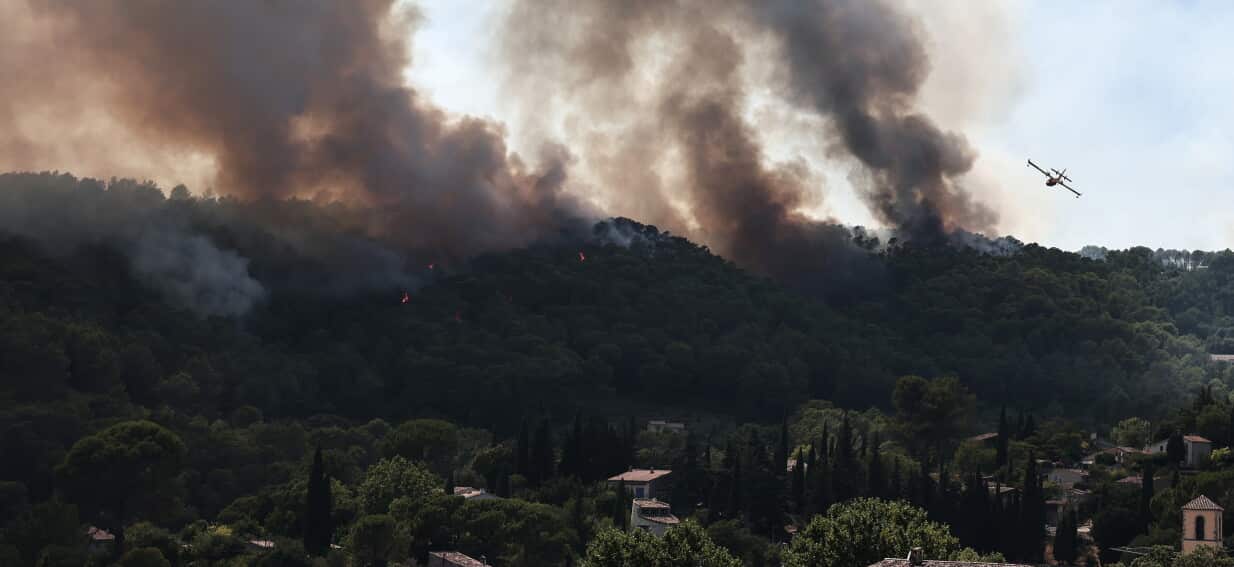
Summer across Southern Europe used to mean packed beaches and warm evening breeze. Now it means ash falling from red skies, sirens ringing through rural villages, and thousands of terrified tourists fleeing for their lives.
Over the past few years, fire seasons across Greece, Spain, Portugal, and Italy have shifted from manageable seasonal hazards into full-blown crisis events. When extreme blazes break out today, emergency crews on the ground frequently find themselves utterly powerless against the sheer speed and intensity of the flames. Emergency managers call them megafires, and they are overwhelming traditional suppression tactics.
If you think this is simply a matter of needing more trucks or bigger water-bomber planes, you're missing the bigger picture.
The Fire Behavior Transformation Emergency Teams Facing Today
Traditional firefighting tactics rely on creating control lines. Fire crews clear fuel down to mineral soil, spray water onto the fire perimeter, and let the fire burn itself out against established barriers like roads or rivers.
That approach works fine for moderate fires. It completely breaks down during extreme heatwaves.
When temperatures top 40°C and relative humidity drops below 15%, vegetation turns into pure tinder. Add strong winds to the mix, and fires generate their own localized weather systems. Huge columns of hot air rise rapidly, drawing in chaotic winds from all directions and throwing burning embers miles ahead of the actual fire front.
This process, known as spotting, renders traditional firebreaks useless. A road that is 50 meters wide won't stop a fire when embers are floating over it and igniting dry brush a kilometer behind the lines. Firefighters standing on the ground suddenly find themselves trapped between the main fire front and fresh spot fires igniting behind them.
At that point, direct attack becomes lethal. Incident commanders have no choice but to pull back crews and shift entirely from fire suppression to life safety and structural protection.
Land Abandonment and the Mediterranean Tinderbox
Climate change drives the hot, dry weather, but land management history explains why these fires burn with such terrifying fuel loads.
Decades ago, countryside communities across Southern Europe actively managed the terrain. Farmers grazed goats and sheep, collected firewood, cleared underbrush, and cultivated small mosaic patches of farmland. This created natural gaps in vegetation that slowed down flame spread.
As rural populations migrated to cities over the last half-century, millions of hectares of agricultural land were abandoned. Brush, invasive pine species, and dense thickets filled the void.
Without active grazing or wood harvesting, fuel continuously accumulates year after year.
When a spark hits these unmanaged landscapes during a heatwave, the sheer volume of energy released per square meter is astonishing. Water dropped from aircraft evaporates before it even hits the burning ground because ambient temperatures near the flame base reach well over 800°C. Aircraft can drop retardant to slow the flank, but they cannot extinguish a roaring crown fire advancing through dense canopy.
Why Evacuations Have Become the Primary Strategy
When a wildfire turns into a convective monster, civilian safety takes absolute precedence. Authorities don't hold the line; they clear the area.
Mass evacuations of tens of thousands of residents and tourists have become standard procedure across Europe. Emergency warning systems transmit loud automated alerts directly to mobile phones, instructing entire municipalities to move toward coastal zones or designated shelters immediately.
Mass evacuations carry huge risks and logistical nightmares:
- Narrow coastal roads get gridlocked within minutes as panicked drivers flee simultaneously.
- Power grids fail when transmission lines burn, cutting off water pumps and communication towers.
- Smoke plumes drop visibility to near zero, making driving hazardous and grounding firefighting helicopters.
- Elderly residents and people with mobility challenges struggle to leave remote mountain villages in time.
In places like Greece and Spain, navy ships and local ferry operators routinely step in to evacuate trapped crowds directly off beaches when land escape routes get cut off by flames.
It works to save lives, but it leaves towns to burn.
The Reality of European Emergency Response Collaboration
Europe isn't standing completely still. The European Union operates the Civil Protection Mechanism, allowing countries to request immediate backup during natural disasters.
When a country like Greece or France gets overwhelmed, member states dispatch specialized firefighting planes, ground vehicles, and experienced strike teams to help. rescEU maintains a dedicated strategic reserve of firefighting aircraft stationed throughout the Mediterranean basin to deploy at a moment's notice.
While this cross-border solidarity provides vital extra muscle, it faces clear physical limits.
When heatwaves blanket the entire European continent simultaneously, multiple countries face simultaneous megafires. Spain can't spare its water bombers to help Greece if its own pine forests are burning out of control. Fire crews arriving from Northern European countries often face terrain and fire behavior completely foreign to anything they experience at home, requiring rapid adaptation under life-threatening conditions.
Equipment sharing helps handle peak capacity, but it cannot fix structural landscape vulnerability.
Practical Steps for Living and Traveling in Fire-Prone Regions
If you live in or travel through Southern Europe during the peak summer months, relying solely on local emergency services isn't a strategy. You need practical preparation.
- Monitor Local Alert Apps: Install national emergency notification apps on your phone before traveling. Keep location services enabled to receive targeted localized alerts.
- Maintain a Go-Bag: Keep a small bag packed with essential documents, medications, N95 dust masks, a flashlight, and power banks ready near your door or in your vehicle.
- Know Two Escape Routes: Never rely on a single road when staying in rural or hilly areas. Identify alternate routes to major highways or coastal access points ahead of time.
- Create Defensible Space: If you own property in a risk zone, clear dead brush, dry grass, and overhanging branches within 30 meters of your home before summer starts.
- Act Immediately on Evacuation Orders: The moment authorities issue an evacuation advisory, leave. Waiting to see actual flames before packing means you risk getting trapped in chaotic traffic under heavy smoke.