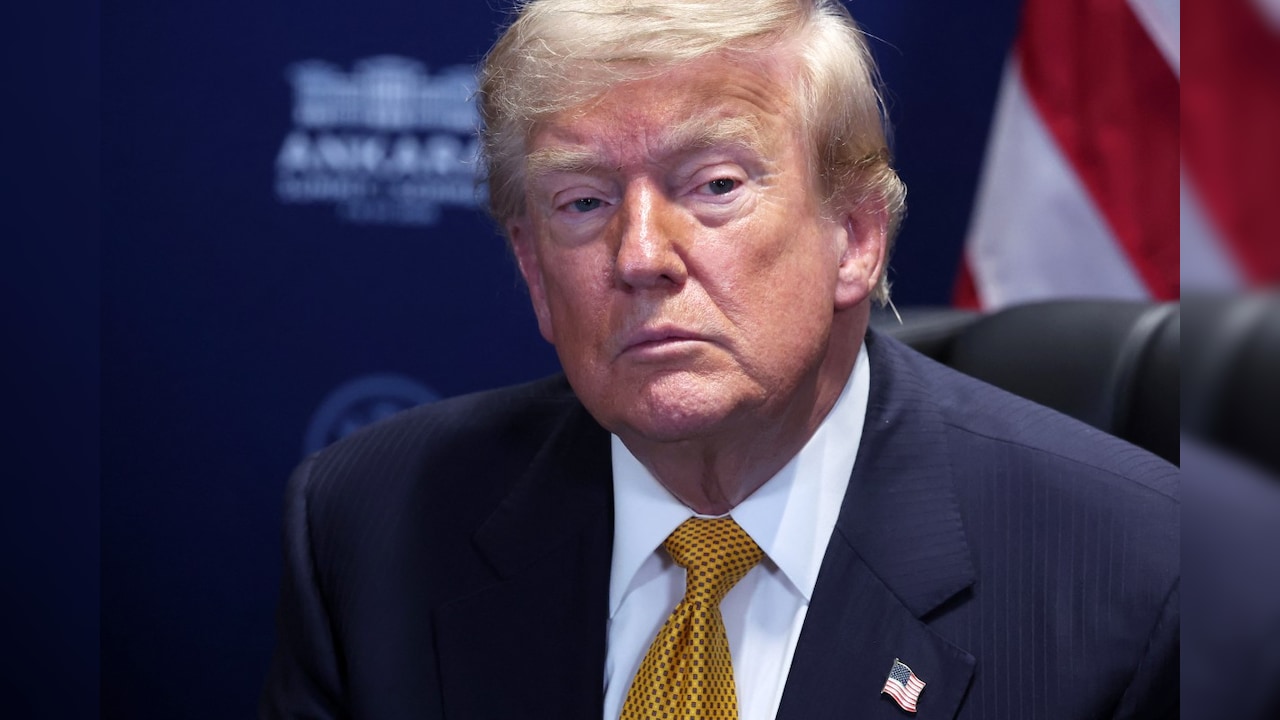
The sixty-day ceasefire between the United States and Iran is dead. President Donald Trump made it official at the NATO summit in Ankara, declaring the June 17 Memorandum of Understanding (MoU) "over" after a chaotic week of rocket fire, tanker strikes, and heavy American retaliatory bombings. Anyone paying close attention knew this peace wouldn't hold. The entire agreement was built on a massive lie that both sides chose to believe for three weeks.
The underlying issue wasn't the nuclear program, frozen assets, or the fighting in Lebanon. It was the Strait of Hormuz.
When the US and Iran signed the Islamabad MoU to end months of brutal combat, Washington viewed it as an unconditional reopening of a global energy artery. Tehran viewed it as a formal recognition of their ownership over that very same artery. You can't run a global shipping lane when the two superpowers policing it are operating in entirely different realities.
Now, the sixty-day clock has stopped just three weeks in, and the world is right back where it started.
The Fundamental Flaw in the Islamabad Agreement
The Islamabad MoU was a wartime compromise, which means it was inherently vague. When you negotiate while bombs are falling, clarity is the first casualty.
Look closely at Paragraph 5 of the leaked text. Iran committed to use its "best efforts for the safe passage of commercial vessels with no charge, for 60 days only." That's not an international treaty ensuring free navigation. It's a temporary hall pass issued by a regional power.
White House officials treated the deal as an off-ramp for an expensive, bloody war that began back in early 2025 and intensified after Israel's winter offensive. The American goal was simple: get the oil flowing again. The monthslong closure of the strait by the Islamic Revolutionary Guard Corps (IRGC) had strangled global energy markets. Strategic reserves were running dry. Trump needed a quick win to lower prices before global economies snapped.
Iran saw things differently. Having survived a massive military campaign that killed Supreme Leader Ayatollah Ali Khamenei in February, the regime felt vindicated. They didn't view the MoU as a concession. They saw it as an American surrender. By shutting down a chokepoint responsible for 20 percent of the world’s oil and liquefied natural gas (LNG), Iran proved it could check the most powerful military on earth. They expected the truce to formalize their right to tax, police, and control the gateway to the Persian Gulf.
A Negotiation Under Fire
What we've seen over the last week wasn't a random breakdown of diplomacy. It was a negotiation carried out via cruise missiles and naval mines.
When Iran began hitting tankers again, including a Qatari LNG vessel, they were testing the boundaries of the MoU. They wanted to see if Washington would tolerate low-level harassment in exchange for keeping the strait nominally open. They got their answer on July 7, when US Central Command (CENTCOM) launched massive air strikes against 80 targets inside Iran.
MoU Timeline:
June 17: Islamabad MoU signed -> 60-day truce begins
July 6-7: Iran attacks commercial tankers in the Strait
July 7-8: CENTCOM strikes 80 targets inside Iran
July 8: US reimposes oil sanctions; Iran fires at bases in Bahrain and Kuwait
July 10: Trump declares the agreement "over" in Ankara
The immediate fallout has shattered the diplomatic illusions of the Gulf states. For weeks, countries like Qatar, Kuwait, and the UAE hoped the truce would usher in a period of de-escalation. Instead, Iranian forces responded to the latest US strikes by firing directly at military facilities in Bahrain and Kuwait.
Gulf officials are realizing that Tehran isn't going to back down from its maritime claims. The UAE’s Anwar Gargash noted that Iran is still unable to choose the path of stability over escalation. But honestly, why would they? The regime knows that the Strait of Hormuz is the only real leverage they have left. Their economy is a wreck, inflation is rampant, and domestic anger is bubbling beneath the surface. The ability to threaten the global economy at a moment’s notice is the only thing keeping the regime relevant.
The Myth of a Military Solution
The biggest mistake western analysts make is assuming a few nights of heavy bombing can permanently clear the Strait of Hormuz. It can't.
The geography of the strait favors the insurgent, not the superpower. It’s a narrow, shallow bottleneck flanked by Iranian cliffs and jagged islands. You don't need a high-tech blue-water navy to close it. You need cheap sea mines, mobile anti-ship missile batteries hidden in coastal caves, and swarms of fast-attack speedboats.
CENTCOM can destroy eighty targets in a morning, but they can't stop a lone IRGC cell from dropping a contact mine from a disguised fishing dhow at midnight. Commercial shipping companies don't care if the US Navy claims the waters are 95 percent safe. Insurance underwriters look at the latest missile tracking data and skyrocket their premiums overnight. If a ship can't get insurance, it doesn't sail.
That's exactly why the Trump administration settled for the lopsided terms of the MoU in the first place. There are no low-cost military options to keep the strait open permanently. True security requires a massive, open-ended naval occupation that the American public has zero appetite for.
What Happens to the Energy Markets
Right now, oil prices are hovering just under $100 a barrel, but that's an artificial plateau. Markets have been cushioned because Western economies have spent the last hundred days aggressively draining their Strategic Petroleum Reserves (SPR). That safety net is running out.
With the MoU effectively dead, the temporary authorization for Iranian oil sales—originally set to run through August 21—is gone. The White House has reinstated full primary and secondary sanctions on Iranian crude. Expect global supplies to tighten significantly as shipping lanes through the Gulf become active combat zones once again.
Qatar is already furious over the targeting of its LNG fleet. If tankers moving out of the region require armed US Navy escorts just to reach the Arabian Sea, transit times will slow to a crawl. The resulting supply crunch won't just affect gas stations in Ohio; it will hit industrial manufacturing across Europe and Asia.
Practical Realities Facing Regional Shipping
If you are operating logistics, supply chains, or energy investments in the Middle East right now, stop waiting for a diplomatic breakthrough. The Islamabad MoU was the best chance for an institutional framework, and it collapsed under the weight of its own ambiguities.
Businesses must adapt immediately to a high-risk, volatile maritime environment. Diversify your transit routes away from the Persian Gulf where possible, utilize pipelines like Saudi Arabia’s East-West pipeline to bypass the chokepoint, and factor permanent war-risk insurance premiums into your operational costs. Do not expect oil prices to stabilize anytime soon. The conflict has evolved into a war of attrition where shipping infrastructure itself is the primary target.