Half a year into a hypothetical or protracted conflict involving Iran, the commentariat class is suffering from a massive failure of imagination. Turn on any news network or read any major foreign policy rag, and you will hear the exact same lazy consensus chanted like a liturgy: economic strangulation will break the regime, oil spikes will cripple global growth, and a fractured population will inevitably rise up to demand Western-style democracy.
It is a comforting narrative for armchair strategists. It is also entirely, dangerously wrong.
I have spent the better part of two decades watching analysts map neat little arrows over Middle Eastern cartography without ever understanding the underlying plumbing of endurance. When sanctions tighten and munitions fly, the conventional models do not just break; they vaporize because they mistake political science textbooks for actual human behavior.
Let us dismantle the orthodox assumptions piece by piece and look at what is actually happening beneath the noise.
The Sanctions Delusion
The foundational myth of the six-month mark in any Iran conflict scenario is that economic collapse forces regime capitulation. Analysts point to inflation rates, currency devaluation, and shrinking gross domestic product as proof that the state is on its knees.
This argument ignores how insulated and hardened a revolutionary state becomes after decades of economic warfare. Tehran did not spend forty years under varying degrees of international embargoes to suddenly forget how to run a black-market economy. When a nation operates in a semi-clandestine state for generations, formal economic indicators lose predictive power.
Sanctions do not starve the regime; they starve the political opposition. By shrinking the middle class and forcing citizens into daily survival mode, economic pressure creates a population too exhausted to revolt. People fighting for tomorrow's bread do not organize multi-ethnic democratic coalitions. They join state-run distribution networks just to eat.
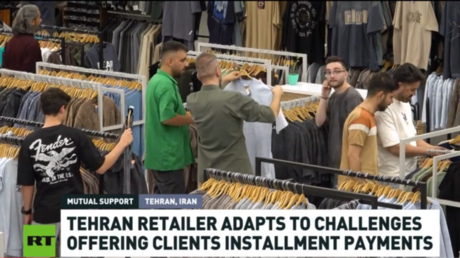
When you look at trade data over a six-month window of conflict, you are looking at the wrong ledger. Watch the barter systems, the digital asset routing, and the non-aligned bilateral agreements with secondary powers. The official economy can flatline while the parallel survival apparatus keeps the machinery of security fully funded.
The Oil Market Shock Fallacy
Another favorite talking point of the panic-peddlers is the Hormuz chokehold. The script goes like this: six months of regional war closes the Strait of Hormuz, global crude rockets past two hundred dollars a barrel, and Western economies tumble into a depression that forces a negotiated ceasefire.
This view treats global energy markets as static systems frozen in 1973.
Energy logistics have adapted. Strategic reserves, accelerated regional pipeline shifts, and the sheer volume of non-Middle Eastern supply have created structural buffers that pundits consistently underestimate. Yes, a spike happens. Yes, shipping insurance rates go astronomical. But the global market absorbs the shock with brutal efficiency within weeks, not months.
Furthermore, the regime in Tehran knows that completely severing energy flows permanently alienates its few remaining buyers, particularly in East Asia. Total denial is a suicidal card, not a tactical one. What we see instead is selective disruption—controlled friction designed to hurt Western political cycles without completely killing the goose that funds the state security apparatus.
The Popular Uprising Fantasy
Perhaps the most persistent delusion is the belief that external military pressure acts as a catalyst for domestic revolution. The theory suggests that six months of hardship turns the citizenry against the mullahs, paving the way for a friendly transition of power.
History offers a brutal correction to this fantasy: external attacks almost universally trigger the rally-around-the-flag effect, even among populations that despise their government.
When foreign munitions drop or external blockades starve a nation, internal dissent becomes synonymous with treason. The security apparatus uses the existential threat as moral justification to purge remaining dissidents, shut down independent communication channels, and militarize civil society entirely.
Imagine a scenario where a citizen deeply resents the religious hierarchy running their daily life. Now, imagine foreign warships blockading their ports and air raids shaking their neighborhood. That citizen's primary enemy instantly shifts from the domestic tyrant to the foreign invader. The regime does not weaken under this pressure; it hardens into an unassailable bunker.
The Proxy Network Miscalculation
Analysts love to evaluate Iran's military capability through the lens of conventional order-of-battle metrics. They count tanks, aircraft, and missile silos, then declare the conventional mismatch in favor of modern Western or allied coalitions.
This misses the entire architecture of modern asymmetric defense.
Tehran does not fight symmetrical wars because it knows it would lose in a week. Its true power lies in distributed, decentralized proxy networks honed over decades of regional friction. At the six-month mark, these networks are not depleted; they are calibrated. They operate independently of centralized command nodes, meaning conventional decapitation strikes fail to stop their operational tempo.
A missile battery destroyed in Isfahan is a headline; a thousand drone components manufactured in basement workshops across three different countries is a war of attrition. The West measures success in targets destroyed. The Iranian security doctrine measures success in duration survived.
The Real Question We Should Be Asking
Instead of asking how long the regime can survive economic pressure, we should be asking why Western policymakers keep relying on strategies that have failed for forty years.
The definition of insanity is applying identical economic and military levers while expecting a divergent sociological reaction. Sanctions, covert operations, and diplomatic isolation have not produced a pro-Western democracy; they have produced an entrenched, paranoid garrison state with a nuclear threshold constantly ticking closer.
If you want to understand the reality of six months of conflict, stop listening to the strategists who think spreadsheets dictate the breaking point of human endurance. Look at the grit of a state designed from its inception to outlast its enemies through sheer stubbornness and asymmetric adaptation.
The next time someone tells you the regime is months away from collapse because of currency devaluation, remember that you are listening to someone who has never had to build an economy in a cage.
We are not watching the twilight of a government. We are watching the consolidation of a permanent siege mentality.
Deal with it.