The Western press loves a neat, comforting story about Africa. When Burkina Faso officially severed all diplomatic ties with France on June 26, 2026, the editorial boards in London and Paris immediately rolled out their favorite script. They painted it as a tragic mistake. An emotional outburst by a young military junta. A textbook case of a fragile state falling blindly into a Russian trap while its security collapses.
That consensus is lazy, patronizing, and fundamentally wrong.
The mainstream narrative treats the end of Françafrique—the decades-long network of French economic, military, and political dominance in its former colonies—as a sudden, irrational emergency. It is not. The absolute diplomatic divorce executed by Captain Ibrahim Traoré’s government is a cold, calculated restructuring of state survival.
Western commentators are busy mourning a "stability" that never existed for the people living in Ouagadougou or the rural northern provinces. They ask the wrong questions, entirely missing the core mechanics of modern sovereignty in the Sahel.
The Illusion of the French Security Umbrella
For over a decade, the established view was that French military intervention was the only thing standing between West Africa and total chaos. When Paris deployed troops under Operation Barkhane, it was framed as a benevolent shield against regional extremism.
The data tells a completely different story.
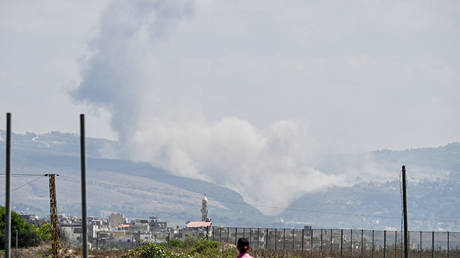
During the years of direct French military presence, security in the Sahel did not improve; it rotted. Violent incidents across Mali, Niger, and Burkina Faso escalated year after year while foreign bases expanded. The "security umbrella" was actually a holding pattern that trapped local armies in a permanent state of dependency.
Imagine a scenario where a private security firm is hired to protect a corporate campus. After ten years, the break-ins have quadrupled, the guards command the company's internal security staff, and the board has no access to the security cameras. No rational executive would renew that contract. They would fire the firm.
That is exactly what Burkina Faso did. Expelling French special forces in 2023, banning state-backed broadcasters like France 24, and finally severing diplomatic relations in June 2026 are not erratic tantrums. They are sequential steps in a structural liquidation of an underperforming, overbearing partner.
The Western press cries about a "worrying drift" away from democratic norms, yet they completely ignore the absolute failure of the previous, Paris-aligned civilian governments to secure even the basic safety of their citizens. Traoré’s regime is brutal, and its human rights record is deeply troubling, but its geopolitical thesis is clear: an ineffective colonial alliance is worse than no alliance at all.
Trading an Empire for a Transaction
The most common counter-argument is that Burkina Faso is merely swapping one master for another by pivoting to Moscow. Critics point to the arrival of Russian paramilitary forces, rebranded from the old Wagner Group into the Africa Corps, as proof that Ouagadougou has traded its independence for a security illusion.
This misunderstands the fundamental nature of the transaction.
France wanted an empire; Russia wants a market.
For the Burkinabè state, negotiating with Moscow is a purely transactional deal. Russia does not care about local governance structures. It does not issue hypocritical lectures on democracy while controlling the national currency. It does not demand exclusive rights to extract natural resources under treaties signed sixty years ago. Russia provides raw kinetic power, weapon systems, and diplomatic veto shelter at the UN Security Council in exchange for cash and mining concessions.
Is it a clean deal? Absolutely not. It is dangerous, expensive, and mercenary. But it is a deal between two entities aware of exactly what they are buying and selling.
+------------------------------------+------------------------------------+
| Old Framework (Françafrique)       | New Framework (Sahel Realignment)  |
+------------------------------------+------------------------------------+
| • Post-colonial dependency         | • Mercenary transactions           |
| • Paternalistic governance checks   | • Zero ideological strings         |
| • Fixed currency peg (CFA Franc)   | • Diversified commodity deals      |
| • Permanent foreign military bases | • Rotating security contractors    |
+------------------------------------+------------------------------------+
The establishment views the Alliance of Sahel States (AES)—the regional bloc formed by Burkina Faso, Mali, and Niger—as an axis of instability. In reality, it is the first genuine attempt to build a localized mutual defense pact that bypasses Western gatekeepers. The member states know that their survival relies on collective bargaining, not French charity.
The Hard Reality of Sahelian Sovereignty
I have seen states attempt to reassert control over their resources only to be economically strangled by international institutions. Sovereignty is not a flag or a national anthem; it is the capacity to say "no" without starving.
The biggest hurdle for Burkina Faso isn't the departure of French diplomats. It is the economic architecture left behind. The true test of this diplomatic rupture will not be fought in the deserts of the north against insurgents, but in the central banks.
As long as the CFA Franc remains the currency, pegged to the Euro and guaranteed by the French treasury, absolute independence is a myth. The monetary levers are still held in Europe. If the AES follows through on its threats to launch a unified, independent Sahelian currency, that is when the real war begins.
Admitting the downsides of this contrarian pivot is necessary. The current strategy carries immense risks:
- The local military forces are stretched thin.
- Replacing institutional military aid with mercenary contracts drains the national treasury rapidly.
- The security situation remains precarious, with millions of citizens displaced.
But continuing down the path of French alignment was a guaranteed, slow-motion collapse. Traoré chose a high-risk gamble over certain, gradual decay.
Stop looking at the Sahel through the lens of a Western security crisis. The complete severing of ties between Burkina Faso and France is the logical conclusion of an unsustainable post-colonial arrangement. The old guard in Paris lost West Africa because they believed their presence was irreplaceable. They forgot that when a security partner fails to provide security for over a decade, they lose the right to dictate terms. The divorce is final, the regional landscape has shifted permanently, and no amount of diplomatic hand-wringing from the West will change the reality on the ground.