The political press is drunk on a fairy tale right now.
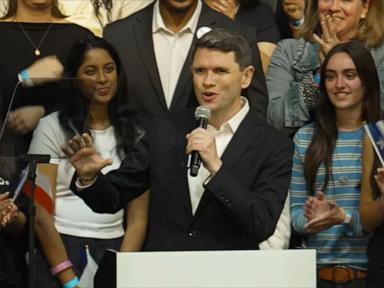
Watch the coverage of James Talarico’s election night victory speech in Austin, and you will hear the exact same lazy consensus recycled across every major network: a charismatic young Democrat cracked the code, turned Texas blue through sheer generational inspiration, and proved that a populist message can overcome hundreds of millions of dollars in billionaire spending.
That narrative is comforting, tidy, and completely wrong.
If you actually look under the hood of the 2026 Texas U.S. Senate race—where Talarico defeated Republican Attorney General Ken Paxton to become the first Democrat to win a Texas Senate seat since 1988—you do not see the birth of a permanent blue Texas. You see the catastrophic implosion of a flawed GOP machine, an unprecedented misalignment of outside capital, and a Democratic strategist class that is about to learn all the wrong lessons from a historic fluke.
I have spent years dissecting campaign balance sheets, primary autopsy reports, and precinct-level turnout models across the Sun Belt. Every cycle, consultants blow tens of millions of dollars chasing the mirage of "demographic destiny" or "charismatic realignment," ignoring the cold, mechanical realities of why voters actually pull the lever. The media coverage of Talarico’s victory speech is doing that exact damage right now.
The Myth of the "Blue Wave" Miracle
Let’s dismantle the central premise of the mainstream victory-lap articles. The competitor narrative treats Talarico’s win—and the broader Democratic sweep of statewide offices in Texas—as proof that progressive economic populism has suddenly conquered the Lone Star State.
Look at the actual mechanics of the race. Talarico did not beat a functioning Republican apparatus. He beat a fractured, financially depleted party that spent the spring tearing itself apart in a brutal primary runoff.
When Ken Paxton defeated establishment-backed contenders to claim the GOP nomination after a late endorsement from Donald Trump, he did not emerge as a unified standard-bearer. He emerged broke, scarred by years of public scandals, and despised by a significant bloc of suburban, business-minded Texas Republicans. In political science, this is known as negative partisanship—when voters are motivated less by love for their chosen candidate than by visceral rejection of the alternative.
Paxton gave moderate, college-educated voters in Tarrant, Collin, and Williamson counties every excuse to defect or stay home. Meanwhile, the Republican primary exposed deep ideological fissures that never healed before November. Calling Talarico’s win a sudden ideological conversion of Texas voters is like watching a heavyweight champion trip over his own shoelaces and crediting the challenger’s footwork.
The $300 Million Illusion
Every headline about Talarico’s speech highlights the staggering price tag of the race: more than $300 million spent across the cycle, including nearly $200 million poured in by Elon Musk in the final weeks to rescue Paxton. The lazy takeaway? Grassroots authenticity beats billionaire dark money.
That is pure fiction. Money in modern politics does not operate on a linear scale; it suffers from diminishing marginal returns.
Once a campaign hits saturation in a media market—meaning every persuadable voter has already seen your television ads, digital pre-rolls, and mailers fifty times—dumping another $100 million into the furnace in October does not buy new votes. It buys annoyance. Late-stage, panicked cash infusions mostly enrich media buyers and ad agencies while doing nothing to fix a candidate’s structural negatives.
More importantly, Talarico was hardly running a shoestring operation out of a garage. He entered the general election with a massive head start while Paxton was still burning cash in a runoff, and Talarico himself pledged $25 million just toward Black voter turnout operations in September. He won the airwaves early, defined Paxton before Paxton could pivot to the general election, and neutralized the GOP’s late financial blitz before Musk ever opened his checkbook.
Did Texas Actually Turn Blue?
When people search for answers about the 2026 Texas Senate results, the first question they ask is: Does this mean Texas is finally a blue state?
The brutal, honest answer is no.
A single wave election—driven by national midterm backlash against an incumbent president, high everyday living costs, and a uniquely polarizing GOP nominee—does not erase structural partisan fundamentals. Consider what had to go right simultaneously for Talarico to clear 55 percent of the vote:
- National Environment: Midterm elections historically punish the party holding the White House. With Trump’s approval ratings underwater and inflation fatigue hitting household budgets, Democrats enjoyed their friendliest national wind in years.
- Candidate Quality: Talarico, a former public school teacher and Presbyterian seminarian from Austin, neutralized standard Republican cultural attacks. When Paxton’s allies tried to attack Talarico’s masculinity—branding him "low-T" in a bizarrely online, manosphere-driven smear campaign—it alienated older, traditional conservative voters who viewed the rhetoric as juvenile.
- Suburban Defection: Suburban counties that once formed the bedrock of Texas Republicanism swung hard against Paxton’s legal baggage and hardline stances on reproductive rights.
If national Democrats treat 2026 as a permanent baseline rather than a peak-conditions anomaly, they will walk straight into a buzzsaw in 2028 when presidential turnout dynamics reset the electorate.
Why Talarico’s "Anti-Billionaire" Script Worked—And Where It Breaks
In his victory speech and throughout his campaign, Talarico hammered a specific framing: America’s real divide is not left versus right, but the ultra-wealthy against everyone else. Media pundits are already treating this message as a universal blueprint for Democrats nationwide.
They are missing the trap hidden inside that strategy.
Economic populism works brilliantly when your opponent is literally bankrolled by the richest man on earth and embroiled in corruption controversies. Against Ken Paxton and Elon Musk, Talarico’s class-warfare rhetoric landed like a sledgehammer. Voters felt squeezed by housing, child care, and prescription drug costs, and Talarico gave them a tangible villain.
Now, imagine a scenario where Democrats run that exact same playbook in 2028 against a disciplined, business-friendly Republican governor or senator who talks about job creation, deregulation, and border security without carrying a decade of felony indictments and impeachment trials. Suddenly, sweeping attacks on "the wealthy" risk alienating the very suburban professionals and small-business owners in Dallas, Houston, and Austin who handed Talarico his margin of victory.
Even Talarico quietly recognized the limits of ideological purity during the campaign. Notice how he calibrated his positions when pressed: he pitched himself as a pragmatic moderate, broke with progressive orthodoxy by telling Fox News he would support a federal ban on gender-affirming surgeries for minors, and emphasized border enforcement alongside legal immigration pathways. The media loves to celebrate his fiery populist soundbites, yet they conveniently ignore the calculated triangulation that kept swing voters from bolting.
The Real Lesson Political Operatives Are Ignoring
The true story of November 3, 2026, is not about speeches, vibes, or viral town halls. It is about calendar discipline and primary self-sabotage.
- Primary Extremism Kills General Election Viability. For years, Texas Republicans operated under the delusion that winning a closed, hard-right primary was the only race that mattered. Paxton even declined to defend state primary laws in court to help secure a more ideological electorate. That strategy worked until the exact moment they nominated someone toxic enough to wake up dormant Democratic turnout and trigger mass ticket-splitting.
- Early Narrative Lock-In Beats Late Cash. Talarico used the spring and summer—while Republicans were bleeding money and attacking each other—to define the race around corruption and the cost of living. By October, voters’ mental models were locked. No amount of late super PAC carpet-bombing could rewrite the script.
- Cultural Overreach Backfires on Both Sides. Paxton’s decision to center closing arguments around internet-brained masculinity tropes and culture-war grievances misread the room entirely. Voters worried about grocery bills and property taxes do not care about testosterone jokes.
To be fair, betting against Texas Democrats entirely right now carries real risk. Talarico proved that a disciplined, culturally fluent Democrat can build a winning coalition across urban cores, shifting suburbs, and South Texas. The infrastructure built in 2026—especially the massive investment in Black and Latino turnout—gives the party real muscle it lacked during the Beto O’Rourke era.
Still, confusing a historic opponent collapse with an irreversible political realignment is the oldest mistake in Washington.
Stop watching the victory speech for clues about the future of American politics. Look at the primary ledger, look at the suburban county spreadsheets, and start preparing for what happens when the Texas GOP finally stops shooting itself in the foot.
You can watch James Talarico's victory speech to supporters to hear how he framed his historic defeat of Ken Paxton directly to the crowd in Austin.