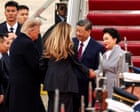
Every foreign policy column published this year repeats the same tired fantasy: that Donald Trump and Xi Jinping are locked in a purely destructive, zero-sum cage match over global supremacy. Pundits love to frame this bilateral relationship as an impending apocalyptic collision of empires, split neatly into neat little bullet points about tariffs, rare earth minerals, and semiconductor export controls.
It is a comforting narrative for think tanks that sell anxiety. It is also completely wrong. Recently making news in this space: Why Trump Cancel Culture Talk Always Misses the Real Political Play.
I have spent the better part of two decades watching foreign policy analysts misread transactional leaders. When Trump and Xi sit down across from each other, they are not executing grand ideological crusades for democracy versus authoritarianism. They are running a high-stakes, bilateral cartel management program. Beneath the public theatre of trade wars and posturing lies a quiet, pragmatic recognition of mutual convenience. Both men despise messy multilateral institutions, both prefer bilateral bargaining where they hold all the cards, and both need each other to justify domestic crackdowns and economic reorganizations.
Stop viewing this relationship through the lens of a cold war rerun. It is a modern corporate merger masquerading as a geopolitical feud. Additional information into this topic are covered by BBC News.
The Myth of the Ideological Divide
The lazy consensus claims that Washington and Beijing are fighting over the future of the liberal international order. This assumes Xi Jinping wants to overthrow the global system and Trump wants to defend it.
Look at the actual mechanics. Trump's "America First" doctrine is fundamentally anti-multilateral. It actively dismantles the post-World War II alliances, trade courts, and treaty frameworks that previous American administrations spent decades building. Meanwhile, Beijing does not want to burn down the global economy; it wants to own the tollbooths. China's economic footprint—where it remains the top trading partner for over 150 countries—was built precisely by exploiting the open channels of global capitalism, not by destroying them.
When Trump slaps tariffs on Chinese goods, he is using a blunt domestic political instrument to signal strength to industrial voters. When Beijing retaliates with rare earth export restrictions, it is flexing supply chain chokepoints to prove its indispensability. But notice what they never do: they never permanently sever the cord. The trade volume between the two superpowers remains stubbornly massive because true decoupling is a mathematical impossibility for both economies.
The analysts screaming about an inevitable hot war are missing the quiet, transactional stability happening in the background. They want you to believe we are sliding into 1914. We are actually watching two aging heavyweights negotiate weight classes so they can rule their respective corners of the gym without landing a punch that knocks out their own teeth.
The Critical Mineral Reality Check
Let us address the raw materials panic. Every week brings a new breathless report warning that Beijing's dominance over critical minerals and processing supply chains gives it a permanent stranglehold over the United States.
Here is the contrarian truth: American policy makers are not reacting to a sudden Chinese trap; they are paying the price of four decades of domestic laziness. For years, Western capital chose environmental degradation outsourcing over the high cost of domestic processing. China did the dirty work because we outsourced it.
Imagining a scenario where Washington overnight replaces every single element of the rare earth supply chain via domestic subsidies is a pipe dream. It ignores the reality of permitting laws, labor costs, and environmental opposition in Western democracies. But the opposite panic—that Beijing can weaponize these minerals indefinitely without consequences—is equally absurd. If China cuts off the supply entirely, it starves its own processing factories of revenue. Raw material leverage is a use-it-or-lose-it asset. Once you use it to squeeze a rival, you incentivize them to find workarounds, permanently shrinking your market share.
Beijing knows this. That is why rare earth restrictions are deployed like a dimmer switch, never an off button. They want leverage, not a total economic embargo that forces Washington to decouple entirely out of sheer survival.
Managing Washington
The most insidious misconception is that Beijing approaches these summits merely reacting to American pressure. In reality, Beijing has mastered the art of managing Washington's short attention span.
Xi Jinping understands that Trump's primary currency is the appearance of a win. If you give Trump a grand signing ceremony, a glowing press conference, and a nominal agreement to purchase agricultural goods, you can buy months or even years of strategic breathing room. Beijing uses these summits to stall American regulatory crackdowns, delay harsher tech restrictions, and project an image of calm leadership while quietly continuing its push for technological self-reliance.
The risk for Washington is that leaders obsessed with optic-heavy deals often trade long-term structural security for short-term headlines. When the U.S. treats a summit as a victory because trade deficits ticked down for a quarter, it misses the larger architecture of Chinese industrial policy, such as the aggressive push into advanced manufacturing, semiconductors, and clean energy tech.
Stop Asking the Wrong Questions
If you are still asking whether the U.S. can "win" a trade war against China, you are asking a nineteenth-century question about a twenty-first-century problem. Winning is no longer about who captures more territory or imposes a higher tariff rate. It is about architectural resilience.
The real battleground is not a naval skirmish over a disputed reef or a tit-for-tat tariff increase. It is about who writes the underlying technical standards for artificial intelligence governance, quantum computing, and automated logistics. And on that front, bilateral summits do very little to stop the divergence. Both nations are hard-wiring their own isolated technology stacks, regardless of what is signed at the White House or in Beijing.
Stop looking at the public theater of Trump and Xi as a proxy for global doom. Look at it for what it is: a cynical, highly managed routine by two leaders who prefer dealing with each other to dealing with the messy, unpredictable constraints of the rest of the world.
The next time a headline tells you a summit has changed the global balance of power, check your portfolio, check your supply chains, and realize that the actors on stage are playing to an audience that refuses to look at the script.