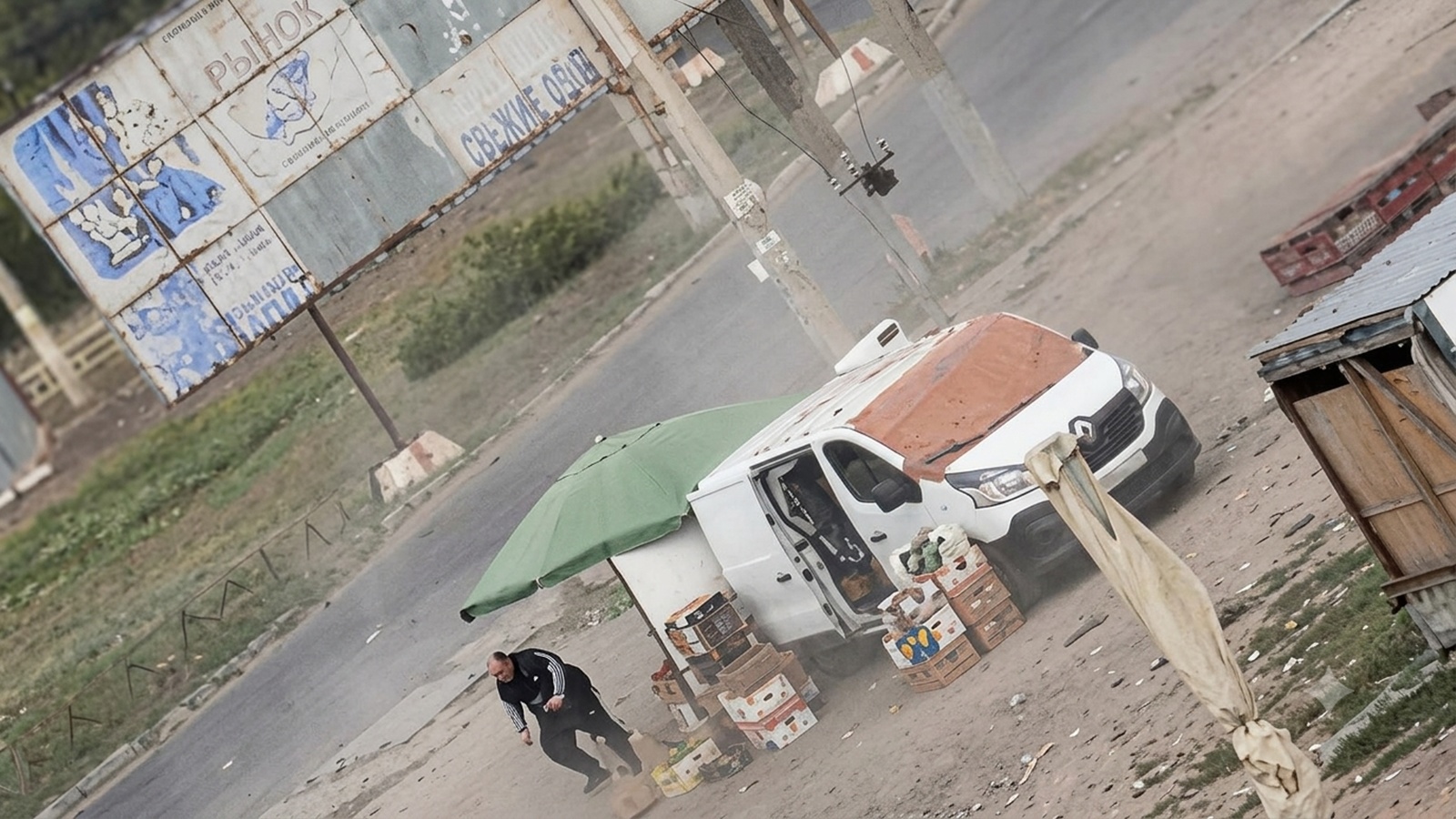
A digital recording surfaces on social media platforms, showing a small aerial vehicle pursuing an ordinary civilian working outdoors before a sudden detonation occurs. This grim footage from Ukraine highlights a brutal shift in modern conflict, where low-cost technology transforms urban streets into high-risk zones. The convergence of commercial hardware and explosive payloads has altered the mechanics of combat. Ground-level civilians, including merchants and street vendors, find themselves navigating an environment where the sky itself presents an immediate, autonomous threat.
The Democratization of Lethal Technology
Decades ago, military dominance required multi-million-dollar airframes, massive logistics chains, and state-backed manufacturing hubs. Today, the physics of war look entirely different. Small quadcopters, originally built for aerial photography or hobbyist racing, now serve as precision-guided munitions.
These platforms rely on off-the-shelf components. Standard microchips, commercially available batteries, and open-source flight control software form the backbone of systems that cost a fraction of traditional artillery shells.
- Cost Efficiency: A standard commercial drone can be acquired for under a thousand dollars.
- Payload Integration: Lightweight explosives or modified grenades are strapped to the chassis using basic hardware.
- Accessibility: Operators require minimal training compared to traditional fixed-wing pilots or tank crews.
This accessibility creates a level playing field for destruction. When an aerial platform can hunt an individual target down an alleyway or track a commercial vehicle along an open road, the traditional boundaries separating the front lines from civilian areas vanish entirely.
Tactical Shifts in Urban Environments
Traditional urban combat relied on concrete walls, basements, and alleyways for cover. Soldiers and non-combatants alike learned to stay out of the line of sight from elevated sniper positions or armored vehicles. Aerial reconnaissance has rendered standard physical barriers obsolete.
When a motorized quadcopter can fly directly through a shattered window frame or hover outside a second-story apartment, architecture no longer provides sanctuary.
[Traditional Cover] -> Line-of-sight protection from ground threats.
[Modern Aerial Threat] -> Vertical angles, window entries, complete spatial penetration.
Street vendors, delivery workers, and municipal repair crews operate in the open out of absolute necessity. They must maintain infrastructure, sell food, or trade goods to keep society functioning amidst ongoing conflict. This visibility makes them primary subjects for high-resolution aerial cameras.
The Psychology of Constant Surveillance
Living beneath a persistent buzz changes human behavior. People look upward instinctively, scanning the horizon for the small dark silhouette of a flying machine. The psychological toll matches the physical danger.
When an individual realizes that a camera miles away is feeding high-definition video to an operator wearing virtual reality goggles, the feeling of privacy disappears completely. Every street corner becomes a potential engagement zone.
The Industrial Supply Chain of Modern Conflict
Governments and independent laboratories study these operational methods to redesign future military doctrines. The ease with which commercial supply chains can be weaponized poses a massive regulatory and security puzzle for international bodies.
- Dual-Use Goods: Items designed for agriculture, delivery, and recreation are easily converted into military assets.
- Decentralized Manufacturing: 3D printing allows operators to manufacture custom frame parts and release mechanisms locally.
- Rapid Iteration: Software updates and hardware modifications happen weekly rather than over decades.
Defense contractors now focus heavily on counter-measure systems. Portable electronic jammers, directional energy weapons, and automated detection networks attempt to neutralize low-altitude threats before they reach targets. Yet, the sheer volume of available units makes complete defense nearly impossible.
The Reality on the Ground
For the people living through these conditions, adaptation is a daily survival mechanism. Routines are modified based on weather conditions, wind speeds, and time of day. High winds or heavy rain ground smaller quadcopters, offering brief windows of relative safety for outdoor commerce.
The incident captured on that viral clip is not an isolated anomaly. It represents a systematic shift in how conflicts are fought, documented, and broadcasted to a global audience in real time. The distance between a battlefield calculation and a civilian marketplace has collapsed into the length of a fiber-optic cable or a radio frequency wave.
As long as cheap, capable aerial technology remains widely accessible, the ground-level reality for non-combatants in contested zones will remain defined by the hum of electric rotors overhead


