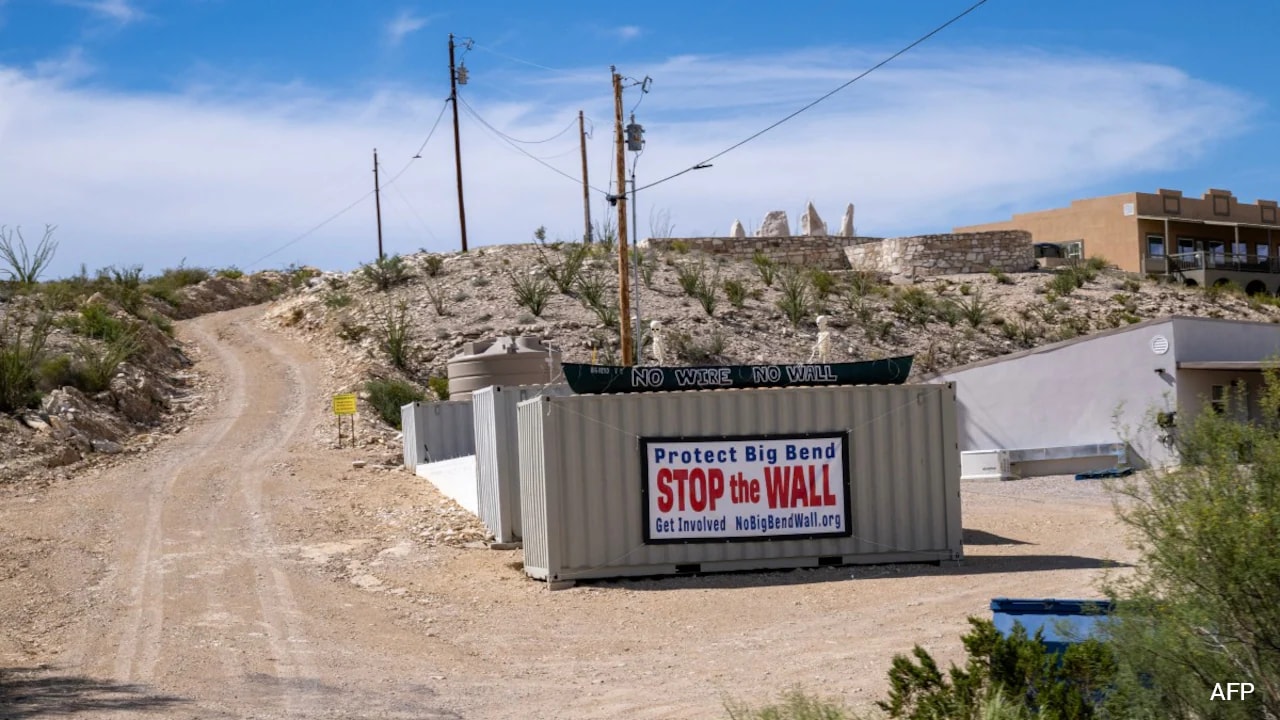
The United States Supreme Court decision permitting the Trump administration to resume border wall construction in Texas using redirected Pentagon funds establishes a functional precedent in administrative law, shifting the balance of power over federal appropriations from legislative specificity to executive discretion. Rather than resolving the underlying constitutional question of whether the executive branch violated the Appropriations Clause, the Court lifted a lower court injunction on procedural and standing grounds, effectively greenlighting billions of dollars in infrastructure spending while litigation proceeds on the merits. Understanding the operational reality of this ruling requires separating judicial procedure from substantive constitutional law, mapping the statutory mechanisms used to bypass congressional funding refusals, and calculating the downstream risks for future executive-legislative budget conflicts.
The Architecture of the Shadow Docket Intervention
Standard media coverage treats Supreme Court interventions as definitive rulings on legality. In reality, the Court operated through its emergency docket—often referred to by legal scholars as the shadow docket—to stay a permanent injunction issued by a federal district court in California and upheld by the Ninth Circuit Court of Appeals. You might also find this connected coverage interesting: Stop Calling the Kinahan Cartel a Global Empire When It Is Actually a Dying Franchise.
To understand why construction resumed without a final ruling on the law, one must examine the four-factor test governing stays pending appeal:
- Likelihood of success on the merits: Whether the applicant (the federal government) has made a strong showing that it is likely to prevail when the full case is eventually argued.
- Irreparable injury: Whether the applicant will be irreparably injured absent a stay.
- Substantial injury to other parties: Whether issuance of the stay will substantially injure the other parties interested in the proceeding (in this case, the Sierra Club and the Southern Border Communities Coalition).
- The public interest: Where the public interest lies in balancing competing institutional and environmental claims.
In its brief, unsigned order, the majority noted that the government had made a sufficient showing that the plaintiffs lacked a cause of action to challenge the transfer of funds under the Administrative Procedure Act (APA). This is a critical distinction. The Court did not rule that the president possessed the constitutional authority to spend money Congress explicitly declined to appropriate. Instead, the majority concluded that environmental advocacy groups were likely not the proper legal entities to enforce the statutory limits of the Department of Defense Appropriations Act. By narrowing the doctrine of zone-of-interests standing, the Court insulated executive budget transfers from third-party judicial review. As discussed in detailed reports by NBC News, the results are notable.
The Statutory Mechanism of Fund Reprogramming
When Congress passes an appropriations bill, the funds are legally bound to the specific purposes outlined in the legislation, a principle codified in the Purpose Statute (31 U.S.C. § 1301). To bypass a direct legislative refusal to fund a southern border barrier, the administration deployed a multi-step statutory workaround centered on emergency declarations and military accounting authorities.
The primary financial engine for the Texas construction was Section 8005 of the Department of Defense Appropriations Act. Historically, Section 8005 functions as a routine administrative tool allowing the Secretary of Defense to transfer funds between military accounts to address unforeseen military requirements. To execute a Section 8005 transfer legally, the executive branch must satisfy two statutory conditions:
- The unforeseen requirement criterion: The funds must be used for a higher-priority item based on unforeseen military requirements than those for which the funds were originally appropriated.
- The non-denial criterion: The item for which the funds are requested must not have been previously denied by Congress.
The central legal friction in the Texas border wall litigation stemmed from this second condition. Congress had repeatedly debated and rejected the administration's specific dollar requests for border barrier construction prior to the budget transfer. Lower courts reasoned that moving $2.5 billion from military personnel and pension accounts into counter-drug support accounts—which were then routed to border wall contracts under 10 U.S.C. § 284—constituted an end-run around a direct congressional denial.
By allowing construction to proceed while appellate review continued, the Supreme Court effectively prioritized the executive branch's interpretation of "unforeseen" and "denied." The administration argued that because it had requested funds for the Department of Homeland Security rather than the Department of Defense, Congress had not technically denied a military funding request. This semantic separation between civilian agency appropriations and defense reprogramming created a legal loophole that neutralized legislative intent.
The Asymmetric Timing Problem in Federal Litigation
Infrastructure projects operate on physical timelines, whereas appellate litigation operates on institutional timelines. The Supreme Court's decision to stay the injunction created an irreversible factual reality on the ground in Texas, regardless of how the courts might eventually rule on the statutory merits.
This dynamic illustrates the structural asymmetry of executive power in federal contracting:
- Sunk Cost Acceleration: Once an injunction is lifted, the Army Corps of Engineers immediately executes contract modifications, clears land, and pours concrete. Capital is rapidly converted from liquid treasury balances into fixed physical assets and binding contractor liabilities.
- The Mootness Trap: If an appellate court or the Supreme Court rules two years later that the Section 8005 transfer was unlawful, the judicial remedy becomes functionally obsolete. Courts cannot un-pour concrete, nor will they order the demolition of completed federal infrastructure at taxpayer expense, particularly when third-party contractors have already been paid under valid federal procurement rules.
- Compensation Liabilities: Terminating active construction contracts mid-stream triggers substantial termination-for-convenience payouts under the Federal Acquisition Regulation (FAR), forcing the government to pay contractors for work performed, demobilization costs, and anticipated profits without receiving a completed asset.
Justice Stephen Breyer highlighted this exact operational hazard in his partial dissent, proposing a middle-ground framework: allow the government to finalize contracts and conduct preparatory planning, but maintain the freeze on actual physical construction until the Court issued a final ruling on the merits. The majority rejected this compromise, opting instead to let physical execution outpace judicial deliberation.
Operational Constraints on Texas Border Infrastructure
Moving from legal theory to physical execution in Texas introduces specific engineering, geographic, and property-law bottlenecks that differ sharply from federal land construction in states like Arizona or New Mexico.
Unlike the western border states, where the federal government owns vast tracts of contiguous desert and military ranges, nearly all borderland in Texas is privately owned or held by state and municipal entities. Resuming construction in Texas therefore triggers a complex sequence of real estate and engineering hurdles:
- Eminent Domain and Condemnation Proceedings: Before physical barriers can be erected on private Texas ranches or farmland, the Department of Justice must initiate condemnation actions under the Declaration of Taking Act. While the federal government possesses indisputable eminent domain authority, judicial valuation disputes and landowner litigation introduce localized delays that cannot be overridden by a broad Supreme Court stay.
- Hydrological and Treaty Constraints: Much of the Texas border follows the Rio Grande, a dynamic river system governed by the 1970 Boundary Treaty between the United States and Mexico. Under this treaty, neither nation may construct barriers within the floodplain that deflect or obstruct the normal flow of the river. Engineering teams must therefore set barriers back from the riverbank, leaving significant acreage of private U.S. territory south of the wall and requiring extensive hydrological modeling approved by the International Boundary and Water Commission (IBWC).
- Terrain and Supply Chain Logistics: Moving heavy steel bollard panels, concrete batch plants, and earthmoving equipment into remote sections of the Rio Grande Valley and Big Bend sector requires constructing miles of heavy-duty access roads before barrier installation can begin.
The Supreme Court ruling removed the overarching legal injunction, but it did not eliminate the friction of physical execution. The administration gained the legal authority to spend the funds, yet the pace of deployment remained tethered to land acquisition and civil engineering constraints.
Systemic Risks to the Separation of Powers
The broader institutional consequence of the ruling lies in how it alters the incentive structure for future presidents facing a divided or hostile Congress. The Constitution's Appropriations Clause (Article I, Section 9, Clause 7) states that no money shall be drawn from the Treasury except in consequence of appropriations made by law. This clause serves as the legislature's primary check on executive overreach.
When the judiciary restricts who has standing to challenge executive fund transfers, it creates an enforcement vacuum. Consider the structural mechanics of this vacuum:
- Private Plaintiffs Are Barred: Environmental groups, border communities, and taxpayers generally fail the zone-of-interests test because appropriations statutes are written to regulate internal government accounting, not to protect individual rights.
- Legislative Standing Is Difficult: Individual members of Congress lack standing to sue the executive branch over institutional injuries, as established in Raines v. Byrd. While the House of Representatives as an institutional body attempted to sue over the border wall transfers, parallel litigation faced protracted battles over whether one chamber of Congress can unilaterally enforce the Appropriations Clause in federal court.
- Internal Executive Checks Are Weak: Inspectors General and the Government Accountability Office (GAO) can issue formal legal opinions finding that an agency violated the Purpose Statute or the Antideficiency Act—as the GAO did regarding certain border wall transfers—but neither entity possesses enforcement power to halt disbursements or hold officials in contempt.
If no external party has standing to seek an injunction, and internal watchdogs lack enforcement teeth, statutory restrictions on fund reprogramming become largely self-policing. Any future administration—regardless of political party—can utilize emergency declarations and broad reprogramming statutes to redirect billions of dollars toward domestic or foreign policy priorities that Congress explicitly refused to fund, confident that physical execution will conclude before judicial review reaches a final verdict.
Strategic Implications for Institutional Governance and Policy
The precedent established by the Texas border wall stay forces both legislative drafters and executive branch legal counsels to recalibrate their operational playbooks.
For Congress, relying on broad appropriations language or traditional committee report directives to restrict executive spending is no longer viable. To preserve the power of the purse, legislative appropriators must embed explicit, self-executing statutory guardrails directly into the text of annual spending bills. This requires three specific drafting adjustments:
- Explicit Repeal or Capping of Transfer Authorities: Congress must severely restrict Section 8005 and similar reprogramming provisions, lowering the dollar thresholds that trigger mandatory prior-approval requirements from relevant appropriations committees.
- Express Statutory Causes of Action: To neutralize the zone-of-interests standing barrier utilized by the Supreme Court, Congress can include citizen-suit provisions or explicit institutional standing clauses within appropriations bills, legally empowering designated state attorneys general or legislative bodies to seek immediate injunctive relief against unauthorized fund transfers.
- Automatic Rescission Triggers: Legislation can stipulate that any funds transferred out of designated accounts without prior congressional sign-off automatically revert to the general Treasury, legally voiding the underlying contract authority.
For executive branch agencies and federal contractors, the ruling demonstrates that aggressive statutory interpretation paired with rapid procurement execution can overcome judicial resistance, provided the administration can survive the initial stay phase. However, contractors entering agreements funded via contested reprogramming authorities must price political and legal volatility into their bids, demanding upfront mobilization payments and strict indemnification clauses to protect against sudden legislative rescissions or incoming administrations terminating projects on day one.