The Structural Tensions in Executive Document Release Mechanics
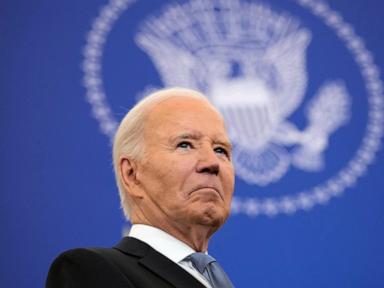
The D.C. Circuit Court of Appeals rejected a motion by former President Joe Biden to halt the release of recorded interviews conducted with ghostwriter Mark Zwonitzer. The 2-1 decision from the panel—composed of Chief Judge Sri Srinivasan, Judge Gregory Katsas, and Judge Florence Pan—establishes a precedent in the legal framework governing personal privacy, Executive Privilege claims, and Freedom of Information Act (FOIA) disclosures.
The core of the dispute centers on the operational boundary between personal record creation and public domain exposure during criminal investigations that do not result in indictment. While former executive officials routinely attempt to shield private communications, the application of targeted law enforcement acquisitions to civil FOIA requests reshapes the disclosure vector. You might also find this similar coverage useful: The Myth of the Desperate Negotiator: Why Sanctions Never Force Tehran to the Table.
+-----------------------------------------------------------------------------------+
|                        THE DUAL-INTEREST BALANCE FRAMEWORK                       |
+-----------------------------------------------------------------------------------+
|                                                                                   |
|   [ PRIVACY INTERESTS ]                                 [ PUBLIC INTERESTS ]      |
|   - Non-indicted Subject Data                           - Special Counsel Basis    |
|   - Candid Personal Musings                             - Governmental Oversight   |
|   - Non-public Interlocutors                            - FOIA Mandate             |
|                                                                                   |
|                  \                                     /                          |
|                   \                                   /                           |
|                    +---------------------------------+                            |
|                    |   COURT BALANCING TEST (D.C. CIR) |                            |
|                    +---------------------------------+                            |
|                                     |                                             |
|                                     v                                             |
|                    [ REDACTION AS A DAMPENING VARIABLE ]                          |
|                       Reduces Privacy Violation Weight                            |
|                                     |                                             |
|                                     v                                             |
|                      OUTCOME: DISCLOSURE PREVAILS                                 |
+-----------------------------------------------------------------------------------+
Deconstructing the Judicial Threshold: The Three Friction Points
The appellate panel’s decision rests on three primary operational mechanics that dictate the threshold for granting preliminary injunctions against executive record disclosures.
1. Privacy Interest Decay via Selective Redaction
The fundamental legal argument advanced by Biden’s counsel asserted that recorded conversations conducted inside a personal residence carry an inherent privacy protection under FOIA Exemption 6 and Exemption 7(C). However, the court’s majority determined that targeted redactions executed by the Department of Justice serve as a dampening mechanism on privacy infringement claims. As discussed in recent reports by The Guardian, the effects are significant.
By scrubbing non-public individuals, personal family matters, and medical details from the files prior to public release, the DOJ altered the legal balance. The remaining residual privacy interest in unredacted portions does not clear the burden required to defeat the public interest under FOIA.
2. The Weight of Special Counsel Inquiries
When records transition from private possession to a Special Counsel’s evidence pool, their legal status mutates. Special Counsel Robert Hur originally seized the Zwonitzer tapes to evaluate whether classified information was unlawfully retained or transmitted.
Because the resulting Special Counsel report explicitly analyzed the former president's memory, cadence, and handling of sensitive information as primary reasons for declining prosecution, the underlying evidentiary audio converted into a core artifact of public interest. The public interest metric shifts from general curiosity to institutional auditing of Department of Justice declination decisions.
3. Evidentiary Irreversibility versus Administrative Stays
In appellate litigation involving document disclosures, the irreparable harm test typically favors the party seeking concealment, because public release cannot be undone once executed. However, the D.C. Circuit panel countered this by issuing a temporary administrative stay until August 3.
This procedural hold preserves the status quo just long enough to permit an en banc petition or an emergency application to the Supreme Court, while simultaneously affirming that on the merits, the injunction fails the requisite likelihood-of-success standard.
Quantitative Breakdown of the Appellate Panel Dynamics
The composition of the three-judge panel highlights the strategic tension in evaluating judicial review standards for executive disclosures.
+------------------+-----------------------+--------------------+-----------------------+
| Judge            | Nominating Authority | Primary Ruling     | Operational Focus     |
+------------------+-----------------------+--------------------+-----------------------+
| Sri Srinivasan   | Barack Obama          | Majority (Release) | FOIA Public Interest  |
| Gregory Katsas   | Donald Trump          | Majority (Release) | Procedural Balancing  |
| Florence Pan     | Joe Biden             | Dissent (Block)    | Non-Indicted Privacy  |
+------------------+-----------------------+--------------------+-----------------------+
Judge Pan’s dissent emphasizes an evidentiary standard: when materials are obtained in an investigation that produces no criminal charges, the subject retains a elevated expectation of privacy relative to the government's justification for release. The majority rejected this standard, establishing that the public interest in assessing the integrity of the declination decision itself supersedes the privacy rights of a former public official.
Tactical Implications for Post-Presidential Media Artifacts
The ruling transforms the legal risk profile for public figures engaging ghostwriters, memoirists, and documentary filmmakers.
- Evidentiary Subpoena Vectors: Any unencrypted, non-privileged audio recordings created during memoir drafting remain vulnerable to seizure during federal inquiries.
- FOIA Conversion Mechanics: Once seized by a federal law enforcement entity, private artifacts held within agency records become subject to third-party FOIA requests.
- Redaction Vulnerability: Relying on redaction to protect broad privacy interests fails if the court determines that the core subject matter holds public interest value.
Immediate action requires legal teams managing high-profile public figures to audit all third-party recording arrangements, implement strict contractual non-retention agreements for interview materials, and formally assert work-product or executive privilege parameters at the exact moment of creation rather than reactively during third-party FOIA litigation.