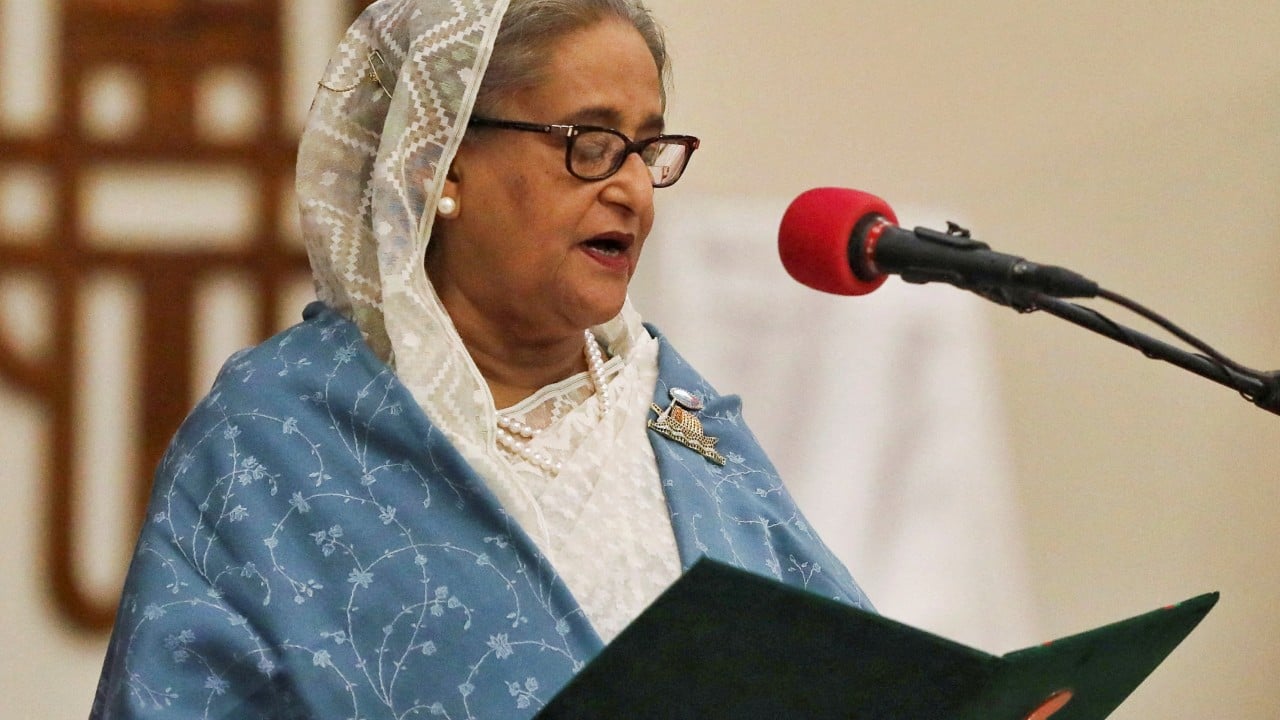
Exiled leaders rarely stay silent for long. Sheikh Hasina, the former Prime Minister of Bangladesh, continues to cast a long shadow over South Asian geopolitics from her refuge in India, transforming what began as a sudden regime change into a persistent diplomatic crisis between New Delhi and Dhaka. Her planned public addresses and political messaging from across the border have triggered a furious backlash from the interim administration in Bangladesh, reigniting historical grievances and placing Indian foreign policy in a precarious vice.
The core friction stems from a fundamental mismatch in expectations. Dhaka wants accountability and the extradition of a fallen leader accused of widespread human rights violations during the July uprisings. New Delhi wants to honor historical ties with a dependable political ally while managing a delicate security perimeter on its eastern flank. When Hasina attempts to broadcast statements or rally her fractured Awami League supporters, she crosses a diplomatic red line for the interim government led by Muhammad Yunus. This dynamic creates immediate border tensions, fuels anti-Indian sentiment among the Bangladeshi public, and forces foreign policy strategists in South Block to walk an agonizingly narrow tightrope.
The Anatomy of an Uncomfortable Asylum
Diplomatic sanctuary is rarely straightforward. When Hasina fled Dhaka aboard a military helicopter as crowds overran her official residence, she stepped straight into a complex legal and political grey area. India extended emergency shelter based on decades of strategic alignment. That choice carried a heavy hidden cost.
By hosting a deposed leader facing multiple criminal charges at home, India inadvertently became a focal point for popular anger in Bangladesh. Street protests in Dhaka frequently target New Delhi's perceived interference. Every time Hasina issues a statement criticizing the current administration or rallying her base, the interim government reacts with formal diplomatic protests. They view her continued presence and vocal output as a direct violation of international norms governing political refugees.
International law offers little clarity for this precise scenario. Asylum grants protect individuals from persecution, but host nations typically expect recipients to refrain from active political agitation against their home countries. Hasina walks a fine line between expressing personal perspective and directing political resistance. For the current leadership in Dhaka, any political breath drawn by Hasina in India is interpreted as an existential threat to the transition process.
The Strategic Dilemma for New Delhi
India views Bangladesh through a security lens that predates the Awami League. Border management, counterterrorism cooperation, and regional containment of rival influences remain primary concerns for security planners in the capital.
- Border Security: A hostile government in Dhaka complicates joint counterinsurgency operations in India's northeast.
- Economic Corridors: Transit agreements and infrastructure projects rely heavily on stable bilateral relations.
- Geopolitical Competition: External actors monitor every diplomatic misstep, eager to expand their footprint in the Bay of Bengal.
Losing influence in Dhaka opens the door for regional competitors. Beijing has watched the political transition closely, offering economic engagement to the interim administration. New Delhi cannot afford to alienate the Bangladeshi public permanently, yet turning its back on a veteran partner like Hasina would signal unreliability to other regional allies. This is the definition of a diplomatic trap. Every available option carries severe geopolitical penalties.
Inside the Awami League Power Vacuum
Hasina's remote orchestration of her party reveals a deep structural weakness within Bangladeshi politics. Decades of centralized control left the Awami League heavily dependent on a single dynastic figurehead. Without her direct physical presence on the ground, local leaders find themselves rudderless, factionalized, and vulnerable to targeted prosecutions.
When statements attributed to Hasina circulate on social media or through underground networks, their primary effect is not a massive popular uprising. Instead, they provide the interim government with a convenient justification to crack down harder on remaining party infrastructure. Prosecutors accelerate corruption charges. Security forces round up local organizers. The fiery rhetoric meant to inspire resilience often achieves the opposite, sealing the isolation of the party rank and file.
Political survival from a distance requires more than audio clips and press releases. It requires grassroots infrastructure that can withstand state pressure. The Awami League built its identity on resistance during past military regimes, but those historical playbooks fail in the digital tracking era. Surveillance tools, financial monitoring, and sweeping emergency decrees make underground coordination extraordinarily difficult.
Economic Interdependence and Public Sentiment
Beneath the political rhetoric lies a pragmatic reality that neither capital can ignore. Trade across the border is massive. Power transmission projects, medical tourism, and supply chains bind the two economies tightly together. Disruption hurts ordinary citizens on both sides long before it reaches the political elite.
Yet, public sentiment in Bangladesh has soured significantly. Social media algorithms amplify anti-Indian narratives, transforming routine trade disputes or border incidents into emotional flashpoints. When Indian media outlets frame the political transition in Dhaka through an alarmist lens, focusing exclusively on minority security or radical infiltration, the outrage in Bangladesh multiplies.
This toxic information loop makes compromise difficult for leaders in both countries. Muhammad Yunus must pander to a restless youth demographic that demands a complete break with the past. Any sign of softness toward Indian diplomatic pressure risks delegitimizing the interim administration. Meanwhile, Indian leadership faces domestic political pressure from constituencies that view any mistreatment of neighbors as a failure of national resolve.
The Road Ahead for Bilateral Realities
The friction caused by Hasina's planned speeches is merely a symptom of a deeper realignment in South Asia. The era of predictable bilateral dynamics, where a friendly face in Dhaka guaranteed smooth sailing for decades, has ended. Future relations will require transactional diplomacy, institutional engagement independent of individual leaders, and careful management of public expectations.
Ignoring the grievances of the Bangladeshi public will only deepen the strategic deficit for India. Clinging to the ghost of past political arrangements guarantees perpetual friction. Diplomatic maturity demands acknowledging that Bangladesh has entered a new political phase, one where the ghosts of 1971 and the long shadows of dynastic rule no longer dictate the terms of engagement.
As long as the former Prime Minister continues her efforts to shape events from across the border, the diplomatic chill will persist. The real test for both nations is whether they can separate the fate of one individual from the broader imperatives of regional stability and mutual survival.