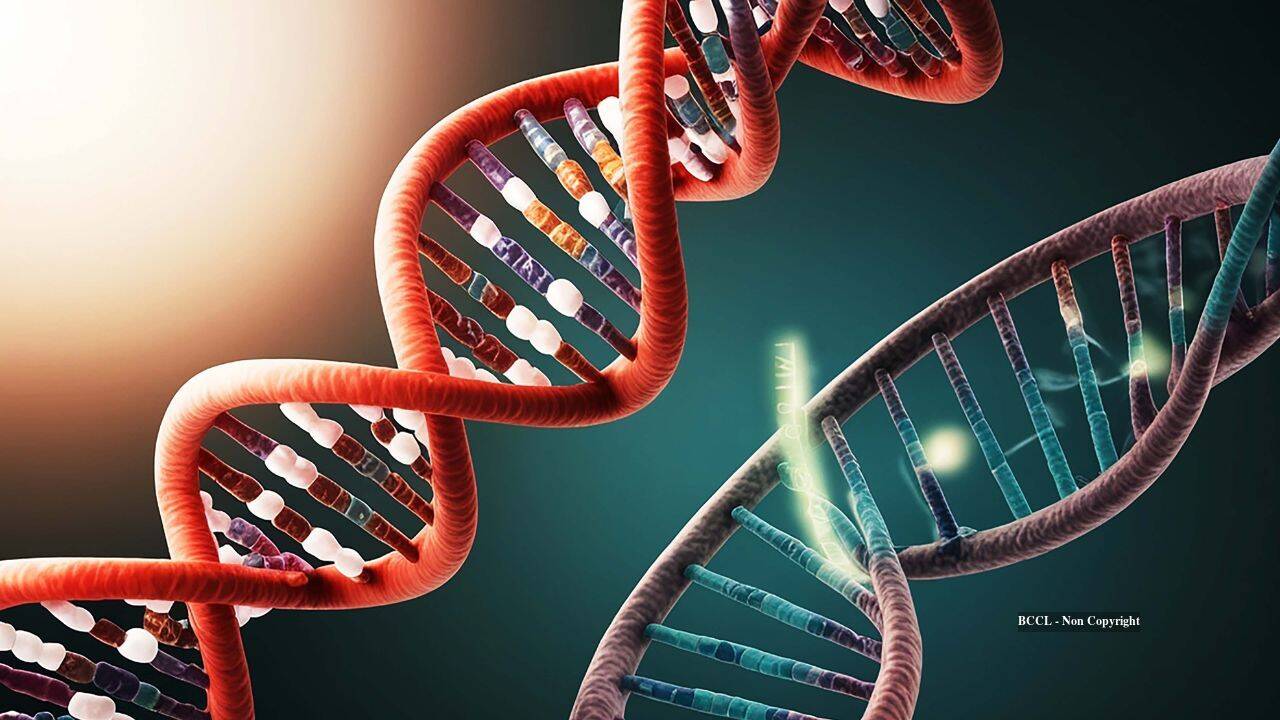
Life on Earth runs on a four-letter code. Every organism from bacteria to blue whales uses Adenine, Thymine, Cytosine, and Guanine. That is it. Four letters building every protein, every trait, and every living thing for billions of years. We thought biology had strict rules. It turns out biology was just keeping options open.
Scientists figured out how to double the genetic alphabet. They created a synthetic system using a bacterial enzyme to read and transcribe eight DNA letters instead of four. Think about that for a second. We aren't just editing existing genetic code anymore. We are writing new biological languages from scratch.
Why should you care? Because this changes biotechnology forever. If you think CRISPR gene editing was a big deal, wait until you see what happens when scientists build organisms using a completely artificial genetic system.
The Problem With Nature's Four Letter Limit
Nature is efficient, but it is also lazy. Four DNA bases pair up in a predictable way. Adenine pairs with Thymine. Cytosine pairs with Guanine. This simple pairing system builds the double helix we all learned about in school.
It works great for survival, but it sucks for custom engineering. When you try to force natural DNA to do unnatural tricks, it breaks down. Natural enzymes get confused. Mutations creep in. The machinery rejects foreign modifications because it evolved for one specific job.
Researchers spent decades trying to invent synthetic letters. They called them designer nucleotides. The hard part wasn't making the letters in a chemistry lab. The hard part was getting living machinery to accept them. You can synthesize all the chemical letters you want. If a cell spits them out like a bad taste in its mouth, your experiment is dead.
That is why the eight-letter DNA system—often called Hachimoji DNA, meaning eight letters in Japanese—is a massive leap forward. Scientists didn't just invent new letters. They found a way to make a bacterial enzyme read, copy, and transcribe them without throwing a molecular tantrum.
How Bacterial Enzymes Learned a New Language
Enzymes are the workhorses of the cell. They do the heavy lifting of copying DNA into RNA so proteins can be built. They are notoriously picky. Imagine trying to read a book where half the alphabet is written in a foreign script. You would stumble. You would make mistakes.
To get around this, researchers tested countless bacterial enzymes until they found strains adaptable enough to handle synthetic base pairs. These modified enzymes can look at an eight-letter sequence, interpret it accurately, and transcribe it into RNA.
It is basically teaching an old dog a completely new dialect. The bacterial enzyme accepts the unnatural chemical structures as normal. It stitches the synthetic RNA strands together just like it would with natural DNA.
This means synthetic biology has moved past theory. We now have functional, working proof that biological machinery can process an expanded alphabet.
What This Means for Medicine and Industry
Most people assume this research only matters to academic geneticists. They are wrong. Expanding the genetic alphabet unlocks entirely new classes of drugs and materials.
Natural proteins are made from a limited set of twenty amino acids. With an eight-letter DNA and RNA alphabet, scientists can code for hundreds of novel amino acids. This lets us build custom proteins that nature never dreamed of creating.
Picture targeted cancer therapies designed with synthetic amino acids that stick exclusively to tumor cells while ignoring healthy tissue. Picture industrial enzymes that eat plastic waste at ten times the speed of current biological solutions.
We are stepping away from discovering what nature made and moving toward engineering what nature missed.
The Risks Nobody Wants to Talk About
Every technological leap carries baggage. When you build organisms with synthetic DNA, containment becomes a massive issue.
What happens if a synthetic microbe escapes the lab? In theory, it shouldn't survive in the wild because it relies on artificial chemical building blocks that do not exist in nature. But biology finds a way. Evolution is relentless. If a synthetic organism figures out how to scavenge alternate nutrients, containment protocols fail.
Regulation is lagging behind the science. Labs working on synthetic alphabets operate under strict biosafety levels, but the commercialization of synthetic biology is moving fast. We need clear safety standards before synthetic genomes become commercially widespread.
Ignoring these risks is pure negligence. We have to build kill switches into these synthetic organisms from day one. If a cell starts mutating outside the lab, it needs to self-destruct.
Where Synthetic Biology Goes From Here
The proof of concept is done. Scientists can read and transcribe eight letters. The next frontier is translation. Can we get ribosomes to build functional proteins using this expanded code inside a living cell?
Some labs are already getting close. Once translation works reliably, the boundary between natural and artificial life dissolves.
You are going to see synthetic biology enter manufacturing, computing, and medicine over the next decade. Companies will store digital data in synthetic DNA because it is denser and lasts longer than silicon hard drives.
The four-letter limitation of life was never a permanent law of the universe. It was just the starting point. The eight-letter alphabet proves that biology is a blank canvas, and we are finally learning how to paint.