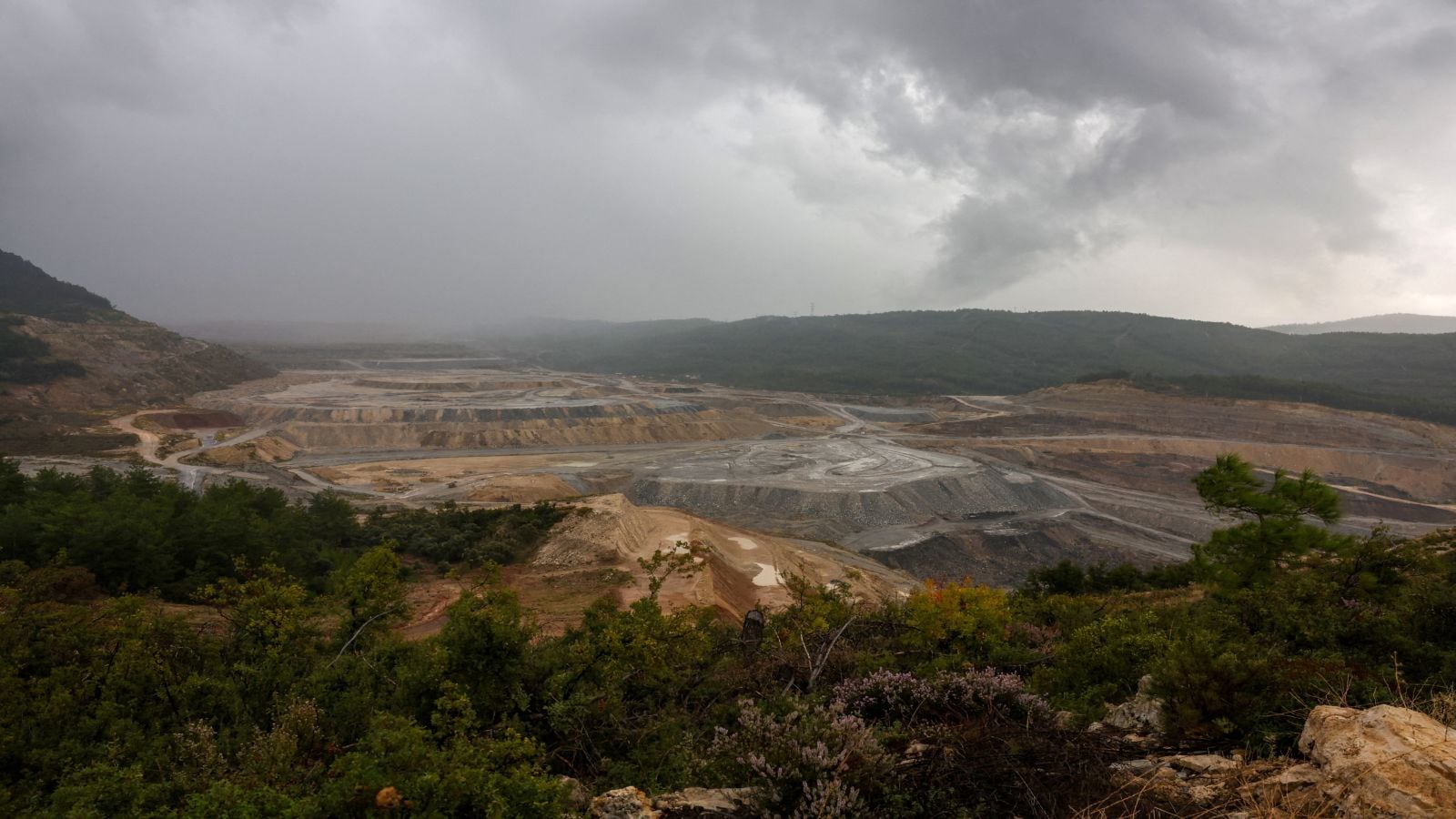
Global climate diplomacy consistently fails when macro-level decarbonization pledges remain insulated from micro-level ecological and economic destruction. As Türkiye positions itself on the international stage for the 31st Conference of the Parties (COP31), agricultural communities in regions such as Muğla and the Akbelen Forest are demanding that international delegates conduct direct field inspections of open-pit lignite mines. This demand exposes a fundamental structural flaw in international climate governance: the reliance on sanitized, aggregated national emissions reporting over localized biophysical audits. To understand why grassroots stakeholders are forcing physical verification onto the diplomatic agenda, analysts must deconstruct the economic externalities of domestic lignite extraction, the institutional mechanisms that suppress local asset rights, and the operational protocol required to integrate ground-truth verification into COP31 negotiations.
The Structural Disconnect in Climate Diplomacy
International climate summits operate primarily on abstract accounting frameworks. Delegations negotiate Nationally Determined Contributions (NDCs), carbon credit exchanges, and long-term net-zero trajectories using macroeconomic models and self-reported national inventories. This high-level abstraction creates an information asymmetry that benefits state-backed and private extractive industries. When diplomats evaluate a host nation's energy transition strategy from a conference hall, the localized devastation of surface mining is reduced to a line item under energy security or transitional baseload power. For a different look, see: this related article.
In Türkiye, the expansion of lignite-fired thermal power plants and their accompanying open-pit mines—most notably in the Milas and Yatağan districts of Muğla—illustrates the severe friction between national energy policy and regional agrarian survival. Lignite, or brown coal, possesses the lowest calorific value and highest carbon intensity among coal ranks. Because its low energy density makes long-distance transport economically unviable, thermal power plants are constructed directly adjacent to the extraction sites. This operational requirement concentrates industrial infrastructure, ash dams, and open-pit excavation directly inside established agricultural zones, olive groves, and old-growth forest ecosystems.
Grassroots mobilization by Turkish villagers represents an attempt to break the diplomatic abstraction barrier. By urging world leaders to physically inspect the mine perimeters, local agricultural producers are applying a basic principle of operational auditing: physical verification overrides desk-based compliance. Without visual and empirical inspection of the hydrological disruption, topsoil stripping, and particulate dispersion occurring at the mine face, international climate agreements risk legitimizing an energy model that liquidates natural capital faster than it generates economic value. Further reporting on this matter has been shared by The New York Times.
The Extractive Cost Function in Rural Türkiye
Standard energy economics calculates the Levelized Cost of Electricity (LCOE) for lignite plants by factoring in capital expenditure, fuel extraction costs, operations, and maintenance. This formula systematically excludes negative externalities—costs imposed on third parties who receive no compensation. In the context of Turkish coal basins, the true economic cost function comprises four distinct variables that are currently externalized onto rural populations.
1. Hydrological Depletion and Aquifer Disruption
Open-pit lignite mining requires extensive dewatering operations to prevent groundwater from flooding the excavation pit. Continuous pumping lowers the regional water table, severing the capillary water supply required by deep-rooted perennials, particularly ancient olive trees that form the backbone of the Aegean rural economy. Once an aquifer is breached or drained, the hydraulic gradient shifts permanently, causing natural springs and agricultural wells to run dry kilometers away from the mine boundary.
2. Topsoil Liquidation and Land-Use Irreversibility
Surface mining strips away the biologically active topsoil horizon to access deeper coal seams. While mining permits typically mandate post-extraction land rehabilitation, the geological reality of overburden—the displaced rock and subsoil—prevents the restoration of complex agricultural ecosystems. Soil structure, microbial networks, and organic matter accumulated over centuries cannot be reconstituted within a corporate fiscal cycle. The land transitions permanently from a renewable, multi-generational revenue-generating asset (olive oil, apiculture, forestry) into a degraded industrial wasteland.
3. Particulate Dispersion and Public Health Liabilities
Lignite extraction, coal transport via uncovered conveyors or heavy trucks, and coal combustion generate high concentrations of fine particulate matter ($PM_{2.5}$ and $PM_{10}$), sulfur dioxide ($SO_2$), and heavy metals. In valleys with thermal inversions, these pollutants remain trapped at ground level. The resulting public health burden—manifested in elevated rates of chronic obstructive pulmonary disease, cardiovascular morbidity, and respiratory illness—functions as an unrecorded subsidy to the energy sector, paid out through public healthcare expenditures and lost rural labor productivity.
4. Asset Expropriation Through Urgent Eminent Domain
The mechanism enabling the rapid expansion of coal pits into private agricultural land is the legal instrument of "urgent expropriation" (acele kamulaştırma). Originally designed for national defense or immediate disaster response, this statutory mechanism allows the state to seize private land rapidly, bypassing standard valuation disputes and environmental impact appeals. For smallholder farmers, urgent expropriation destroys generational wealth, replaces productive land with lump-sum cash payouts that fail to match the net present value of decades of harvests, and forces rural-to-urban migration.
Why Standard Environmental Impact Assessments Fail
A critical question for international observers is how large-scale ecological degradation proceeds within a regulatory framework that mandates Environmental Impact Assessments (EIAs). The failure of the EIA process in Turkish coal basins stems from three systemic governance vulnerabilities:
- Fragmentation of Project Scope: Extractive operators frequently divide massive, integrated mining and power generation projects into smaller, sequential phases. By submitting separate EIAs for mine extensions, ash storage expansions, and plant upgrades, developers avoid triggering stricter regulatory thresholds that would apply to the cumulative environmental footprint of the entire industrial complex.
- Consultant Capture and Asymmetric Data: Under standard regulatory models, the project proponent hires and pays the environmental consultancy responsible for drafting the EIA. This financial structure creates an inherent principal-agent conflict, incentivizing consultancies to underestimate hydrological drawdown, downplay biodiversity loss in state forests, and rely on optimistic mitigation projections rather than empirical baseline monitoring.
- Temporal Mismatch Between Judicial Review and Physical Execution: Even when local communities successfully challenge an EIA or an urgent expropriation decree in administrative courts, physical clearing and excavation frequently proceed while appeals are pending. Because ecological destruction—such as the clear-cutting of a mature pine forest or the blasting of a limestone aquifer—is irreversible, a favorable court ruling delivered eighteen months after the fact offers zero functional remediation.
The Diplomatic Leverage of COP31
Hosting or co-leading a major UN climate summit places a nation's domestic energy portfolio under intense international scrutiny. For Türkiye, which ratified the Paris Agreement in 2021 and established a 2053 net-zero target, the credibility of its climate diplomacy depends on reconciling its international commitments with its domestic energy subsidies.
Currently, Türkiye's energy strategy exhibits a sharp structural contradiction. On one hand, the country has expanded its renewable energy capacity significantly, particularly in solar and wind installations. On the other hand, domestic coal continues to receive capacity mechanisms, purchase guarantees, and regulatory exemptions from environmental compliance deadlines. The rationale for maintaining domestic lignite relies on reducing natural gas and hard coal import dependencies to manage the current account deficit.
However, the economic logic of import substitution breaks down when evaluated against emerging international trade regimes, specifically the European Union's Carbon Border Adjustment Mechanism (CBAM). As the EU phases in tariffs on carbon-intensive imports—including cement, steel, aluminum, and electricity—an industrial grid heavily reliant on high-emission lignite erodes the export competitiveness of Turkish manufacturing. Consequently, the villagers' demand for site visits intersects directly with macroeconomic risk: continuing to subsidize domestic lignite creates stranded asset risks for energy companies while penalizing export-oriented manufacturers under CBAM.
Operational Protocol for Ground-Truth Verification at COP31
If international delegates, climate negotiators, and institutional investors intend to avoid greenwashing and evaluate the true transition readiness of coal-dependent regions, diplomatic protocols must incorporate structured field verification. A ceremonial tour managed by state ministries or corporate public relations teams will yield no actionable intelligence. Delegates must execute a rigorous, four-step verification framework.
Step 1: Independent Hydrological and Geospatial Auditing
Before arriving at a contested site, visiting delegations should commission multi-temporal satellite imagery analysis (such as Sentinel-2 NDVI vegetation indices and Interferometric Synthetic Aperture Radar for ground subsidence) covering the preceding decade. This establishes an objective, non-negotiable baseline of forest cover loss, mine pit expansion, and surface water depletion, eliminating reliance on corporate self-reporting.
Step 2: Unmediated Stakeholder Testimony
Diplomatic itineraries must allocate closed-door, unescorted sessions with local agricultural cooperatives, municipal water authorities, independent hydrologists, and rural health practitioners. To ensure accurate risk assessment, negotiators must gather primary data on crop yield declines, well-water salinity levels, and local respiratory hospitalization rates without the presence of corporate security or state enforcement personnel.
Step 3: Financial Audit of Capacity Mechanisms and Subsidies
Technical teams accompanying climate delegates should cross-reference physical site observations with public treasury data. Specifically, analysts must quantify the exact fiscal transfers flowing to the thermal power plants via capacity payments, tax exemptions, and public land leases. Comparing these state subsidies against the estimated economic value of the destroyed agricultural output reveals the net fiscal drag of the coal operation.
Step 4: Linking Climate Finance to Just Transition Milestones
International climate finance—such as concessional loans from multilateral development banks or bilateral Just Energy Transition Partnerships (JETPs)—must be conditioned on verifiable, site-level decommissioning milestones rather than abstract national targets. Disbursement tranches should require legally binding moratoriums on urgent expropriation decrees, permanent cancellation of mine expansion permits in high-value agricultural zones, and direct capital allocation for ecological remediation and farmer compensation.
Limitations of Diplomatic Site Visits
While bringing world leaders to the edge of an open-pit mine disrupts the sanitized narrative of climate summits, physical inspections are not a standalone solution. Diplomatic interventions face severe structural constraints:
- Sovereignty and Jurisdictional Limits: The UNFCCC framework operates on consensus and national sovereignty. International delegates cannot legally compel a sovereign government to revoke domestic mining licenses or alter its eminent domain statutes. External pressure functions solely through reputational leverage, trade policy alignment, and capital allocation conditions.
- The Risk of Performative Diplomacy: High-profile visits by foreign dignitaries often generate immediate media coverage but fail to alter bureaucratic momentum once the summit concludes. Without permanent monitoring mechanisms embedded in bilateral trade or financing agreements, local communities face the risk of retaliatory administrative pressure after international observers depart.
- Baseload Grid Constraints: Shutting down lignite capacity without concurrent investments in grid-scale battery storage, transmission infrastructure, and flexible renewable generation creates genuine grid stability risks. Advocates for rapid mine closures must account for the engineering reality of replacing synchronous thermal generation in regional industrial grids.
The Strategic Imperative for COP31 Stakeholders
The confrontation between rural Turkish communities and lignite operators is a localized manifestation of a global energy transition bottleneck: the willingness of states to sacrifice peripheral ecosystems and rural livelihoods to sustain legacy industrial assets. As COP31 approaches, international negotiators, institutional investors, and multilateral lenders must treat the extractive zones of Muğla and similar basins not as peripheral local disputes, but as primary stress tests for the integrity of the Paris Agreement.
The definitive strategic move for COP31 delegations is to formalize "Ground-Truth Verification Protocols" as a prerequisite for climate finance eligibility and bilateral carbon market integration. International capital providers must freeze all green bond certifications, sustainability-linked loans, and transitional energy funding for conglomerates that maintain active litigation against smallholder farmers or utilize urgent expropriation to expand fossil fuel extraction. By tying sovereign and corporate access to global capital markets directly to verifiable, site-level cessation of ecological liquidation, climate diplomacy can transition from aspirational rhetoric to enforceable economic discipline.