Morning arrived with an almost offensive clarity. September 11, 2001, began in New York City as a postcard day: deep azure skies, a sharp, welcoming breeze hinting at autumn, and sunlight striking the polished glass of the World Trade Center towers with a blinding, indifferent brilliance. Millions of people stepped onto the sidewalks that morning carrying ordinary worries. Coffee orders. Train schedules. The quiet anxiety of a late-arriving report.
Then came the tear in the sky.
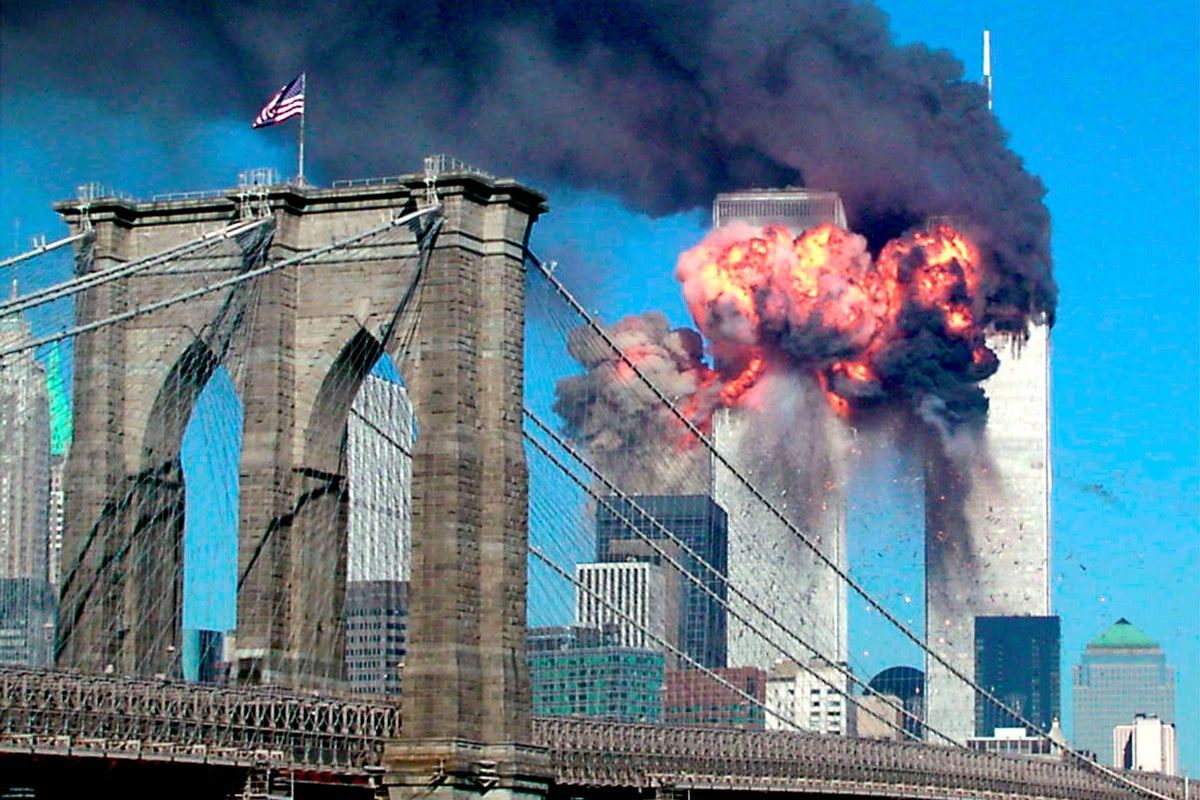
It was not a sound that belonged to the earth. It was a violent, metallic ripping that tore through the calm morning air, followed by a concussive blast that made the concrete pavements of Lower Manhattan jump. For a fraction of a second, minds refused to accept the geometry of what had happened. Airplanes do not belong between skyscrapers. They belong thousands of feet higher, swimming through invisible corridors of cloud. Yet there it was—a jagged silhouette embedded in the north face of the North Tower, vomiting thick, oily plumes of black smoke that immediately began to choke the pristine blue.
Distance distorts history. Decades later, we view that day through the sanitized lens of archives: wide-angle photographs of burning steel, looping television broadcasts, and dry timelines of destruction. But the true weight of that morning does not live in the macro statistics. It lives in the micro moments. It lives in the individual decisions made in fractions of a second inside stairwells, office cubicles, and sidewalks coated in gray ash.
Consider a hypothetical commuter stepping off the E train at Cortlandt Street at 8:40 AM. They hear the first roar overhead, feel the violent shudder of the earth beneath their rubber-soled shoes, and emerge onto Church Street to find a blizzard of white paper fluttering down from the upper floors. Insurance claims, internal memos, and blank office stationery—the mundane detritus of daily commerce drifting like confetti over a catastrophe.
That visual—the paper falling from the sky—remains one of the most haunting fragments of the event. It strips away the abstract concept of a geopolitical attack and reduces it to human scale. Those were people's jobs, floating away on the thermal currents of a burning building.
Within minutes, the second plane hit the South Tower. The illusion of an isolated accident vanished instantly, replaced by the terrifying, chilling realization of coordinated war.
The cameras on the ground captured things that change how a person looks at the world forever. They captured shoes left abandoned on sidewalks. They captured strangers gripping each other's shoulders, mouths frozen in silent screams or murmured prayers. They captured office workers who, trapped by smoke and impossible heat on the 100th floor, chose to open windows and step out into the empty air rather than wait for the inevitable collapse.
Physics is brutal. Steel beams, engineered to withstand immense structural loads, began to lose their integrity as jet fuel burned at temperatures high enough to melt their resolve, though not the steel itself. The internal temperature climbed. Floors sagged. And beneath those wounded giants, thousands of ordinary people—firefighters, police officers, medics, and civilians—ran directly toward the sound of the falling sky.
We honor them, and rightly so, but we often miss the sheer human panic that defined their actions. Fire Engine 34 rolled down the West Side Highway into a landscape resembling the surface of the moon. Smoke turned day into an apocalyptic twilight. The air tasted of pulverized concrete, jet fuel, and copper.
When the towers fell, they did not just collapse downward; they pancaked in a thunderous roar of grey fury that swallowed the daylight. A rolling pyroclastic cloud of dust raced down narrow canyons between buildings, chasing fleeing crowds who ran for their lives, their clothes turning ghostly white, their lungs burning for untainted oxygen.
In that blinding cloud, humanity revealed its dual nature. Panic existed, yes. Elbows were thrown in scrambles for safety. But alongside the fear lived an overwhelming, instinctive grace. Total strangers grabbed hands. Coat sleeves were torn to create makeshift dust masks for the person coughing beside them. Office workers held doors open against crushing stampedes until the very last second.
We look back at those twenty-five images, and a hundred more like them, because we are searching for something we lost that morning. We are looking for the exact moment the world shifted. Before that Tuesday, cynicism was a luxury. Afterward, the world felt smaller, more fragile, and permanently exposed to the dark edges of human intent.
The dust settled long ago. New glass towers have risen to pierce the New York skyline, gleaming with modern defiance. Memorial pools now sit carved into the footprints of the fallen giants, water cascading ceaselessly into dark, bottomless voids where names are etched in bronze. Yet every time a jetliner banks too low over the harbor, or a sudden, sharp September breeze carries the smell of dry leaves and cold air, the collective pulse of a generation skips a beat.
We still look up. Not out of fear, but because we remember the exact color of the sky on the morning we learned how fragile everything really is.