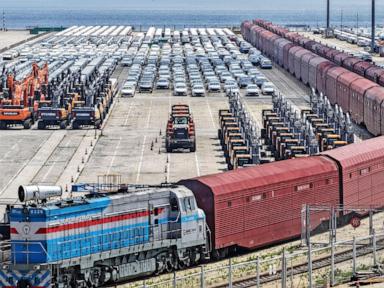
The mainstream financial press has a severe case of narrative dependency.
Every time a macro-economic data point spikes, they scramble for a trendy buzzword to explain it. When China’s customs data showed a massive 27 percent year-on-year surge in June exports, the headlines wrote themselves. The lazy consensus immediately declared it an "AI-driven demand boom."
According to the popular narrative, the world’s insatiable hunger for artificial intelligence is pulling Chinese manufacturing out of its slump. Supercomputers need servers, servers need components, and China makes the components. Case closed.
It is a beautiful, clean, and utterly fictitious story.
Having spent nearly two decades inside East Asian supply chains—watching raw materials turn into finished goods and monitoring the credit flows that finance them—I can tell you that this explanation is dangerously wrong. The global market is not experiencing an organic technology boom.
What we are actually witnessing is a desperate, state-subsidized fire sale masquerading as industrial triumph.
The Tariff Front-Running Illusion
If you want to understand why Chinese ports are overflowing, stop looking at AI silicon and start looking at the calendar.
Importers worldwide are panicking. The United States and the European Union have made it clear that a wall of heavy protectionist tariffs is coming down on Chinese goods. Whether it is electric vehicles, lithium batteries, or legacy microchips, the window to import cheap Chinese manufactured goods at low tariff rates is rapidly slamming shut.
So, what does a rational global procurement officer do? They pull demand forward.
They order twelve months of inventory today to get it across the border before the new duties kick in. This is not new demand. It is borrowed future demand.
When you front-load shipments, your current export numbers look spectacular. Your factories run triple shifts. Your port authorities brag about record tonnage. But you have not created new economic energy; you have merely emptied the tank early.
Once these tariffs are fully implemented, the export cliff will be sudden, steep, and incredibly painful. Treating this temporary surge as a structural bull market driven by high-tech innovation is a fundamental misreading of supply chain mechanics.
Dumping Deflation on the Rest of the World
To understand why China’s export volumes are up, you must look at what is happening inside its borders.
The Chinese domestic economy is trapped in a brutal balance-sheet recession. The real estate market—historically the vehicle for 70 percent of Chinese household wealth—is in ruins. Domestic consumption has cratered. Chinese citizens, terrified of the future, are hoarding cash instead of spending it.
In a normal market economy, when domestic demand collapses, factories scale back production. Prices stabilize, and weak players go bankrupt.
But China does not operate like a normal market economy.
Beijing’s response to underconsumption is always the same: double down on the supply side. State-owned banks funnel endless, low-interest credit to factories to keep production lines running at maximum capacity. The goal is to maintain employment and preserve industrial dominance at all costs.
This policy creates a massive structural mismatch. When you produce far more than your own population can ever consume, you have only one escape valve: export the excess.
And how do you force foreign markets to absorb your overproduction? You cut prices to the bone.
- The volume illusion: China is exporting more units than ever before.
- The value reality: The dollar value per unit is dropping rapidly.
China is not winning the global market through superior value-add; it is exporting its domestic deflation to the rest of the world. Economists like Michael Pettis have repeatedly warned that this model of systemic underconsumption paired with overinvestment is unsustainable. You cannot run an economy by forcing the rest of the world to absorb your excess production while refusing to buy their goods in return.
The "AI Boom" is a Marketing Gimmick
Let us dismantle the claim that artificial intelligence is driving this export surge.
The high-end semiconductors required to train modern large language models—think Nvidia’s Blackwell or H100 architectures—are strictly barred from being exported to or manufactured inside China. China’s primary domestic foundry, SMIC, is still struggling to produce high yields on sub-7-nanometer nodes.
So, what "AI hardware" is China actually exporting?
They are exporting low-margin legacy-node microcontrollers, aluminum server chassis, copper wiring, power supply units, and plastic fan casings.
Calling this an "AI export boom" is like saying a surge in cardboard box shipments is a "literary renaissance" because some of those boxes might eventually hold books.
China is manufacturing the basic, commoditized physical containers for the AI revolution, not the intellectual property driving it. The profit margins on these components are razor-thin. Western companies are buying them because they are dirt cheap, heavily subsidized by Chinese taxpayers, and easily sourceable.
This is not technological leadership. It is low-end assembly line work rebranded as a tech miracle to appease provincial party officials and gullible Wall Street analysts.
The Shell Game of Transshipment
If you look solely at direct bilateral trade data between China and the West, you are missing half the picture.
The surge in Chinese exports is heavily supported by an elaborate geopolitical shell game known as transshipment. To bypass direct tariffs, Chinese manufacturers are shipping semi-finished goods to intermediary countries like Vietnam, Mexico, and Malaysia.
Once there, the goods undergo minimal processing—sometimes just getting packed into new boxes—to receive a "Made in Mexico" or "Made in Vietnam" label before continuing their journey to the US or Europe.
Analyze the trade data closely:
- Chinese exports to ASEAN and Mexico have skyrocketed.
- ASEAN and Mexican exports to the US have risen in near-perfect lockstep.
- The actual value-add in these intermediary countries remains negligible.
This is trade diversion, not trade creation. It is an expensive, inefficient way to pretend that supply chains are decoupling when they are actually just getting longer and harder to trace. The moment Western customs agencies crack down on these origin-washing schemes—and they are already beginning to do so—the artificial export channels will dry up instantly.
The Dark Side of the Contrarian Reality
Admittedly, there is a dark side to this contrarian view.
While China’s export boom is built on artificial demand, state subsidies, and tariff-dodging maneuvers, the sheer scale of this industrial dumping is highly destructive. It can, and often does, decimate foreign competitors who operate on market principles.
If a Chinese manufacturer can borrow money at near-zero percent from a state bank and sell solar panels or legacy chips below the cost of production indefinitely, they will drive private-sector Western rivals out of business.
By the time Western governments implement tariffs or the Chinese banking system can no longer absorb the bad debts, the domestic industries of competitor nations may already be wiped out. This is not a sustainable long-term strategy for China, but in the medium term, it acts as a wrecking ball to global industrial stability.
The Real Question You Should Be Asking
Instead of asking "How long can China's AI export boom last?" supply chain managers and investors should ask a much more brutal question:
What happens to my business when the artificial dam breaks?
Relying on these inflated export numbers to plan your capital expenditures or inventory targets is a recipe for disaster. The current trade volumes are an anomaly born of fear, political maneuvering, and desperate domestic monetary policy.
Stop buying the narrative that a high-tech renaissance is lifting the world's factory floor. Protect your supply chains from the inevitable tariff shocks, diversify away from transshipment hubs that are in the crosshairs of regulators, and prepare for the deflationary hangover that always follows a credit-fueled manufacturing binge.