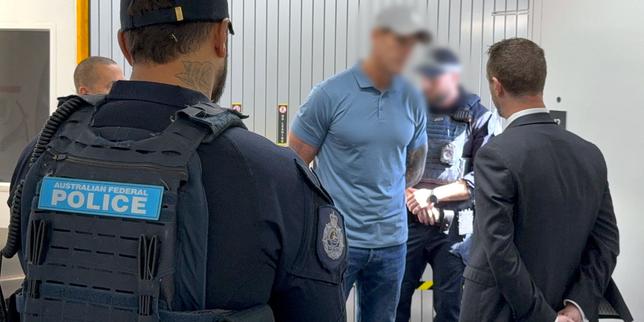
Australia’s military identity just hit a concrete wall. Ben Roberts-Smith, the man once hailed as the ultimate modern warrior, now faces the very real possibility of a prison cell. This isn't just about one soldier's fall from grace. It’s about the systemic failure of a culture that prioritized medals over morality in the dust of Afghanistan. For years, the Australian public saw a hero. Today, they see a defendant.
The recent charges against the Victoria Cross recipient follow a landmark defamation loss that basically stripped away his shield of invincibility. Federal police have finally moved from investigations to indictments. It's a messy, uncomfortable moment for a nation that ties much of its pride to the "Anzac" spirit. If you think this is just another legal battle, you're missing the bigger picture. This is a reckoning for the Australian Defence Force (ADF).
Why the Charges Against Ben Roberts Smith Changed Everything
For a long time, Ben Roberts-Smith was untouchable. He was the most decorated living soldier in the country. He stood as a symbol of bravery, a giant of a man who supposedly did the impossible on the battlefield. But the Brereton Report changed the math. That inquiry found "credible information" of 39 unlawful killings by Australian special forces.
The current charges focus on specific incidents in Afghanistan. We’re talking about allegations that go far beyond the "heat of battle" defense. Prosecutors are looking at the execution of non-combatants and prisoners. When a soldier kills a person who is under control—meaning they're handcuffed or no longer a threat—that’s not war. It’s a crime.
The legal process has been slow. Painfully slow. Families in Afghanistan have waited over a decade for any semblance of justice. Meanwhile, Roberts-Smith maintained his innocence, funded a massive legal team, and worked as a high-level media executive. The contrast between his life in Sydney and the allegations from villages like Darwan is staggering.
The Myth of the Untouchable Special Forces
We often treat Special Air Service (SAS) operators like they're characters in a movie. They operate in the shadows. They're the best of the best. But that "warrior culture" can easily rot when there's zero oversight. The allegations against Roberts-Smith suggest a environment where "blooding" new soldiers—forcing them to kill a prisoner to get their first kill—became a sick ritual.
The Australian government spent years trying to keep these stories under wraps. They raided journalists' offices. They intimidated whistleblowers like David McBride, who actually ended up in prison before the soldiers he blew the whistle on. It’s a backwards reality. You've got a guy who told the truth behind bars, while the man accused of kicking a handcuffed villager off a cliff was a free man for years.
The evidence presented during the defamation trial was harrowing. Witnesses described a culture of silence. Soldiers were afraid to speak up against their superiors. Roberts-Smith wasn't just a soldier; he was a brand. Breaking that brand took immense courage from the few SAS members who chose to testify against him. They’re the ones who actually upheld the values the military claims to represent.
The Evidence That Broke the Case
The shift from a civil defamation case to criminal charges is a massive leap. In the defamation trial, the newspapers only had to prove their claims were "substantially true." In a criminal court, prosecutors have to prove guilt beyond a reasonable doubt. That’s a much higher bar.
But the testimony already on the record is devastating. We heard about:
- The 2009 killing of a man with a prosthetic leg, which was then allegedly taken back to the SAS base and used as a drinking vessel.
- The 2012 incident in Darwan, where a villager named Ali Jan was reportedly kicked off a cliff and then shot.
- Persistent bullying of subordinates to ensure their silence.
These aren't just "missteps." They're fundamental breaches of the Geneva Convention. If the ADF wants to keep its international standing, it can't look the other way. You don't get a free pass on murder just because you're wearing a uniform and have a medal pinned to your chest.
Accountability Is Not a Weakness
A lot of people argue that we shouldn't judge soldiers from the comfort of our living rooms. They say war is hell and "stuff happens." That’s a lazy argument. Professional soldiers are trained specifically to handle high-pressure environments without losing their humanity. Rules of engagement exist for a reason. Without them, an army is just a gang with better equipment.
The prosecution of Roberts-Smith is a signal to the entire ADF. It says that the "shield of the VC" doesn't exist anymore. It tells every young recruit that their primary loyalty is to the law, not to a charismatic commander who thinks he’s above it. This trial will be grueling. It will be expensive. It will likely take years to reach a verdict. But it's necessary.
Australia has spent millions of dollars on this investigation. Critics say it’s a waste of money or a "witch hunt." I’d argue that the real waste is the loss of our national integrity if we ignore these claims. You can't claim to be a moral leader in the Pacific or a champion of human rights while ignoring war crimes in your own backyard.
What Happens to the Victoria Cross
There’s a massive debate about whether Roberts-Smith should keep his medals. Usually, if a soldier is convicted of a serious crime, their honors are forfeited. It’s a symbolic move, but a powerful one. Stripping a Victoria Cross is almost unheard of in modern times.
But the medal represents "valour in the face of the enemy." If the "valour" was built on a foundation of lies or if the soldier committed atrocities elsewhere, the medal becomes a mockery. Many veterans feel that his actions have tarnished the honor for everyone else who wears it. They want the military to distance itself from him as fast as possible.
The Road Ahead for Australian Military Justice
The Office of the Special Investigator (OSI) is still digging. Roberts-Smith is the biggest name, but he isn't the only one under the microscope. We’re likely to see more charges against other personnel in the coming months. This is a top-to-bottom scrub of the special forces.
It’s a painful process for the families of those involved, on both sides. But it’s the only way to heal the rift between the military and the public. Transparency is the only thing that works here. No more redacted documents. No more "national security" excuses to hide bad behavior.
If you’re following this case, watch the witnesses. The real story isn't just in the indictments; it's in the courage of the soldiers who decided that their oath to the country mattered more than their "brotherhood" with a man they saw commit crimes. That's where the actual "Anzac" spirit lives now.
Pay attention to how the government handles the whistleblower protections moving forward. If we want to prevent this from happening again, we have to make it safe for soldiers to report wrongdoing the moment it happens. The current system failed because it took a decade and a multi-million dollar defamation suit to bring these facts to light. That’s a failure we can’t afford to repeat.
Keep an eye on the court dates and the specific witness testimonies as they emerge. The legal defense will likely lean heavily on the "fog of war" and the unreliability of memory after ten years. It’s going to be a brutal fight in court. But for the sake of the victims and the integrity of the ADF, it’s a fight that has to happen.
If you want to understand the impact of these events, read the Brereton Report for yourself. It’s a grim read, but it provides the context that no news soundbite can capture. It shows exactly how the culture broke and why these charges were the only logical conclusion. Don't look away just because it's uncomfortable.