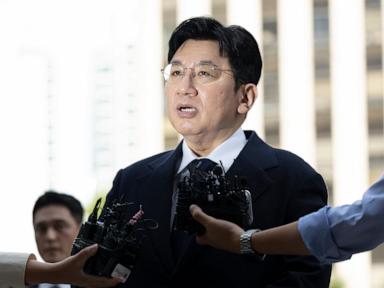
The myth of the K-pop visionary is currently dissolving in a Seoul police precinct. For years, Bang Si-hyuk—the man known as "Hitman" Bang—was the untouchable architect of the BTS phenomenon, a figure who transformed a debt-ridden label into a multi-billion dollar conglomerate. But today, the Seoul Metropolitan Police Agency has shattered that veneer of corporate invincibility by requesting a formal arrest warrant for the HYBE chairman.
The allegations are not merely a matter of administrative oversight. Investigators claim Bang orchestrated a sophisticated investor fraud scheme that netted approximately $136 million in illicit gains. At the heart of the probe is a 2019 shell game where Bang allegedly convinced early investors that HYBE had no plans to go public, only to push them into selling their shares to a private equity fund linked to his own associates. When the company hit the KOSPI exchange in 2020, that fund liquidated its position, with Bang reportedly pocketing a 30% cut of the profits through a secret return-sharing agreement.
This is the brutal reality behind the "HYBE Way." While the world watched BTS conquer Wembley and the Grammys, the man behind the curtain was allegedly rigging the financial plumbing of his empire to ensure he was the primary beneficiary of the transition from music label to tech giant.
The Mechanics of the $136 Million Deception
The South Korean Capital Markets Act is notoriously rigid, and the police case against Bang suggests he may have crossed lines that even the most aggressive Western venture capitalists would fear. The investigation centers on the timeline between late 2019 and the blockbuster 2020 IPO.
According to police filings, Bang personally met with stakeholders to downplay the possibility of a public listing. By creating a false sense of stagnation, he allegedly induced these shareholders to offload their equity at a suppressed valuation. The buyer? A private equity vehicle that authorities believe was a proxy for Bang’s personal interests.
The Hidden Dividend
- The Buy-In: Investors were told a public exit was years away, if it happened at all.
- The Proxy: Shares were moved to a fund allegedly operating under a "return-sharing" contract with Bang.
- The Exit: The 2020 IPO sent valuations into the stratosphere, allowing the fund to sell high.
- The Kickback: Bang allegedly received 190 billion KRW (roughly $136 million) from the fund’s profits.
If these allegations hold, this wasn't just savvy business. It was a calculated breach of fiduciary duty. In the high-stakes world of Korean finance, where "chaebol" style management often clashes with modern transparency standards, Bang’s alleged actions represent a throwback to an era of opaque governance that South Korea has been trying to leave behind.
The Civil War and the Cultural Cost
The timing of this arrest warrant could not be more catastrophic for HYBE. The company is currently bleeding from self-inflicted wounds following a vicious, years-long public feud with Min Hee-jin, the former CEO of ADOR and creator of NewJeans.
Just weeks ago, a Seoul court dealt a massive blow to HYBE’s credibility by ruling in favor of Min, ordering the company to pay her 25.5 billion KRW in a put-option settlement. The court's findings were damning, explicitly stating there was no evidence Min intended to sabotage the company. Instead, the ruling suggested that HYBE’s internal culture was one of aggressive litigation and territorial warfare.
This internal instability has created a vacuum of leadership. Bang, who has been under a travel ban since August 2025, has spent more time in legal strategy sessions than in recording studios. The creative engine that made HYBE a global force is idling. While BTS members are preparing for their "Arirang World Tour" following their military service, the infrastructure supporting them is effectively decapitated.
The Institutional Failure of HYBE
The fundamental problem with HYBE is that it was built as a cult of personality centered on Bang Si-hyuk. When a company is this vertically integrated around the whims and "creative genius" of one man, his legal peril becomes a systemic risk.
For years, analysts warned that HYBE’s aggressive acquisition strategy—buying up labels like Pledis, Source Music, and even Scooter Braun’s Ithaca Holdings—was an attempt to mask a looming reliance on a single group and a single executive's vision. Now, that house of cards is shaking. The police are no longer asking if Bang is a genius; they are asking if he is a criminal.
The Seoul Metropolitan Police Agency's financial crimes division has indicated that their investigation is "essentially complete." This suggests they have more than just circumstantial evidence. They likely have the paper trail of the return-sharing agreements and the testimony of the private equity managers who facilitated the trades.
A Reckoning for K-Pop Governance
This isn't just about Bang Si-hyuk. It is a referendum on the entire K-pop industry's transition into a global financial asset class. For decades, the industry operated on "handshake deals" and intense loyalty. But as the numbers moved from millions to billions, the old ways of doing business became liabilities.
If the court grants the arrest warrant, HYBE faces a total institutional collapse. Shareholders are already bracing for a massive sell-off as the company’s "Key Man Risk" graduates from a theoretical concern to a documented catastrophe. The irony is palpable: the man who taught the world that K-pop could be a professionalized, global business may end up being the one who proves it is still a Wild West governed by ego and shadow deals.
Bang Si-hyuk wanted to build a legacy that outlasted his artists. He may have succeeded, but not in the way he intended. Instead of being remembered as the mentor to BTS, he may be remembered as the cautionary tale of what happens when a music mogul forgets that the stock market has a longer memory than a fandom.
The next 48 hours will decide the fate of the most powerful man in music. If the warrant is signed, the "Hitman" era is over, and the reconstruction of the K-pop industry will begin in the ruins of HYBE.