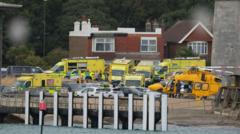
Tragedy strikes in seconds. The ocean looks calm. A family wades into the surf. Within minutes, a relaxing beach day turns into an unimaginable disaster. Three lives lost because the sea doesn't care who you are.
It happens every single summer. People underestimate open water. They think knee-deep means safe. They think swimming parallel to the shore is a myth.
Let's look at the reality of coastal dangers. Why do families get into difficulty in the sea? How do rip currents work? What can you actually do to survive a sudden pull from the tide?
The Illusion of Safety at the Shoreline
Water looks inviting on a hot day. The waves crash playfully. Kids splash near the edge. Adults relax on towels nearby, glancing up every few seconds.
Then a sudden drop-off catches someone off guard. A powerful wave knocks them down. Panic takes over.
Most people don't realize how quickly coastal conditions change. A sandbar shifts overnight. A hidden trough forms just feet from dry sand. You step off the ledge, lose your footing, and the panic cycle begins. Adrenaline floods your system. You swallow saltwater. You gasp.
Water safety experts constantly preach about situational awareness. But awareness means nothing if you don't know what to look for. The sea hides its traps in plain sight.
Understanding the Invisible Killer
Rip currents are responsible for the vast majority of water rescues and drownings worldwide. They are fast-moving channels of water pulling away from the shore. They look calm. In fact, people often seek them out because the surface appears smoother than the churning waves on either side.
That smoothness is a trap.
If you get caught in a rip current, your first instinct is to swim straight back toward the beach. Fight the water. Beat the current with sheer muscle.
That instinct kills.
Even Olympic swimmers cannot fight a strong rip current head-on. You exhaust yourself in minutes. You swallow water. You sink.
How to Break the Grip of a Rip Current
Survival requires counterintuitive action. You must swim parallel to the shoreline. Get out of the narrow channel of moving water first. Once you escape the current's pull, you can swim diagonally back to the sand.
If you cannot swim out of it, float. Conserve your energy. Signal for help by waving an arm and shouting. Let the current carry you out past the break zone, where the force usually dissipates.
Panic is the real enemy. Fighting exhausts you faster than anything else.
The Danger of Family Rescues
When a child or a loved one screams for help in the water, logic disappears. Adrenaline surges. You jump in to save them.
This is how multiple family members perish in a single incident.
Rescuing someone in open water is brutally difficult. A panicked person will climb on top of you, pushing you under to keep themselves above water. Lifeguards train for years to handle this exact scenario. An untrained parent or sibling stands almost no chance.
Before you dive in, grab a flotation device. Anything that floats helps. A cooler lid, a boogie board, a life jacket. If you don't have something, think twice about entering heavy surf without backup. Call 911 or the local emergency number immediately. Direct someone on the beach to keep eyes on the victims while help is on the way.
It sounds cold to hesitate when your child is drowning. But a double tragedy helps no one.
Prevention Beats Survival Every Time
You can't rely on luck. You have to stack the deck in your favor before you even touch the sand.
Check local beach flags before swimming. Red means danger. Double red means closed. Yellow means caution. Too many people ignore these warnings because the sun is shining and the weather looks fine. Flags indicate underwater hazards you cannot see from your towel.
Swim only where lifeguards are present. Statistics from rescue organizations prove that drowning rates drop dramatically on guarded beaches. If a beach has no lifeguard, assume the risk is entirely yours.
Teach children to respect the ocean. Make sure they understand that water commands respect. Never turn your back on the surf. Sneaker waves can sweep adults off rocks and pull children out from shallow water in a heartbeat.
Stay sober near the water. Alcohol impairs judgment, slows reaction times, and accelerates hypothermia. A few drinks by the cooler mix terribly with sudden ocean currents.
Respect the Power of the Ocean
The sea does not negotiate. It does not care about your vacation plans. It operates on physics, tide charts, and raw power.
When tragedies happen, communities mourn. Headlines read about sudden accidents. But most of these events stem from predictable hazards that people simply didn't recognize in time.
Keep your eyes open. Know the warning signs. Teach your family how to handle a current before you ever pack your beach bags.
Stay out of the water when conditions look rough. No swim is worth your life.