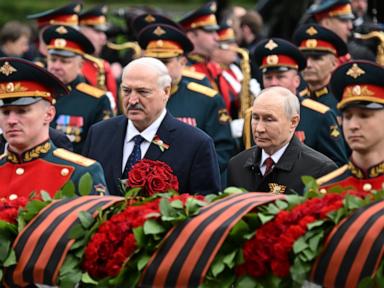
Whenever Vladimir Putin needs to rattle nerves in the West or force Ukraine to divert its troops away from the eastern front lines, he drops a familiar hint. He hints that Belarus might finally join the fight, or that Russian forces might use their northern neighbor to mount a massive new ground invasion aimed straight at Kyiv again.
Lately, the sirens have been blaring louder. Kyiv is warning that Alexander Lukashenko, the autocratic ruler of Belarus, is coming under intense pressure from Moscow. We are seeing joint tactical nuclear drills. We are hearing furious rhetoric from Belarusian military officials about alleged Ukrainian drone incursions.
It feels like February 2022 all over again.
But if you look past the standard headlines, a full-scale ground invasion from the north isn't the real danger right now. In fact, focusing purely on a ghost army of Russian tanks crossing the northern border means you're missing the actual, highly dangerous shift happening right under our noses.
The Ground Invasion Myth
Let's look at the actual math and geography here. When Russia launched its initial, disastrous charge toward Kyiv from Belarusian territory in 2022, it caught Ukraine relatively off-guard. Today, that northern border is a fortress. Ukraine spent years heavily mining the forests, blowing up bridges, flooding river basins, and lining the entire frontier with deep defensive fortifications.
An army cannot simply stroll through the Pripet Marshes anymore.
According to recent data from the Institute for the Study of War (ISW), there's no massive buildup of Russian or Belarusian troops on the border capable of executing a successful ground invasion. Lukashenko’s own army is notoriously small, poorly equipped, and politically unreliable. He knows that sending his troops across the border would likely trigger massive domestic unrest, the last thing a dictator who barely survived the 2020 mass protests wants.
Putin doesn't have the spare reserves to back him up either. Russia’s army is completely stretched across massive frontline battles in places like Kramatorsk, Huliaipole, and Lyman. They simply don't have the hundreds of thousands of fresh troops required to break through Ukraine’s reinforced northern defense lines.
So if a ground invasion is a long shot, why is the tension spiking?
The Real Threat Is Airborne
The actual danger isn't infantry; it's drones and logistics. Russia and Belarus are actively setting the stage to justify launching continuous drone strikes against western Ukraine directly from Belarusian airspace.
Think about why this matters. Currently, Ukraine relies heavily on ground supply lines running from Poland and Slovakia through western Ukrainian oblasts. Highways like the M-06 and the connecting railway networks are the absolute arteries keeping Ukraine's military fed, armed, and fueled.
Right now, Russian drones launched from Russian territory or occupied Crimea struggle to strike these western supply routes with high precision. They have to fly a long way through dense Ukrainian air defense networks.
Launching from Belarus changes the geometry completely.
By operating cheaper Molniya drones and Shahed-type loitering munitions from Belarusian soil, Russian forces can target western Ukraine from much closer range. It allows them to bypass major air defense concentrations and strike moving targets along those crucial logistics routes with far greater accuracy.
To build a pretext for this, Belarusian Security Council Secretary Lieutenant General Alexander Volfovich recently claimed his forces "recorded" 116 attempts by Ukrainian drones to cross into Belarus, explicitly targeting border infrastructure. It's a classic playbook. They create a narrative of Ukrainian aggression to justify "retaliatory" Russian strikes from Belarusian bases.
Deep Strategic Depth for the Kremlin
Even without sending a single soldier into battle, Lukashenko is providing Putin with something almost as valuable as troops: economic and industrial strategic depth.
Ukraine’s highly effective, long-range drone campaign has hammered Russia’s domestic oil infrastructure, forcing major installations like the Syzran Oil Refinery to halt operations. To keep its war machine running, Russia has quietly started relying on Belarus to bail it out. Data from the St. Petersburg Exchange shows Russian traders purchasing tens of thousands of tons of Belarusian gasoline to offset domestic shortages.
Furthermore, Belarus acts as a giant, protected manufacturing hub. Its factories produce critical electronic components, heavy machinery, and military hardware components for Moscow, completely shielded from the frontline artillery strikes that plague Russian facilities closer to Ukraine.
Kyiv’s Counter Strategy
Kyiv isn't just sitting back and watching this play out. They've shifted their political strategy in a way that should make Lukashenko very nervous.
In a massive departure from their previous, cautious policy of trying not to provoke the Belarusian dictator, Ukrainian President Volodymyr Zelenskyy recently held a formal, high-profile meeting in Kyiv with Sviatlana Tsikhanouskaya, the exiled leader of the Belarusian democratic opposition.
By rolling out the red carpet for Tsikhanouskaya, Ukraine sent a direct warning to Minsk: if you let Russia escalate attacks from your territory, we will actively work to destabilize your regime from the inside out.
And the military warnings are even sharper. Robert “Magyar” Brovdi, a prominent commander within Ukraine’s Unmanned Systems Forces, publicly declared that Ukraine has already identified its first 500 military targets inside Belarus. The message is clear: the moment a drone or missile flies south from Belarus, Kyiv’s long-range strike drones will hit back, hard, against Belarusian military bases and infrastructure.
What Happens Next
If you want to track where this situation is actually heading, stop watching for tank movements on TikTok videos and start paying attention to these specific actions:
- Watch the electronic warfare deployments: Look for reports of Russia moving specialized electronic warfare units and advanced radar systems into southern Belarus. This signals preparation for an aerial campaign, not a ground push.
- Monitor the border rhetoric: Keep a close eye on state media reports from Minsk regarding border incidents. If the claims of "Ukrainian provocations" intensify, a drone-led escalation is likely imminent.
- Track the western logistics routes: Pay attention to air raid alerts in western Ukrainian cities like Lviv, Rivne, and Lutsk. An uptick in strikes there will confirm that Russia has successfully utilized the Belarusian shortcut.
The threat from the north is real, but it isn't the one most people are talking about. It's an airborne, economic, and logistical partnership designed to choke off Ukraine’s Western supply lines while keeping Russian forces safe from direct exposure.


