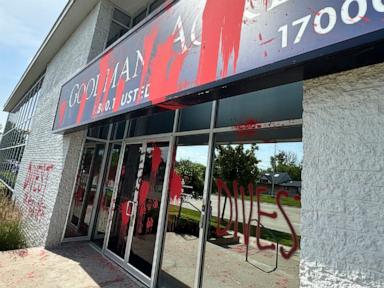
Free speech stops where criminal intimidation begins. You can shout, march, and organize all day long. But the second you start terrorizing university officials at their private homes and leaving fake bloody corpses on lawns, you cross a major line.
Federal prosecutors unsealed an indictment on June 10, 2026, charging eight pro-Palestinian activists with a conspiracy to run a targeted intimidation campaign against University of Michigan officials. This isn't your standard campus protest drama. It is a massive escalation that brought the Department of Justice directly into the fight.
The Department of Justice isn't targeting peaceful dissent. They're going after coordinated tactics designed to rule by fear. If you want to know how campus activism turned into a federal conspiracy case, look at the specific lines these activists crossed.
The Tactics That Triggered Federal Indictments
Campus protests over the Israel-Hamas war have been a fixture since late 2023. Protesters wanted the University of Michigan to divest its multi-billion-dollar endowment from companies with ties to Israel. The university repeatedly stated it holds no direct investments and less than $15 million in funds that might include Israeli companies.
Protesters shifted from campus quadrangles to personal residences when university administrators didn't budge. The federal indictment details a series of escalations that prosecutors say went far beyond protected speech.
- Fake bloody corpses: Activists allegedly placed simulated blood-soaked bodies on the lawn of an elected university board member.
- Targeted home vandalism: Activists spray-painted anti-Israel messages at the private residence of Santa Ono, the University of Michigan president at the time of the incidents.
- Hamas symbolism: The indictment explicitly states that the defendants marked their victims' property with symbols used by Hamas, including red inverted triangles and red handprints.
- Corporate and community targeting: The campaign extended past university staff to include vandalism against local Michigan businesses and the Jewish Federation of Metropolitan Detroit.
U.S. Attorney Jerome Gorgon Jr. made the government's stance clear when unsealing the charges in Detroit. He emphasized that the U.S. rules by law, not fear, and called the attempts to terrorize officials anti-American.
Why the Department of Justice Took the Case
Many wonder why federal prosecutors intervened when local trespass and vandalism laws exist. The answer lies in the coordinated, cross-state nature of the campaign and the use of the internet to broadcast threats.
The activists used social media and digital platforms to amplify their actions. They wanted to ensure their targets, and the public, saw the threats. Using digital networks to coordinate and broadcast an intimidation campaign quickly turns a local misdemeanor into a federal conspiracy.
The geographic footprint also widened the case. While six of the defendants made their initial appearances in a Detroit federal court, law enforcement arrested another defendant in Wisconsin. One individual remains out of custody. This cross-state movement and digital coordination give federal agencies the jurisdiction they need to step in.
The Breakdown of Local and State Prosecutions
The federal intervention follows a messy history of local legal battles over these same protests. The legal landscape in Michigan has been a pendulum of dropped charges and political finger-pointing.
Michigan Attorney General Dana Nessel previously faced heavy criticism for her office's handling of campus demonstrators. In May 2025, Nessel dropped felony charges against seven protesters arrested at a University of Michigan encampment. Defense attorneys successfully argued that Nessel had conflicts of interest, pointing out that university regents had contributed tens of thousands of dollars to her campaigns. Her office faced accusations of selective prosecution.
While state-level cases fell apart amid political fighting, the Feds quietly built a separate case. They focused on specific, targeted acts of harassment against individuals rather than the general campus encampments.
The Fight Over the First Amendment
The defense will almost certainly frame this case as a direct attack on free speech. Defense attorneys involved in previous iterations of these campus cases have consistently argued that the university and the state are trying to criminalize dissent.
A separate federal civil lawsuit filed by student workers who were fired after participating in protests is currently moving through discovery. In April 2026, a federal judge allowed those student workers to pursue First Amendment retaliation claims against the university. Activists point to that ruling as proof that the university has a history of heavy-handed repression.
But the federal criminal indictment cuts through that argument by focusing on the venue and the nature of the actions. The First Amendment protects your right to call a university policy unjust. It doesn't protect your right to show up at a regent's private home in the middle of the night to deface their property and drop mock corpses on their grass.
What This Means for Campus Activism Moving Forward
This federal case sets a massive precedent. It signals to student groups and outside activists nationwide that the Department of Justice is watching.
If you are involved in campus organizing or advocacy, the boundaries are now explicitly clear. You cannot use digital tools to coordinate targeted harassment campaigns against specific administrators outside of school property. The moment your activism shifts to a person's home or involves symbols associated with designated terror organizations to induce fear, local police won't be the only ones showing up. The Feds will take the wheel.
Organizations must keep their actions tied to public forums, campus spaces, and policy debates. Coordinated campaigns aimed at individual intimidation will land you in a federal courtroom, facing years in prison instead of a minor campus suspension. Expect federal prosecutors to push hard for convictions in Detroit to establish a firm boundary for political dissent across the country.