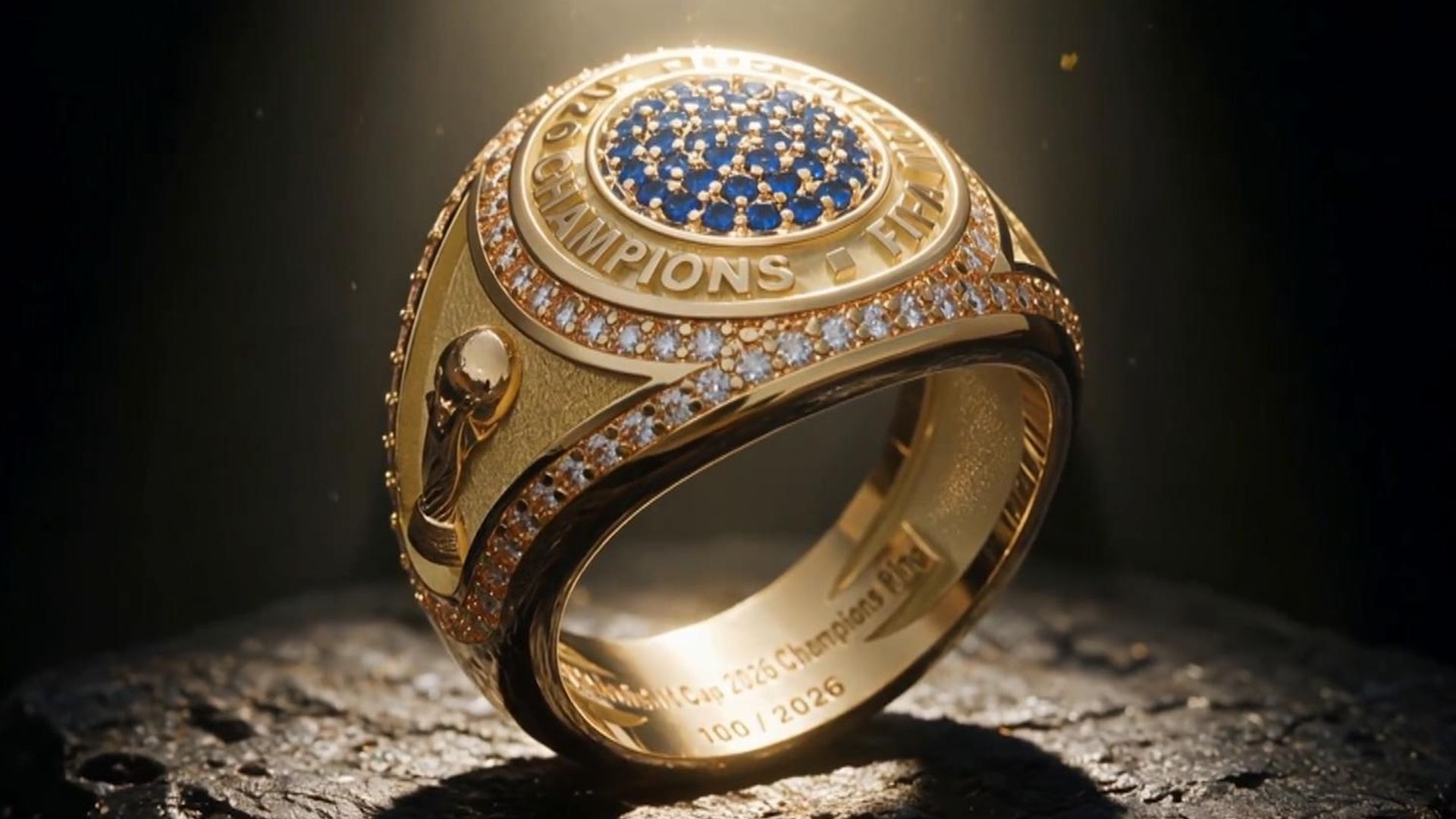
Purists are going to hate this. Football has spent nearly a century honoring its world champions with two sacred things—a heavy gold trophy and a shiny medal hung around the neck. But FIFA just decided that tradition isn't flashy enough for the biggest World Cup in history.
When Argentina and Spain walk out at MetLife Stadium for the 2026 World Cup final, they aren't just playing for eternal glory. They're playing for jewelry.
FIFA officially announced a major cultural departure by introducing US-style championship rings for the tournament winners. It's a blatant nod to the sports culture of the host nation, planting a loud, diamond-encrusted American tradition directly onto the grandest stage in global football.
If you think this is just a quick gimmick, look closer at the numbers. FIFA is treating this like a massive commercial rollout.
The anatomy of the 2026 World Cup ring
Football players usually hide their winners' medals away in private safes or bank vaults. FIFA's public stance is that a championship ring gives these players a wearable, everyday token of their triumph. Let's be honest, though. It's also an incredibly smart marketing play.
The governing body plans to produce exactly 2,026 rings to match the tournament year. The breakdown reveals who actually benefits from this stunt
- 30 rings go directly to the winning players and coaching staff.
- 1,996 rings are being funneled straight to the public as official licensed memorabilia.
The pieces are crafted from high-purity gold and packed with heavy diamond inlays. Each individual ring will carry its own unique serial number and a certificate of authenticity. For the design, one side prominently displays the iconic FIFA World Cup trophy. The other side gets customized to show off the visual identity and colors of the winning country.
Estimates put the raw value of each ring somewhere between $30,000 and $50,000. Multiply that across the entire production run, and you are looking at a jewelry collection worth up to $100 million.
The logistics on final day will look a bit unusual. Right after the final whistle blows in East Rutherford, the winning captain and the head coach will receive temporary rings to wear during the chaotic on-field trophy presentation. The permanent, custom-fitted versions will be manufactured later once individual finger sizes are measured, ensuring the jewelry fits perfectly before a formal presentation down the line.
Catering to the American market
Don't fool yourself into thinking this is some organic evolution of the sport. This is a cold, calculated business decision. FIFA has desperately tried to fully conquer the North American corporate market for decades, and bringing the tournament to stadiums across the US, Canada, and Mexico is its golden ticket.
By adopting the championship ring—a concept deeply embedded in the DNA of the NFL, NBA, and MLB—FIFA is speaking a language American sports fans and commercial sponsors understand.
Interestingly, some modern players didn't wait around for FIFA permission anyway. After France won the tournament in 2018, Antoine Griezmann and Paul Pogba famously went out of their way to commission custom, multi-carat championship rings from a high-end jeweler in Los Angeles to hand out to the squad. They wanted that specific American sports luxury flavor. FIFA clearly took notes on that player behavior and decided it was time to control the narrative—and pocket the licensing cash.
Traditionalists will complain that this Americanizes a global game that didn't need fixing. They'll argue that a medal is a symbol of athletic honor, while a giant ring is just an oversized display of wealth. But FIFA doesn't care. The organization wants a spectacle that dominates social media feeds and commands insane prices in the sports memorabilia collector market.
Whether Lionel Messi or Lamine Yamal ends up sliding a massive gold ring onto their finger, the message is clear. The lines between global football culture and American entertainment have permanently blurred.
If you are an avid sports memorabilia collector trying to secure one of the 1,996 public allocation rings, keep your eyes locked tightly onto the official FIFA store immediately following the final match on Sunday. Expect bidding wars to erupt instantly, and make sure your capital is liquid before the allocation windows open.