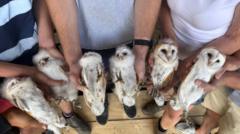
Everyone loves a clutch of six white owlets. The local papers run the photos with soft-focus affection. Headlines melt into warm platitudes about nature healing itself, resilient wildlife bouncing back against the odds, and the quiet triumph of rural biodiversity. It makes for good morning reading with a cup of coffee. It sells newspapers, drives clicks, and lets people feel warm and fuzzy about the state of the natural world.
It is also complete ecological illiteracy.
When a barn owl drops a hyper-extended brood of six or more chicks, you are not looking at a wildlife triumph. You are looking at a desperate, resource-starved emergency response to environmental collapse.
I have spent decades watching conservation media romanticize biological panic. I have stood in barns with ornithologists while well-meaning landowners point proudly to bursting nestboxes, completely blind to the fact that over-production is a symptom of extreme ecological volatility, not health. We need to stop cheering for demographic explosions and start asking why the parents felt forced to gamble everything on a single, high-risk reproductive roll of the dice.
The Boom and Bust Trap
Let us look at the mechanics of avian reproduction without the Disney filter. Barn owls do not operate on a fixed family planning schedule. Their clutch size is directly tethered to prey density, primarily micro-client rodents like field voles.
In a stable, high-quality ecosystem with a diverse prey base, predatory pressure is consistent. Clutch sizes hover around a manageable four. But when agricultural homogenization strips the landscape of biodiversity, you get erratic, boom-and-bust rodent cycles.
Imagine a scenario where a massive monoculture crop creates a temporary, artificial explosion of a single rodent species due to post-harvest grain availability. The local owls register a hyper-abundance of food for a micro-window of time. Their hormonal triggers override caution. They pump out six, seven, sometimes eight eggs.
This is known in population ecology as a maladaptive over-response. The parents are responding to a localized, fleeting spike in calories, completely blind to the impending crash.
When those six white owlets hatch, the clock starts ticking down to a massacre.
The Brutal Math of the Brood
An owl nest does not distribute food evenly like a modern suburban household. It operates on strict hierarchy. Eggs are laid asynchronously, meaning they hatch days apart.
By the time the sixth owlet emerges from its shell, its oldest sibling is a heavily armored, voracious dinosaur twice its size. In a healthy, stable food market, the smaller chick might limp along. In reality, when the temporary vole boom inevitably collapses—as it always does when driven by intensive farming practices—the pantry goes empty overnight.
What happens next does not make the local news.
The parents cannot feed six rapidly growing apex predators. The starvation protocol kicks in. The older chicks consume their younger siblings, or the parents selectively neglect the runts to ensure the survival of just one or two strong genetic carriers. Finding a nest with six white owlets today usually means walking into a graveyard of stunted development and sibling cannibalism three weeks from now.
We are celebrating a tragedy in slow motion.
The Agricultural Sin We Ignore
Why are these population spikes happening with such erratic violence? Because our rural environments are broken.
Intensive, chemical-heavy farming has erased the hedgerows, rough margins, and permanent pastures that buffer wildlife against weather extremes. Instead of a steady, year-round supply of small mammals, modern farmland offers a volatile rollercoaster: absolute desert followed by sudden, artificial abundance, followed by sterile barrenness when pesticides and plowing wipe the slate clean.
When a pair of barn owls has to produce six chicks just to maintain replacement rates across a generationally degraded territory, the species is in trouble. High fecundity in a declining habitat is a classic extinction precursor. It is the biological equivalent of a living-paycheck-to-paycheck worker taking out high-interest payday loans to buy luxury groceries.
Yet, the public reaction remains hopelessly naive.
People see fluffy white feathers and assume habitat management is succeeding. They ignore the poisoned rodenticides accumulating in the food chain. They ignore the lack of safe roosting sites. They ignore the fragmented territories forcing birds to crowd into suboptimal agricultural outbuildings where a single modern machinery run can wipe out a breeding season.
Dismantling the Feel-Good Narrative
Let us address the common counter-argument: Surely more owls mean a better natural pest control service for farmers, right?
This is the favorite talking point of lazy green-marketing campaigns. Proponents argue that an army of hungry owlets will decimate local rodent populations, saving crops and reducing chemical use.
The data flatly contradicts this. A single family of owls during a forced over-production event cannot keep pace with commercial-scale rodent fluctuations driven by grain storage practices. Relying on erratic demographic spikes of predators for pest management is like relying on sudden lightning strikes to power your home. It is wildly unreliable, ecologically disruptive, and completely ignores systemic root causes.
Worse, when these massive broods face inevitable food shortages, the stressed juveniles disperse into unfamiliar territories, flying blindly across highways, colliding with wind turbines, or ingesting secondary anticoagulant rodenticides left out by panicked property owners. We are breeding them for the blender.
What Real Conservation Looks Like
If we actually care about barn owls, we need to stop treating them like local sports teams to root for based on seasonal headcount victories.
Real conservation is boring, systemic, and politically difficult. It means:
- Reversing agricultural intensification by forcing landowners to restore permanent grassy margins.
- Banning second-generation anticoagulant rodenticides that turn every field vole into a delayed-action poison pill for the predators above them.
- Prioritizing habitat carrying capacity over raw breeding numbers. A landscape that sustainably supports a pair of owls raising two healthy chicks year after year is infinitely superior to a ruined landscape that tricks a pair into attempting six, only to watch them starve.
Stop scrolling past pictures of oversized broods with a heart-eyes emoji. Start demanding policies that fix the broken food webs forcing these birds to gamble their lineage on a desperate dice roll.
The owls do not need your applause. They need a landscape that doesn't lie to them.