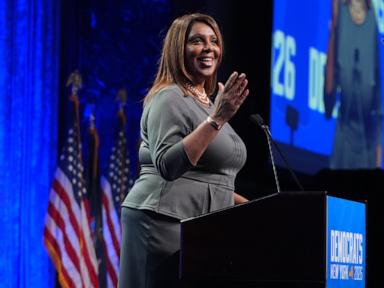
Five defendants named in a civil lawsuit over an alleged 2024 fraternity assault at Cornell University are pushing to disqualify New York Attorney General Letitia James from leading the reopened criminal investigation, arguing her public social media statements prove she cannot prosecute them impartially. The courtroom battle erupted after Governor Kathy Hochul removed Tompkins County District Attorney Matthew Van Houten from the probe on October 1 and tapped James as special prosecutor. Defense lawyers contend that James prejudged the allegations before taking over the case, while James has pushed back by naming former federal civil rights prosecutor Jacqueline Kelly to handle day-to-day investigative duties.
Strip away the cable-news noise, and this fight exposes a classic tension in modern prosecution. Prosecutors are expected to project fairness while also speaking to public trauma. When those two roles collide online, defense attorneys rarely miss the opening. In related news, we also covered: What Most People Get Wrong About California Commuting Over 500 Death Row Sentences.
The Social Media Post at the Center of the Dispute
The defense challenge hinges on what James wrote on September 28, three days before her special prosecutor appointment. Linking to coverage of the former student's civil lawsuit, James posted on X and Facebook that what the young woman was forced to endure was "horrific and unacceptable," adding that she was holding her in her heart and prayers and telling survivors they were not alone.
To defense counsel, those words read less like a neutral review of evidence and more like a verdict already formed. In criminal practice, prosecutorial impartiality is not an abstract ideal; it is the baseline standard that separates an officer of justice from an advocate chasing a headline. If the lead prosecutor publicly labels the alleged conduct "horrific and unacceptable" before grand jury presentment or charging decisions, defendants have a ready-made due process argument. NPR has also covered this critical issue in great detail.
James has defended the post as an expression of empathy rather than bias. Speaking at an October 8 debate, she argued that the comments reflected basic human compassion at a moment when public life needed more of it.
That defense is politically understandable. Legally, it is vulnerable. A prosecutor can care about victims of crime without declaring before a single witness is re-examined that an unproven civil complaint describes settled reality.
How a 2024 Allegation Became a State Special Probe
You cannot understand the disqualification fight without looking at why the case sat dormant for nearly two years. The civil complaint filed on September 16 alleges that the plaintiff was sexually assaulted at the Chi Phi fraternity house in October 2024 after drinking alcohol and being pressured into using ketamine and marijuana.
According to reporting on the timeline, she went to Cornell University police in November 2024 and was interviewed on November 14 and 15. That gap matters clinically and forensically. Alcohol clears the body quickly, and ketamine metabolites generally window out in urine within roughly two weeks depending on testing sensitivity and individual metabolism. By mid-November, toxicology evidence was already up against the clock.
Van Houten declined to bring charges in 2024, later stating that the sworn statement given to his office back then differed from what appeared in the civil suit. When the civil lawsuit surfaced in September 2026, public anger surged across Ithaca, prompting Van Houten to announce a reopened inquiry on September 28 before Hochul stepped in days later.
Why Governors Bypass Local District Attorneys
Removing a local district attorney from an active or reopened case is an extraordinary step. Hochul said she had lost confidence in the local office after serious questions emerged about how the 2024 investigation and records were handled.
State lawyers have argued in court that the governor possesses broad authority to appoint a special prosecutor and chose James because of her experience handling high-profile matters. Yet transferring authority from an elected county prosecutor to a statewide political figure inevitably raises the stakes. Every step looks magnified. Every public word carries extra weight.
The Jacqueline Kelly Workaround and Its Limits
On November 4, James announced that Jacqueline Kelly, a Cornell graduate, former chief of the Civil Rights Unit in the Southern District of New York U.S. Attorney's Office, and partner at Boies Schiller Flexner, would lead the day-to-day criminal investigation as outside counsel.
On paper, that move is smart damage control. Kelly brings serious federal prosecutorial credentials and some operational distance from the political spotlight surrounding the Attorney General. James stated she had full confidence Kelly would conduct a fair and thorough probe.
Defense lawyers were not impressed. Andrew Miltenberg, representing the defendant spearheading the removal push, argued in court filings that bringing in Kelly changes who runs the daily work but does not strip James of ultimate authority.
He has a point about hierarchy. Outside counsel hired by the Attorney General still answers to the Attorney General's office. Unless a court disqualifies James or her office recuses itself entirely, the chain of command still runs through the top lawyer who posted the September 28 statement.
What Defendants Are Actually Trying to Gain
Defense motions to disqualify a prosecutor are rarely filed purely out of philosophical purity. In high-tension cases, they serve concrete strategic goals:
- Delaying momentum: Challenging the prosecutor's authority slows down grand jury scheduling, subpoena enforcement, and investigative pressure while the court weighs the motion.
- Creating appellate leverage: Even if a trial judge denies removal now, preserving a record of alleged prejudgment gives defense teams ammunition for later motions or appeals if charges are filed.
- Drawing lines among co-defendants: Four defendants joined the push after a court deadline window, while two unrepresented defendants did not respond, highlighting how different lawyers are weighing risk across the seven men named in the suit.
It is also worth noting a detail that gets flattened in shorthand coverage: not every man named in the civil suit was accused of rape, and all seven former fraternity members have denied wrongdoing, with at least one moving to dismiss the civil claims against him. Conflating civil allegations across every defendant is a trap careful reporters and prosecutors both have to avoid.
Campus Fallout Runs on a Separate Track
While judges wrestle over prosecutorial authority, Cornell's leadership has moved aggressively to contain institutional damage. President Michael Kotlikoff suspended fraternity social events and parties for the remainder of the academic year under a zero-tolerance rule, barred the Chi Phi chapter, announced a broad review of Greek life and student housing, and tapped former Deputy U.S. Attorney General Sally Yates alongside King & Spalding to review campus sexual misconduct policies and handling of the October 2024 report.
Campus discipline and independent policy reviews operate under completely different standards than a criminal grand jury. A university can enforce housing rules, suspend chapters, or overhaul consent training without proving guilt beyond a reasonable doubt in a courtroom. A criminal prosecutor faces a far higher bar, especially when events occurred two years earlier.
Gray Areas Neither Side Wants to Admit
Neither side in this dispute holds clean moral or legal high ground. Critics of the defense effort see a cynical attempt to sideline a high-profile prosecutor over a tweet rather than confront serious allegations. Critics of the state's approach see a preventable self-inflicted wound: a seasoned attorney general commenting warmly on an active controversy days before taking charge of its criminal investigation.
If the court rules that James's remarks crossed the line into disqualifying bias, the state could face a messy reassignment that fuels accusations of political theater. If the court keeps her on the case, defense lawyers will scrutinize every investigative step for signs of selective zeal.
Watch how the presiding judge defines the line between public empathy and prosecutorial prejudgment, because that ruling will set the guardrails for every step of the reopened investigation that follows.