Everybody talks about modernising classrooms, but few people actually fix what is broken. Hong Kong’s education system sits at a strange crossroads. On one side, you have world-class universities and hyper-focused students. On the other, you find an archaic reliance on rote learning that leaves graduates ill-prepared for a world reshaped by artificial intelligence and shifting economic realities.
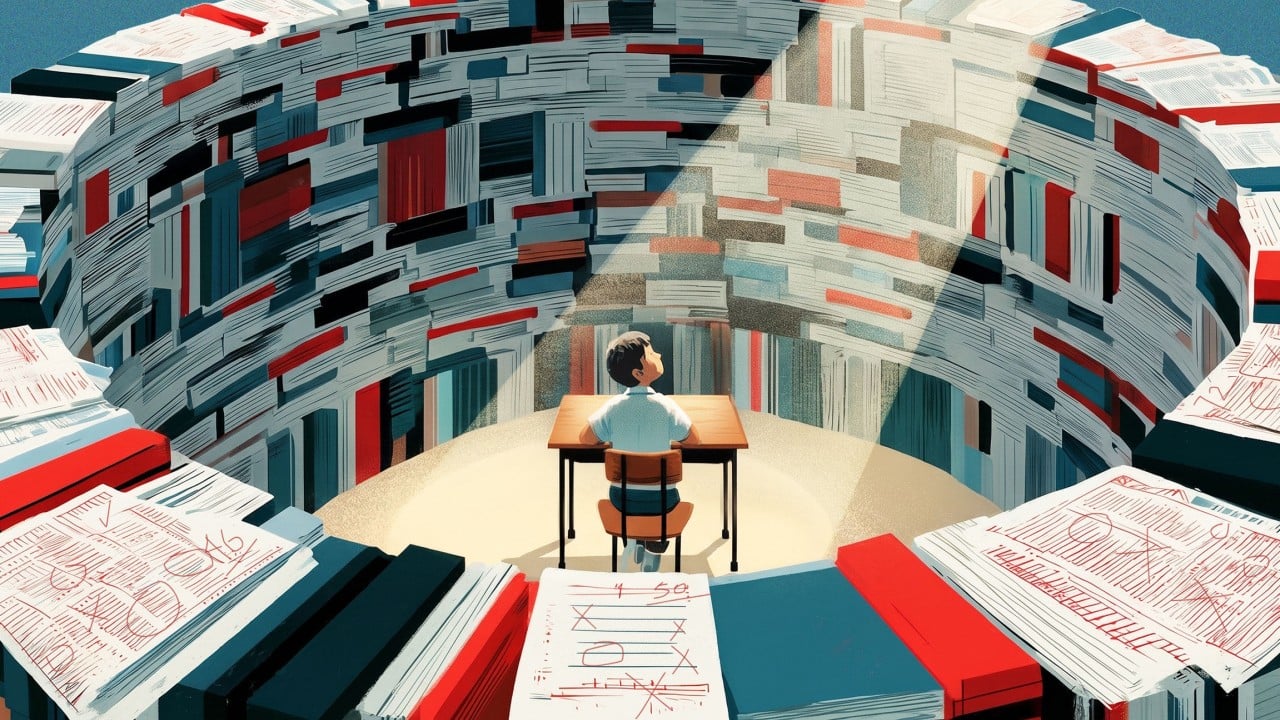
If you want to understand why local graduates face a tough job market, look no further than the obsession with standardized testing. Spoon-feeding kids just to pass high-stakes exams creates test-takers, not thinkers. To fix this, Hong Kong needs practical, immediate shifts rather than decades-long bureaucratic committees.
Rethinking Assessment in the Age of Artificial Intelligence
The Hong Kong Diploma of Secondary Education exam remains a relic of an industrial era. Students spend years memorizing essays and rehearsing formulas that any basic algorithm can solve in seconds. When generative tools can pass standard exams with top marks, testing memory is a waste of time.
Schools must pivot toward authentic performance tasks. Instead of asking students to regurgitate facts on paper, evaluation should measure how they analyze messy data, build projects, and solve real-world problems. Teachers need permission to grade the process of inquiry rather than just the final answer. If students can use any digital tool available to find a solution, the exam should test how well they curate, evaluate, and apply that information.
Expanding Global Perspectives Beyond Local Borders
Hong Kong has always prided itself on being an international financial hub. Yet, the secondary school curriculum often feels insular, treating global citizenship as an afterthought rather than a core requirement. Students rarely engage with peers outside their immediate region until they hit university, which leaves them vulnerable in a hyper-connected international job market.
The fix is straightforward. Schools need mandatory cross-border and international project-based collaborations. This means real partnerships with classrooms in Southeast Asia, Europe, and mainland China where students work together on environmental or technical challenges. Bringing in a higher percentage of international students and exposing local teenagers to diverse worldviews early on builds the adaptability they desperately need.
Creating Alternative Pathways Beyond the Traditional University Track
For decades, society pushed a single narrative: get good DSE scores, enter a local university degree program, and secure a traditional corporate job. That linear pipeline is cracking. The economy demands diverse skills, from specialized technical trades to creative digital design and applied sciences.
When young people feel forced onto a single academic track, anxiety spikes and disengagement follows. Vocational and applied learning pathways still carry an unfair social stigma in the city. Parents and educators need to treat alternative credentials, technical certifications, and entrepreneurship tracks as equal partners to traditional degrees. Giving students viable paths to earn a living without passing through the traditional university bottleneck will save thousands of kids from burnout.
Modernising education doesn't mean buying expensive tablets for every desk or rebranding old curriculums with buzzwords. It means throwing out obsolete testing models, opening doors to the wider world, and respecting different paths to success. Stop waiting for policy makers to figure it out. Push for these changes at the school board level and let the next generation actually prepare for the reality waiting outside the classroom door.