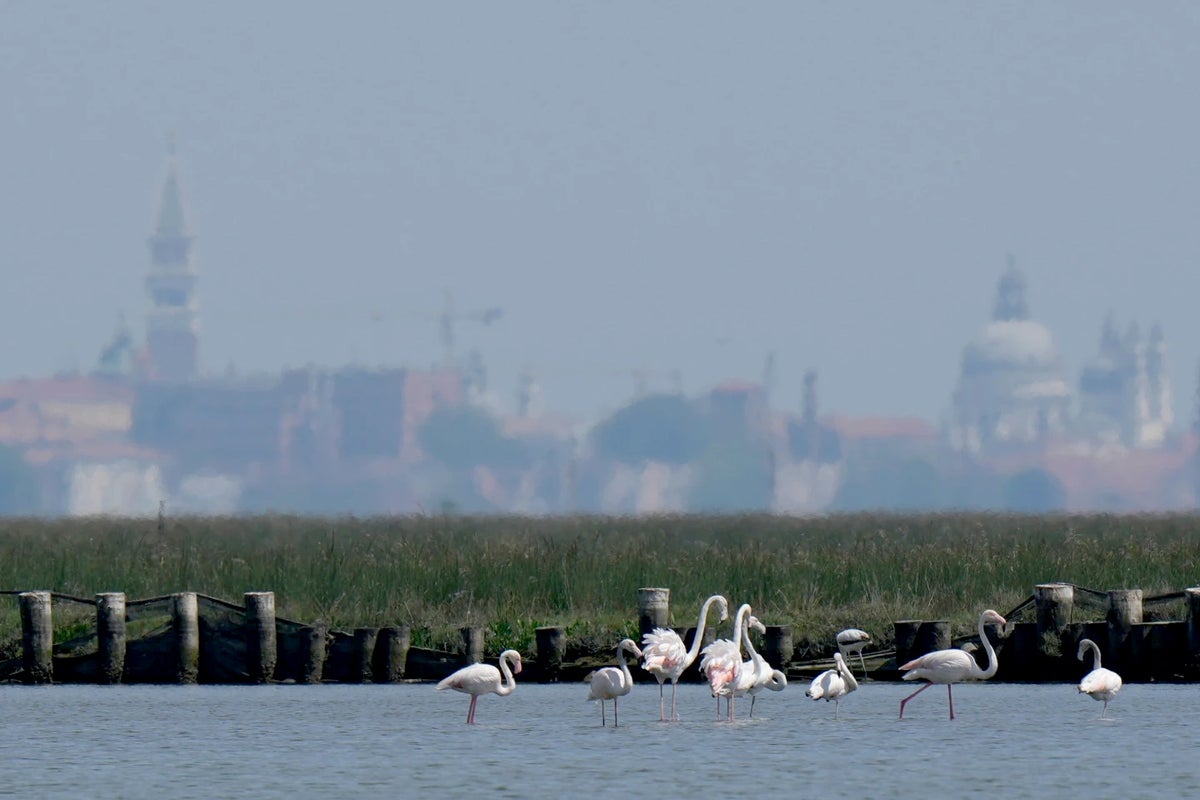
Venice is famous for its gondolas, historic canals, and crushing tourist crowds. But a massive environmental shift is happening right now in the city's shallow waters, far away from the St. Mark's square selfie spots. Pale pink flamingos are moving in. They are doing it in numbers nobody expected.
Last year, the wintering flamingo population in the Venetian Lagoon hit a record high of nearly 24,000 birds. That is a massive jump of up to 8,000 birds from the previous year alone. Local experts are realizing that Venice has quietly transformed into one of the most critical wintering spots for the European flamingo.
If you visit Venice hoping to see a pink wave from the Rialto Bridge, you're going to be disappointed. These birds stick to the isolated, muddy edges of the lagoon where deep-draft tourist boats cannot follow. Their sudden presence is not a random fluke of nature. It's the direct result of serious, multi-million-dollar engineering efforts designed to bring back the lagoon's dying ecosystem.
The Massive Loss of the Venetian Barene
To understand why flamingos love Venice right now, you have to look at what the city used to be. The Venetian Lagoon spans roughly 550 square kilometers. Centuries ago, nearly half of that entire area consisted of salt marshes. Locals call these unique mudflats barene.
These marshes are not just piles of wet dirt. They act as natural shock absorbers for the city. They soak up high tides, reduce the impact of storms, and clean the water. Over generations, heavy industrial shipping, deep channel dredging, and motorized boat waves eroded these mudflats. Today, only about 7% of the original salt marshes remain.
That is where the flamingos come in. As these marshes vanished, the birds lost their food. Flamingos are specialized filter feeders. They need shallow mud flats to stomp their feet, kick up silt, and filter out tiny brine shrimp and algae with their upside-down bills. Without the marshes, they have no reason to visit.
Rebuilding a Wetland From Scratch
The recent population boom is tied to a massive 23.6 million euro eco-project called WaterLANDS. Funded largely by the European Union, this five-year initiative aims to undo decades of coastal damage across Europe. In Venice, the local environmental group We Are Here Venice is leading the charge to literally rebuild the lost barene.
Engineers are using sediment and specialized native plants to reconstruct the marshes, particularly in the quiet southern lagoon past the industrial ports. They are building up mud flats that can withstand rising sea levels and capture carbon dioxide.
It is tedious, dirty work. But the birds noticed immediately.
Ornithologist Alessandro Sartori, who tracks the lagoon's bird populations by boat every single week, has watched the shift firsthand. In the southern lagoon, where wetland erosion was once catastrophic, flamingo counts went from just a few stray birds to regular flocks of 300 to 400. Rebuilt marshes mean more food, more space, and less human hassle.
Where the Flamingos Face Trouble
Right now, more than 90% of the lagoon's 24,000 flamingos still squeeze into the northern lagoon. This area holds the largest remaining pockets of natural salt marsh, along with traditional, embanked fishing valleys. These fishing valleys offer plenty of food, but they put the birds on a collision course with human activity.
Commercial fishing, hunting, and local boating create constant stress. Flamingos are incredibly skittish. A single pair of squawking oystercatchers or a low-passing motorboat can send a flock of thousands into a panic.
The real goal for scientists is not just keeping these birds fed for the winter. They want them to stay and nest. Right now, Venice is just a seasonal pitstop. The flamingos mostly breed in established colonies in France and Spain.
Nesting in Venice has been a historic failure. The birds tried to set up permanent colonies in the northern lagoon twice before, in 2008 and 2013. Both times, disasters wiped them out. A single violent summer hailstorm killed dozens of birds and crushed their delicate mud nest mounds.
By rebuilding the isolated southern marshes, conservationists hope to coax the birds away from the busy north. The southern lagoon offers a quieter space where a new breeding colony could actually survive a bad storm season.
How to Spot the Pink Newcomers Safely
If you are traveling to Venice and want to see this wildlife phenomenon, don't expect a casual viewing experience. The flamingos live in shallow, treacherous zones of the lagoon. Navigating these waters requires an intimate knowledge of local tides, hidden sandbars, and deep channels.
You can occasionally spot small flocks from the shores of the northern lagoon islands like Murano and Burano. If you want a closer look, you have to hire a licensed local guide with a flat-bottomed boat.
Keep your distance. Bring a high-powered pair of binoculars or a serious telephoto camera lens. If the birds stop feeding and raise their heads, you are too close. Respect their space, watch the tides, and leave the muddy shallows exactly how you found them.