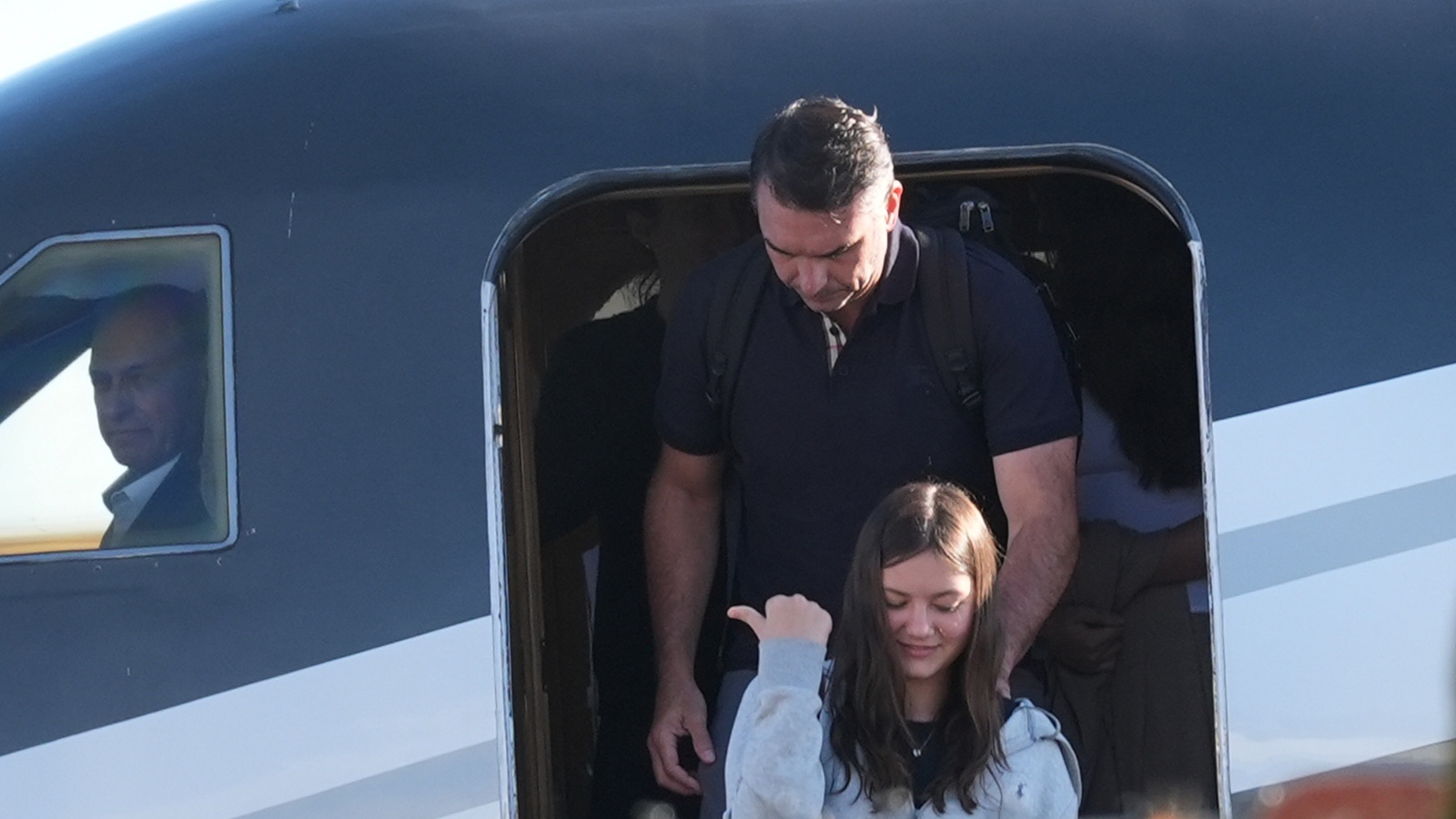
Mainstream political analysts love a simple story. A politician loses an election, packs a suitcase, boards a flight to South Florida, and hides from the fallout. That is the exact narrative currently dominating coverage of Flávio Bolsonaro arriving in Miami with backing from Donald Trump following Brazil's 2026 election defeat.
It is clean. It is easy to digest. And it completely misses how modern hemispheric politics actually works. If you enjoyed this post, you should check out: this related article.
For years, covering Latin American political movements has meant watching foreign commentators apply outdated, 20th-century coup-and-exile tropes to 21st-century media operations. When a high-profile figure from Brasília steps off a plane at Miami International Airport right after a painful loss at the ballot box, the lazy consensus screams "retreat." Journalists treat South Florida like a retirement home for defeated right-wing leaders, a sunny waiting room where political relevance goes to die.
They are looking at the map upside down. For another angle on this event, check out the recent coverage from Reuters.
Miami is not where Brazilian conservatives go to disappear. It is the offshore command center where they go to reload, fundraise, and bypass domestic institutional friction. By framing Flávio Bolsonaro's arrival—and Trump's public backing of his entry—as a simple tail-between-the-legs exit, pundits are ignoring the structural mechanics of transnational political survival.
The Myth of the Miami Exile
To understand why the standard media take fails, you have to understand what Miami actually represents in Brazilian politics.
If you look at immigration and census data from the last decade, South Florida has absorbed hundreds of thousands of Brazilian expats, business owners, and capital flight. Cities like Doral, Weston, and Brickell are not merely vacation spots for Brasília's elite; they are massive, concentrated nodes of Brazilian economic power operating outside the jurisdiction of Brazil’s Supreme Federal Court (STF).
When conventional reporters see Flávio Bolsonaro landing in Florida, they compare it to his father Jair Bolsonaro's trip to Orlando in late December 2022. They treat it as a rerun of the exact same movie. That comparison is sloppy.
In late 2022, Jair Bolsonaro was an outgoing president avoiding a ceremonial sash handover while facing immediate, chaotic legal exposure at home. Fast forward to November 2026. The political machinery of Bolsonarismo has had four years to professionalize its international infrastructure. Flávio—long considered the pragmatic, institutional dealmaker among the Bolsonaro brothers, distinct from Eduardo’s ideological firebrand persona—is not running away from a camera. He is stepping onto a bigger stage with fewer local constraints.
Imagine a scenario where a corporate executive loses a brutal proxy battle in their home country, where local regulators hold the power to freeze domestic bank accounts, subpoena communications, and restrict travel at a moment's notice. Does that executive stay in the local headquarters to get bled dry by legal fees and hostile press cycles? No. They relocate to the branch office in the world's largest financial market, where their biggest strategic ally holds executive power, and they keep running the company remotely.
That is what is happening in Miami right now.
What Trump's Backing Actually Signals
The second half of the competitor headline—that Donald Trump backed Flávio’s entry into the United States—is being treated by cable news panels as mere personal favoritism. A pat on the back between ideological allies.
Again, that reading is dangerously naive.
In diplomacy and immigration law, nothing involving a sitting U.S. administration and a prominent foreign senator happens by accident. Entering the United States as a foreign political figure carrying heavy domestic legal baggage is never just a matter of flashing a passport at customs. Depending on the visa classification—whether it is an A-1/A-2 diplomatic visa tied to active congressional duties in Brazil or a standard B-1/B-2 business and tourism entry—the Department of State and the Department of Homeland Security hold massive discretionary power over admissibility.
When Trump signals explicit support for Flávio Bolsonaro's presence on U.S. soil, it serves three cold, calculated functions:
- Jurisdictional Insulation: While an ordinary U.S. visa does not grant legal immunity from extradition treaties or Interpol notices, executive-level political backing creates massive friction against any rapid, politically motivated cross-border enforcement requests coming out of Brasília. It turns a routine legal transfer into a high-stakes diplomatic standoff that the White House has already signaled it will block.
- Legitimacy Laundering: An election loss erodes political capital overnight. Donors get nervous. Local coalition partners in Brazil's Centrão—the notoriously transactional bloc of center-right parties in Brasília—start looking for the next winning horse. Standing in the United States with the explicit blessing of the American president instantly signals to Brazilian donors and power brokers that the Bolsonaro brand still holds international weight.
- Asymmetric Media Warfare: Operating out of Florida allows political figures to speak directly to millions of Portuguese-speaking voters via social media platforms governed by U.S. First Amendment protections, safely removed from the aggressive content-removal orders frequently issued by Brazilian courts.
Anyone who thinks this is just about golf courses and beach weather does not understand how leverage works in Washington or Brasília.
Dismantling the Wrong Questions
When news breaks of a major political figure crossing borders after a defeat, search engines flood with the exact same predictable queries. Let's look at what people are asking—and why the questions themselves are built on faulty premises.
Is Flávio Bolsonaro seeking political asylum in the US?
This is the classic clickbait question, and the answer is almost certainly no. Applying for formal asylum under U.S. immigration law (Form I-589) requires proving a well-founded fear of persecution based on race, religion, nationality, political opinion, or membership in a particular social group. More importantly, filing for asylum traps the applicant inside the United States for years while backlogged immigration courts process the claim.
A sitting Brazilian senator with deep financial ties, active business interests, and an ongoing role in opposition politics does not want to be locked into asylum limbo. What they want is mobility—the ability to enter the U.S. freely, raise money, hold summits, and return to South America when the political winds shift. Trump’s backing ensures smooth entry without needing the desperate, career-ending label of an asylum seeker.
Does this mean the Bolsonaro movement is finally dead in Brazil?
Every election cycle since 2018, pundits have written obituaries for Bolsonarismo. Every single time, they confuse the defeat of a candidate with the death of an electorate.
Electoral defeats in polarized democracies rarely erase a movement; they usually radicalize its base and force its leadership to adapt. Roughly half of Brazil's voting population consistently aligns with conservative, anti-establishment, or right-wing economic policies. That demographic did not evaporate on election night. Moving key operations to Miami does not abandon those voters; it creates an untouchable offshore hub to keep them mobilized while the domestic opposition regroups.
Why would Trump spend political capital on a losing foreign politician?
Because in transactional geopolitics, you do not back allies only when they are winning; you back them to maintain pressure on your ideological rivals who are winning. A vocal, well-funded Brazilian opposition operating out of Florida acts as a constant counterweight to a left-wing government in Brasília, complicating Brazil's foreign policy alignment with BRICS nations and Beijing. For Washington, keeping the Bolsonaro network viable in Miami is a low-cost way to maintain a permanent foothold in South American domestic politics.
The Mechanics of Offshore Opposition
Let's strip away the partisan noise and look at the actual playbook being executed here. Having watched political consultancies and advocacy groups operate across the Americas for over a decade, the pattern is unmistakable. When a movement loses institutional control at home, it shifts from governing to campaigning in perpetuity.
Governing requires compromise, legislative math, and managing bureaucratic failures. Permanent campaigning requires only three things: a clear villain, an uninterrupted broadcast channel, and a steady flow of cash.
Miami provides all three.
First, look at the media ecosystem. Over the past several years, Brazilian conservative influencers, podcasters, and digital strategists have built professional studio operations in South Florida. When a high-ranking figure like Flávio Bolsonaro arrives, they do not have to beg hostile legacy networks in São Paulo or Rio de Janeiro for five minutes of airtime. They walk into state-of-the-art studios in Miami, record three-hour long-form podcasts, slice them into hundreds of vertical video clips, and beam them straight onto the smartphones of voters in Minas Gerais and Paraná.
Second, look at the legal insulation. In Brazil, the intersection of campaign finance investigations, defamation suits, and judicial inquiries into digital militias has turned domestic politics into a legal minefield. Operating from the United States forces any domestic investigator to navigate Mutual Legal Assistance Treaties (MLATs) to obtain records, bank statements, or testimony from U.S.-based entities. That process takes years, not days. By the time a subpoena clears diplomatic channels, the next election cycle is already underway.
Third, look at the networking density. South Florida has quietly become the Davos of the global populist right. Between Mar-a-Lago two hours north in Palm Beach and the dense concentration of conservative think tanks, PACs, and Latin American expat business associations in Miami-Dade County, a Brazilian politician can hold more high-level strategic meetings in one week in Florida than in six months in Brasília.
The Fatal Flaw in the Miami Strategy
Of course, contrarian analysis means nothing if you ignore the massive risks built into this exact playbook. Moving your center of gravity to Miami solves immediate legal and media problems, but it introduces a slow-acting poison that has killed plenty of opposition movements in the past: the exile disconnect.
Politics is still fundamentally local. While digital media bridges geography, it cannot replace physical presence when economic pain hits voters on the ground.
If Flávio Bolsonaro and his inner circle spend too much time basking in the warmth of Trump’s political protection in South Florida, they risk looking like wealthy tourists lecturing working-class Brazilians from air-conditioned condos in Brickell. Left-wing strategists in Brazil are already sharpening this exact attack line. Every photo of a Brazilian politician dining in Coral Gables or attending a gala in Palm Beach becomes instant ammunition for opponents back home to paint them as out-of-touch elites who abandoned their own voters the second things got tough.
Furthermore, relying on U.S. executive backing is inherently unstable. American political priorities shift every four years—sometimes every four weeks. What looks like ironclad support from the White House in November 2026 can evaporate overnight if Washington needs a trade concession, an agricultural deal, or cooperation on border enforcement from Brasília. In geopolitics, foreign allies are always expendable when domestic interests demand a pivot.
How to Actually Read the News Out of South Florida
If you want to understand what happens next in Brazil, stop reading surface-level wire stories about flight itineraries and airport arrivals. Watch the operational indicators instead.
- Track the donor networks, not the speeches: Pay attention to who hosts the private dinners in Miami and Palm Beach. When Brazilian agribusiness titans and tech entrepreneurs fly north to meet with Flávio, the movement is actively funding its 2028 municipal and 2030 presidential pipelines.
- Watch the Senate calendar in Brasília: A senator cannot govern from abroad indefinitely without triggering constitutional attendance rules and losing committee leverage. How quickly Flávio shuttles back and forth between Miami and Brasília will tell you whether this is a short-term tactical reset or a long-term retreat from legislative combat.
- Monitor the judicial response in Brazil: Watch whether Brazilian prosecutors escalate investigations specifically to test the limits of Trump's diplomatic shield, or if they hold fire to avoid handing the opposition a martyr narrative.
The mainstream press wants you to believe Flávio Bolsonaro's trip to Miami is the final chapter of a defeated political dynasty. They are wrong.
It is the opening bell of an offshore insurgency—and the fight for Brazil's future just moved to Florida.