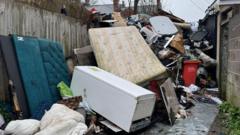
The sight of a stained mattress or a pile of construction rubble rotting in a green lane makes my blood boil. It’s a specialized kind of arrogance to think your local woodland is a personal skip. For years, the legal system in England treated fly tipping like a minor clerical error. A small fine here, a stern warning there, and the taxpayer picked up the bill for the cleanup. That’s changing. Under new government directives, the people who dump the mess are being forced to roll up their sleeves and clear it.
It's about time.
The "clean-up" punishments are part of a broader crackdown on anti-social behavior. Local councils and the Environment Agency are moving away from just issuing Paperwork. They're leaning into the idea of "immediate justice." If you're caught dumping bags of household waste or old sofas, you won't just pay a fine that you might ignore. You’ll be out there in a high-vis vest, picking up litter and scrubbing graffiti. It’s a public admission of guilt that hits harder than a bank transfer.
The end of the easy ride for dumpers
For a long time, the risk-to-reward ratio for fly tipping was skewed. If you're a rogue rogue trader, dumping a van full of drywall in a lay-by saves you hundreds in commercial tip fees. Even if you got caught, the fines often didn't exceed the money you saved. It was a calculated business expense.
The new approach shifts that math. By forcing offenders to participate in community clean-up projects, the government is trying to reconnect them with the environment they’ve damaged. It's not just about the labor. It's about the social stigma. Imagine having to clear a park in the same neighborhood where you dumped your trash. People see you. They know what you did.
Local authorities in areas like Buckinghamshire and Westminster have already been aggressive with their enforcement. They're using hidden cameras and AI-powered software to track license plates in hotspots. But technology only goes so far. The real deterrent is the certainty of a consequence that actually hurts. For many, losing a Saturday to manual labor is more painful than a £400 fixed penalty notice.
Why the old system failed so miserably
If you look at the stats from the Department for Environment, Food & Rural Affairs (DEFRA), the numbers are staggering. In recent years, councils in England dealt with over a million fly-tipping incidents annually. Most of those resulted in... nothing. A tiny fraction ended in a prosecution.
The system was clogged. Taking someone to court costs more than the cleanup itself.
- Evidence was hard to find.
- Legal proceedings took months.
- Fines were often inconsistent.
The shift toward "Community Payback" style punishments bypasses some of the bureaucratic sludge. It allows for a faster turnaround. You dump. You’re caught. You clean. This isn't just a theory; it’s a response to the fact that our streets have been looking like "The Last of Us" sets because nobody felt there was a real price to pay for being a slob.
The real cost of your "cheap" waste removal
I've seen it happen dozens of times. A homeowner finds a "man with a van" on Facebook for £30. It’s a steal. Except, that guy isn't going to a licensed waste transfer station. He’s going to the nearest quiet road.
When the council finds your name on a stray envelope in that pile, you’re the one who gets the knock on the door. The law is clear on this: you have a "duty of care." If you don't check that the person taking your waste has a proper license, you’re legally responsible for where it ends up.
The new "clean up your own mess" rules apply to these situations too. If you’re found negligent, you could be spending your weekend in a hi-vis jacket alongside the guy you hired. It's a harsh lesson in due diligence.
How councils are stepping up the pressure
It isn't just about the physical labor. There’s a massive push to increase the financial sting. The maximum fine for fly tipping was recently raised to £1,000. That’s a significant jump from the previous £400 cap. When you combine that with the requirement to perform unpaid work, the "business model" of illegal dumping starts to crumble.
Some councils are even seizing vehicles. I’ve seen footage of vans being crushed because they were used in repeat offences. That is the ultimate deterrent. A white van is a person's livelihood. Losing it over a few bags of rubbish is a catastrophic mistake.
We’re also seeing more "shame" campaigns. Some local authorities are publishing photos of fly-tipping sites and asking the public to identify the culprits. It sounds a bit medieval, but in a world where everyone has a doorbell camera, it’s effective. The community is tired of the mess. They’re filming everything.
What you need to do to stay on the right side of the law
Don't be the person holding the bin bag while a council officer watches. It’s easy to avoid this mess if you follow a few basic steps.
Check the Environment Agency’s website for a registered waste carrier. It takes two minutes. If they can’t show you a license, send them packing. Always ask for a receipt or a "waste transfer note." This is your get-out-of-jail-free card. It proves you did your part. If the waste is found in a ditch later, you have the paperwork to show you handed it over to someone you believed was legitimate.
If you’re disposing of large items, use the official council bulky waste collection. It’s usually cheap, or even free depending on your area. It’s certainly cheaper than a £1,000 fine and a day spent picking up cigarette butts and discarded takeaway boxes.
The impact on the English countryside
Our rural areas get hit the hardest. Farmers often have to pay out of their own pockets to clear waste dumped on their private land. It’s an absolute disgrace. The law is often murky here, as councils aren't always required to clear waste from private property.
By forcing fly tippers to participate in broader cleanup schemes, some of that labor can be diverted to help restore these blighted areas. It doesn't solve the problem of the initial cost to the farmer, but it increases the chances that the person responsible will eventually face the music.
The goal isn't just to clean up the trash. It’s to change the culture. We need to get back to a point where dumping a fridge in a hedge is seen as a socially radioactive act. The threat of manual labor is a step toward that. It’s physical. It’s tiring. It’s embarrassing.
Honestly, it’s exactly what’s needed.
Stop looking for the "too good to be true" price for waste removal. It's always a scam. If you're moving house or clearing a garage, budget for a proper skip or a licensed professional. If you see someone dumping waste, don't just complain on a local Facebook group. Report it to the council immediately with any vehicle details you have. The more data they have, the more likely they are to deploy those new punishments. You're not being a "snitch"; you're protecting your own wallet from the rising council taxes used to fund these cleanups. Check the license, keep the receipt, and keep your weekends free from community service.