The coffee in the chipped ceramic mug had gone cold hours ago, but Mateo didn't care. He sat on the porch of his corrugated-metal home, watching the heat haze shimmer off the dirt road outside a quiet river town in Central America. Here, the rhythm of life was dictated by the morning sun and the distant hum of outboard motors on the water. But lately, a different kind of noise had begun to infiltrate the horizon. It wasn't the roar of jet engines directly overhead—not yet—it was the quiet, bureaucratic creep of a shifting borderland strategy.
We talk about military campaigns in conference rooms thousands of miles away, sketching arrows on maps and speaking in acronyms that roll off the tongue with sterile ease. Yet, every tactical pivot leaves a footprint in the dust. To understand the transition from the maritime strikes that claimed hundreds of lives on the water to the expanding footprint on land across Latin America, one must look past the dry defense department memos. One must look at the riverbanks, the jungle tracks, and the quiet communities caught in the gravity well of an expanding footprint.
The Anatomy of a Drift
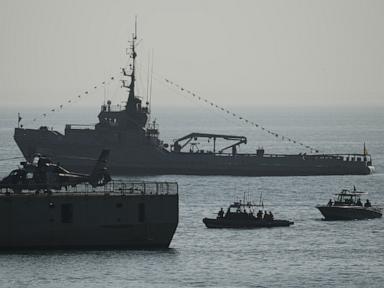
For years, the playbook relied heavily on blue water. Interdiction. High-speed chases. The lethal logic of boat strikes aimed at disrupting illicit supply chains at sea. Hundreds dead. Countless vessels scuttled beneath the waves, swallowed by the Pacific and the Caribbean. It was clean from a distance. Out of sight, largely out of mind for citizens in the northern capitals who only caught brief glimpses of grainy thermal footage on evening broadcasts.
Water is vast. It leaves no witnesses other than the salt and the tide.
But pressure, much like water itself, always finds the lowest crack. When maritime routes tighten, smugglers adapt. They shift inland. They use backroads, dense canopies, and established logistics networks that snake through sovereign nations under the radar. And as the targets move ashore, so too does the machinery designed to hunt them.
This is where the quiet expansion begins. It is not an overnight invasion with marching battalions and flying banners. It arrives in increments. A handful of advisers here. Expanded intelligence-sharing agreements there. Specialized training units embedded with local security forces. Logistics hubs quietly upgraded to handle heavier traffic, more personnel, more oversight.
To visualize this, imagine a vast, intricate spiderweb constructed over decades across the hemisphere. When a single strand near the coast is snapped by a drone or a coastal patrol, the spider doesn't abandon the web. It simply shifts its weight, reinforcing the inner threads, pulling tighter on the anchors secured deep within the interior.
On the Ground
Consider what happens next in places like the one where Mateo lives. The local police station, once a modest outpost meant for handling local disputes and petty theft, suddenly receives modern communications gear. Drones hum in the night sky above the treeline. Men in unmarked utility vehicles with foreign-made tactical vests begin stopping trucks at rural checkpoints.
The justification is always security. The narrative is always protection. Trafficking is a global scourge, an invisible poison that feeds corruption, instability, and violence. No one denies the malignancy of the cartels. The fear, however, lives in the method of the cure.
When a superpower extends its security apparatus onto foreign soil, the lines of accountability blur. Sovereignty becomes a soft concept, negotiable in the name of expediency. A local commander takes orders or receives intelligence from foreign handlers who answer to a chain of command thousands of miles away, insulated by layers of bureaucracy.
I remember speaking with a retired investigator years ago who had spent decades tracking transnational syndicates. He lit a cigarette, the ember glowing bright in the dim room, and shook his head. You cannot bomb your way out of a market, he had said. Every time you squeeze one balloon, the air just bulges out somewhere else. And when you bring a heavy military hammer to a complex social and economic puzzle, every problem starts looking like a nail.
That is the danger of the creeping land campaign. It treats systemic, regional crises as tactical military objectives. It substitutes long-term institution-building and economic reform with counter-narcotics sweeps and surveillance grids.
The Invisible Ledger
The human cost of this expansion rarely makes the official tallies. It is written in the quiet erosion of local trust. When foreign boots or foreign-trained units operate with sweeping authority, local populations find themselves caught between two merciless forces: the ruthless syndicates who control the local economy through terror, and an opaque, militarized state apparatus that views every civilian through a lens of suspicion.
Trust is hard to build and terrifyingly easy to shatter.
Down by the river, Mateo watched a convoy of heavily armored vehicles kick up a thick cloud of red dust as they rumbled past his gate. He didn't wave. He didn't look away. He just wrapped his calloused hands tighter around his cold mug, feeling the chill seep into his bones long before the sun began to set. The campaign had arrived at his doorstep, wrapped in the language of safety, casting a long, unyielding shadow across a landscape that only wanted to be left alone.


