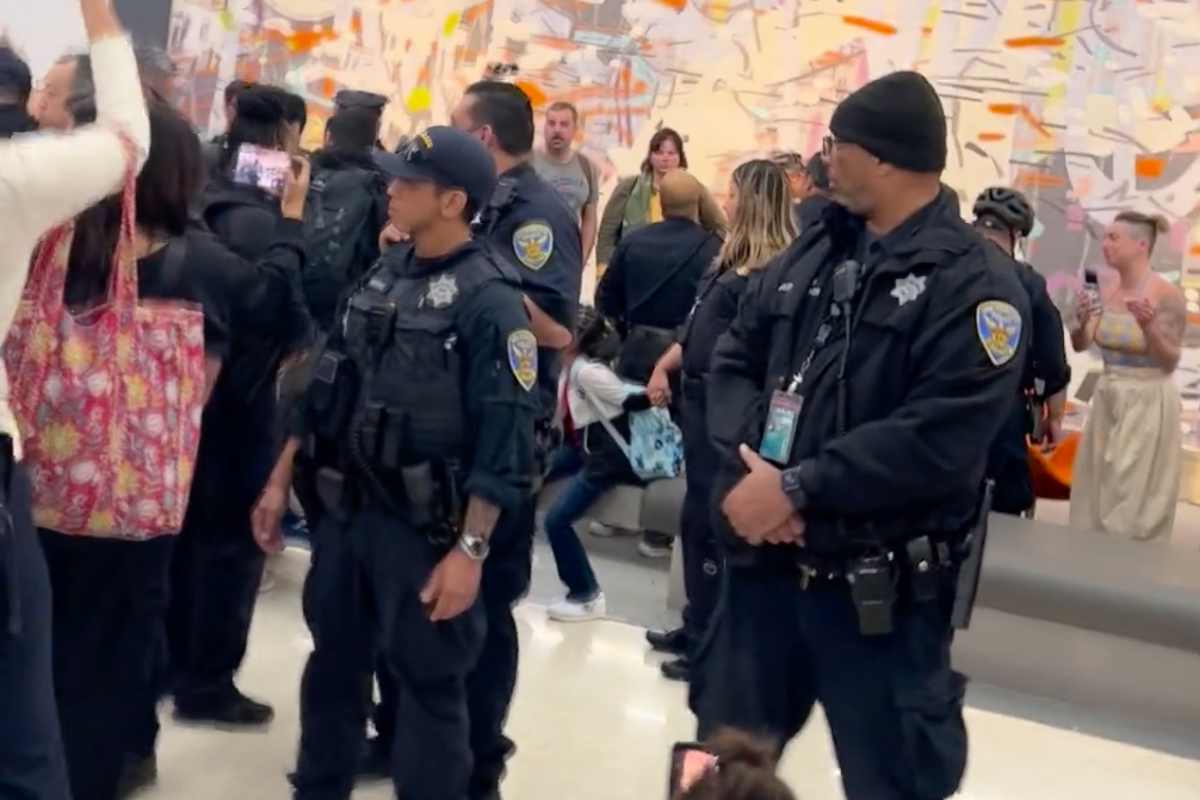
A viral video of a woman screaming for help as federal agents hauled her through San Francisco International Airport (SFO) recently set social media on fire. To the casual observer, it looked like a kidnapping in broad daylight. To the Department of Homeland Security (DHS), it was a "routine" removal of a Guatemalan national. This friction between public perception and administrative procedure exposes the sharpening edges of American immigration enforcement in an era where every gate is a potential stage for political theater.
The woman, whose identity has been shielded by privacy protocols but whose distress was unmistakable, represents a spike in high-visibility enforcement actions. These aren't just logistical maneuvers; they are the physical manifestation of a system struggling to manage a massive backlog of final orders of removal. When a detainee resists, the cold machinery of the state becomes visible, forcing travelers and tech workers in a liberal hub like San Francisco to confront the reality of a border that begins far from the actual Rio Grande.
The Logistics of Resistance
Deportation is rarely as simple as a plane ticket. It is a grueling, multi-layered process that involves diplomatic clearances, medical screenings, and, most importantly, the cooperation of the individual being removed. When that cooperation vanishes, the situation devolves into the visceral struggle witnessed at SFO.
ICE Air Operations, the branch responsible for these flights, typically utilizes private charters to move large groups of people. However, "commercial removals" are still common for individuals with specific needs or those destined for locations not covered by the standard charter routes. This puts armed federal agents and terrified detainees in the same security lines as vacationers and business travelers. The proximity is intentional for efficiency but disastrous for public relations.
Agents are trained in "applied pressure" and restraint techniques designed to move a non-compliant person without causing permanent injury. Yet, when a human being believes they are being sent back to certain death or extreme poverty, the physics of a struggle often bypasses the sanitized language of a DHS press release.
The Guatemalan Pipeline
Guatemala remains one of the primary "sender" nations for the U.S. deportation machine. The reasons are a complex weave of failed harvests, gang extortion, and the lingering scars of civil conflict. When a person reaches the end of their legal rope in the U.S. court system, the government of Guatemala must issue a travel document. This is the moment the clock starts ticking.
In the San Francisco case, the detainee had likely exhausted all appeals. In the eyes of the law, she was a fugitive from justice the moment her voluntary departure window closed. In her eyes, she was a mother or a daughter fighting for a life she had spent years building in the shadows of the Bay Area. The legal finality of her case does not erase the human instinct to fight for survival.
The U.S. government currently manages hundreds of thousands of active final orders of removal. The sheer volume means that ICE must prioritize. Often, individuals who have been in the country longer or who have families are pushed down the list in favor of recent arrivals, but high-profile resistance can happen to anyone caught in the dragnet.
The SFO Paradox
San Francisco is a "Sanctuary City." This designation creates a profound psychological and legal dissonance for residents. Local police are generally prohibited from cooperating with ICE, but that protection ends at the airport’s perimeter. SFO is federal ground. Once a person is inside that terminal, the local ordinances of San Francisco carry no weight against the federal mandate of the Immigration and Nationality Act.
This creates a vacuum where enforcement happens in the heart of a city that ideologically opposes it. The optics of agents dragging a crying woman past a Napa Valley wine bar or a high-end tech kiosk are a reminder that federal power is absolute at the point of transit. It is a jurisdictional trap that catches both the detainee and the public’s conscience.
The Cost of the Commercial Move
Using commercial flights for removals is a cost-saving measure that carries a massive social tax. When ICE books a seat on a standard carrier, they are betting on the anonymity of the process. They hope the detainee will remain quiet, head down, compliant.
When that bet fails, the airline faces a crisis. Pilots have the ultimate authority to refuse any passenger who might compromise the safety of the flight. If a detainee is screaming or struggling, a captain can—and often will—order them off the plane. This creates a cycle of failed attempts, increased costs for the taxpayer, and prolonged trauma for the individual.
The SFO incident was a failure of the "discreet removal" strategy. It forced a private airline and its passengers into the middle of a federal enforcement action, turning a routine flight into a site of civil unrest.
Why Non-Compliance is Rising
Advocacy groups argue that the increase in public struggles is a direct result of the narrowing pathways to legal status. When people feel the system is rigged against them, they stop trusting the process. If a "day in court" feels like a foregone conclusion, the only remaining agency a person has is their physical presence.
The Breakdown of the System
- Backlog: Over 3 million cases are currently pending in immigration courts.
- Speed: Pressure to clear cases leads to "rocket dockets" where due process is often sacrificed for throughput.
- Access: Only a fraction of detainees have access to competent legal counsel, making the final order feel like a clerical error rather than a judicial decision.
The Role of the Witness
In the SFO video, you hear bystanders asking what is happening. Some try to intervene; others just record. This is the new reality of enforcement. The ubiquity of smartphone cameras has ended the era of "invisible" deportations. Every agent is now a character in a viral narrative, and every detainee has a global platform for their grief.
This transparency doesn't necessarily change the law, but it changes the political price of enforcing it. When the public sees the human cost—the tears, the physical struggle, the sheer desperation—the abstract concept of "border security" becomes a specific, painful image.
The Pressure on the Ground
ICE agents frequently cite a lack of resources and clear directives. They are caught between a political administration that wants numbers and a public that wants humanity. The SFO incident was not an anomaly of cruelty; it was the standard procedure operating under the glare of public scrutiny.
Agents are tasked with executing the law of the land. If that law requires the removal of a resisting individual, the results will never be pretty. There is no "humane" way to force someone onto a plane against their will. To pretend otherwise is to engage in a collective delusion.
Beyond the Viral Clip
The woman on that floor at SFO is now likely back in Guatemala, a country she risked everything to leave. Her story ended where the video stopped, but the mechanism that put her there continues to churn. The U.S. spends billions annually on this infrastructure, yet the fundamental issues—regional instability, a broken visa system, and the demand for low-wage labor—remain unaddressed.
We are left with a system that performs its most difficult work in the most public spaces, then wonders why the public is horrified. The SFO struggle was a brief tear in the curtain of administrative normalcy. Through that tear, we saw a glimpse of what it actually looks like to enforce a border in the 21st century.
Check the tail number of the next plane you board. You might be sharing a cabin with someone whose life is being dismantled in the seat behind you.