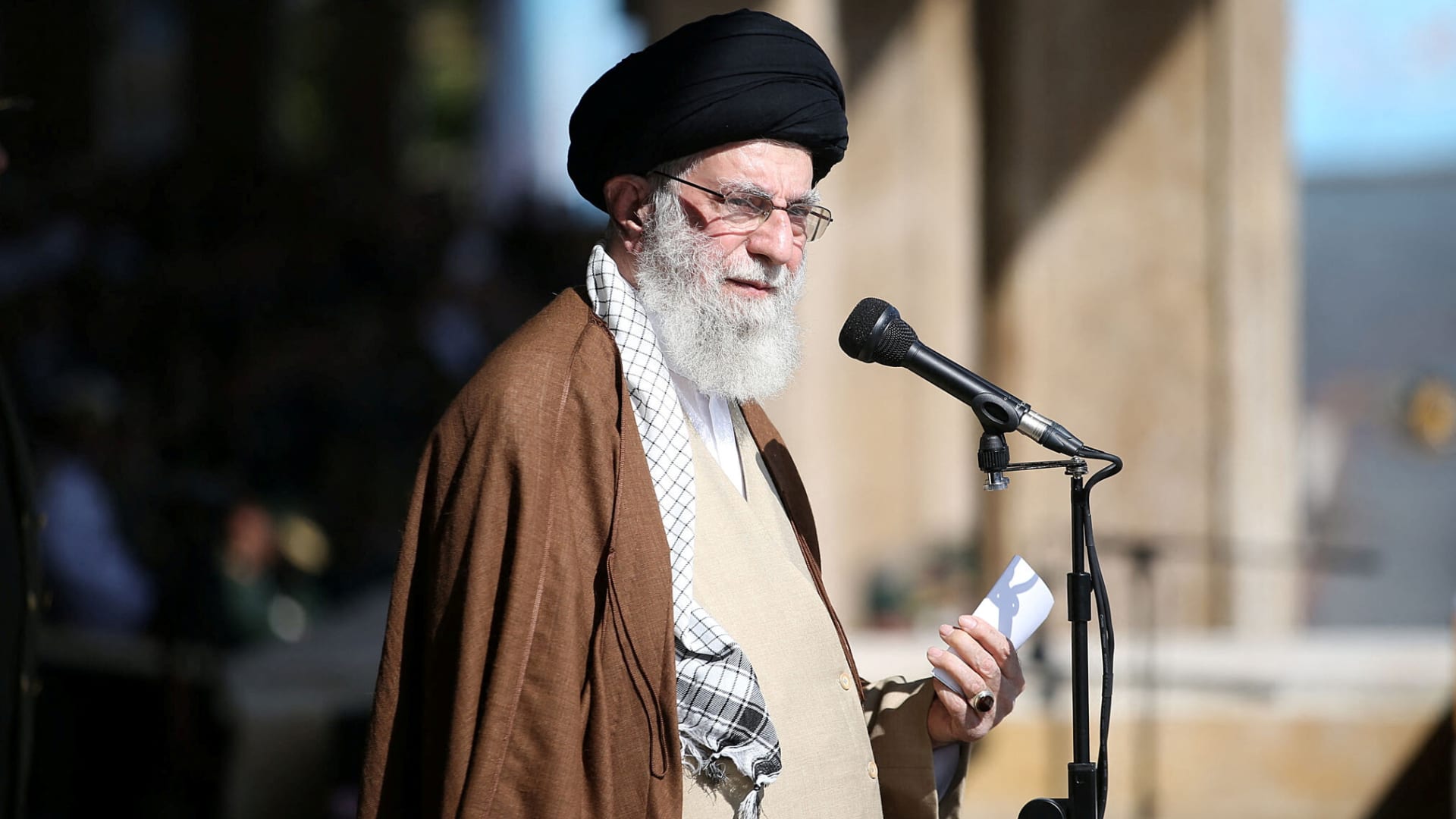
The Western media has spent three decades painting Ayatollah Ali Khamenei as a grand strategist of "resistance." They frame him as a singular, ideological titan who successfully maneuvered Iran into a position of regional hegemony while thumbing his nose at the Great Satan. It is a cinematic narrative. It is also a complete hallucination.
If you look at the actual mechanics of power in Tehran, Khamenei is not a bold shaper of history. He is a cautious, reactive bureaucrat managing a slow-motion institutional collapse. The "defiance" touted by analysts is actually a desperate series of tactical pivots designed to keep a bloated, corrupt military-industrial complex from eating itself alive. Also making waves recently: Finland Is Not Keeping Calm And The West Is Misreading The Silence.
We need to stop asking how he "shaped" Iran and start asking how he accidentally survived it.
The Myth of the Ideological Monolith
The standard profile of Khamenei suggests he is the successor to Khomeini’s firebrand legacy. This is the first lie. Khomeini was a charismatic revolutionary; Khamenei is a middle-manager who rose to power through a backroom compromise because he was perceived as "weak" and "pliable" by the real power brokers of 1989. Further details into this topic are covered by Al Jazeera.
The defiance we see today isn't born of ideological purity. It is born of institutional capture. Khamenei does not command the Islamic Revolutionary Guard Corps (IRGC); he negotiates with them. Over the last thirty years, he has traded the country's economic future for the IRGC's loyalty, allowing them to seize between 30% and 50% of the national economy.
When the IRGC builds a dam that destroys an ecosystem or runs a shadow shipping network that invites more sanctions, Khamenei cannot stop them. He frames these failures as "resistance" to Western pressure because the alternative—admitting he has lost control of the Praetorian Guard—would end his reign overnight. He isn't the captain of the ship; he’s the guy polishing the brass while the engines melt down.
The Sanctions Delusion: Survival is Not Success
You will often hear that Khamenei has "outlasted" Western sanctions. This is the "lazy consensus" at its peak. Outlasting a siege while your population descends into poverty isn't a victory; it’s a failure of governance.
The "Resistance Economy" is a branding exercise for a black market. By refusing to engage with global financial systems like FATF (Financial Action Task Force), Khamenei hasn't protected Iranian sovereignty. He has simply ensured that the only people who can make money are those with the guns to protect their smuggling routes.
- Inflation: Consistently hovering near 40-50%.
- Brain Drain: Iran loses its top-tier talent at one of the highest rates in the world.
- Infrastructure: The power grid and water tables are failing because capital is diverted to proxy militias.
I have spoken with analysts who argue that the "Axis of Resistance" is a low-cost way for Iran to project power. That is a tactical truth and a strategic lie. Yes, drones and proxies are cheap. But the secondary costs—the total isolation of a 85-million-person nation—are astronomical. Khamenei has traded a modern, high-tech future for a collection of militias in broken states. That isn't brilliance. It's a fire sale.
The Stability Paradox
The most common question people ask is: "How has the regime stayed in power so long?"
The answer is not "defiance" or "popular support." It is the perfection of the Atomization Strategy. Khamenei’s greatest "achievement" isn't defeating the West; it’s making sure no two Iranians can trust each other enough to organize.
He hasn't built a stable state. He has built a state of permanent emergency. By constantly invoking an external threat, he justifies the internal security apparatus that monitors every WhatsApp message and neighborhood council. This isn't the behavior of a leader who has "shaped" a defiant nation. It’s the behavior of a landlord who knows the foundation is rotting and decides to board up the windows so nobody sees the cracks.
The Succession Trap
The ultimate proof of Khamenei’s failure is the looming succession crisis. A true "shaper" of a nation builds institutions that can survive them. Khamenei has done the opposite. He has hollowed out the presidency, the parliament, and even the clerical establishment to ensure no rival can emerge.
In doing so, he has created a vacuum. When he passes, there is no consensus candidate. There is only a heavily armed IRGC and a disenfranchised public. He hasn't built a legacy of defiance; he has built a powder keg.
The "Great Defier" is actually a man who is terrified of his own people. Every time a protest erupts—whether over headscarves or fuel prices—the response isn't "defiance" of the West. It is the panicked violence of a regime that knows its ideological software has been deleted and it’s running on pure, coercive hardware.
Stop Misunderstanding the Conflict
We are told this is a clash of civilizations or a struggle for regional dominance. It’s simpler than that. It is a protection racket.
Khamenei’s "defiance" is the marketing department for a small elite that needs the West to remain an "enemy" to justify their own existence. If the "threat" from the U.S. disappeared tomorrow, Khamenei would be in deep trouble. He would have to explain why the middle class has disappeared, why the lakes are drying up, and why the youth have no future.
He doesn't hate the tension with the West. He needs it. It is his life support system.
The West needs to stop treating him like a grand chess player. He’s a gambler who is doubling down on a losing hand because he’s already spent the house’s money. The next time you hear a report about Iran’s "strategic depth" or its "unwavering leader," remember that you are looking at a facade. Behind the rhetoric of the "leader who shaped defiance" is a man who is simply trying to survive the next twenty-four hours without the walls closing in.
Stop looking for a master plan. There isn't one. There is only the momentum of a failing system and a man too afraid to change course.
Prepare for the collapse. It won't be televised as a revolution; it will look like the sudden, quiet snapping of a bridge that everyone knew was rusted but was too polite to mention.
Go look at the currency exchange rates in Tehran today. That is the only data point that matters. The rest is theater.