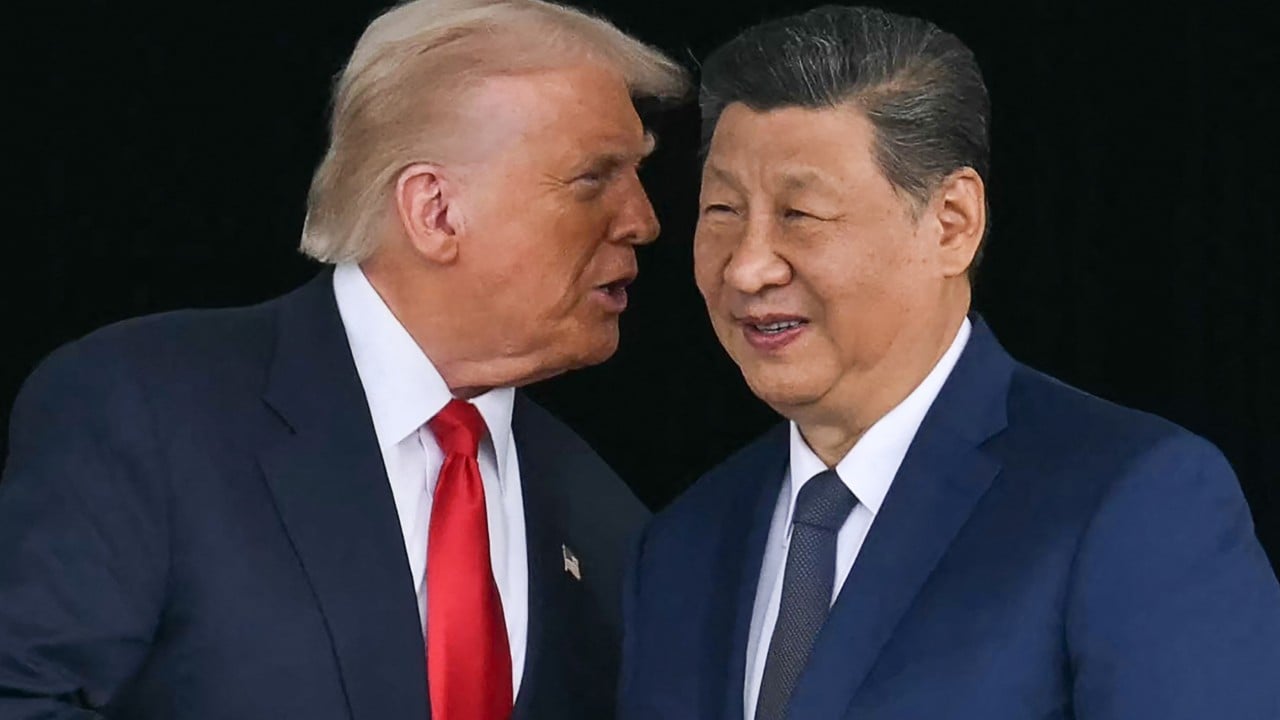
The prevailing narrative in Washington suggests that the upcoming summit between Donald Trump and Xi Jinping is a collision of two unmovable objects. Pundits point to the aggressive tariffs of the past and the icy rhetoric of the present as evidence that any meeting is destined for a stalemate. This view is wrong. In reality, both leaders are currently trapped by internal economic pressures that make a "successful" summit not just a preference, but a political necessity.
Former Biden administration officials have recently begun to suggest that the unusual circumstances surrounding this meeting—specifically the combination of China’s slowing domestic growth and Trump’s desire to maintain a booming stock market—actually create a path for a deal. But a "deal" in the context of global superpowers is rarely about long-term stability. It is about a temporary truce that allows both sides to save face at home while preparing for the next phase of a multi-decade rivalry.
The Quiet Panic Inside Zhongnanhai
While the Chinese Communist Party projects an image of unwavering strength, the cracks in the foundation are widening. Xi Jinping is facing a deflationary spiral and a real estate crisis that has wiped out trillions in household wealth. For the first time in forty years, the social contract—economic prosperity in exchange for political compliance—is under genuine strain.
Xi needs a win. He cannot afford another four years of escalating trade wars that decouple Chinese manufacturing from Western consumers. The "unusual" nature of the current moment lies in China’s willingness to make tactical concessions on agricultural purchases and intellectual property protections that they previously ignored. They are buying time. By offering Trump a "grand bargain" on trade, Beijing hopes to blunt the more aggressive security and technology restrictions that are truly damaging their long-term ambitions in artificial intelligence and semiconductors.
The Art of the Narrative Win
Donald Trump’s approach to diplomacy has always been transactional rather than ideological. He views the trade deficit as a scoreboard. If he can walk away from a summit with a signed document promising hundreds of billions in purchases of American soybeans, corn, and Boeing jets, he will declare it the greatest victory in history.
The markets know this. Wall Street is already pricing in a "Goldilocks" scenario where rhetoric stays hot but the actual policy remains manageable. The danger is that this focus on visible, quantifiable trade metrics ignores the deeper, more dangerous shifts in the South China Sea and the Taiwan Strait. A summit that "goes well" for the Dow Jones Industrial Average might be a disaster for regional security if the price of a trade deal is a reduction in American naval presence.
The Ghost of 2018 and the Tariff Trap
History provides a grim roadmap for these negotiations. In 2018, we saw a similar pattern of escalation followed by a "Phase One" trade deal that ultimately failed to deliver on its promises. China didn't hit its purchase targets, and the structural changes to their state-led economy never materialized.
This time, the stakes are higher because the tools of economic warfare have evolved. We are no longer just talking about taxes on steel and aluminum. We are talking about the total exclusion of Chinese firms from the American financial system and the physical blockade of high-end chips. If the summit fails to create a framework for managing these "tech-wars," the resulting market volatility will be unlike anything seen in the first term.
The Semiconductor Ceasefire
One overlooked factor is the role of third-party players like the Netherlands and Japan. The U.S. has pressured these nations to stop selling chip-making equipment to China. Xi will likely demand a loosening of these "choke point" controls in exchange for trade concessions.
If Trump agrees to even a minor reprieve for Chinese tech giants like Huawei or SMIC, it would be a massive strategic victory for Beijing. It would signal that American national security concerns can be traded for short-term economic gains. This is the "unusual" circumstance that has veteran diplomats worried: the possibility that the pursuit of a "good" summit leads to the erosion of long-term strategic advantages.
Why Domestic Politics Dictate the Outcome
Trump’s second-term agenda is centered on domestic manufacturing and the "de-risking" of supply chains. However, he is also keenly aware that inflation was the primary reason for the previous administration’s unpopularity. Drastic tariffs on all Chinese goods would inevitably lead to higher prices for American consumers.
This creates a paradox. He wants to be seen as the toughest president on China, but he cannot afford a price hike at Walmart six months into his term. Consequently, we should expect a summit characterized by loud, aggressive public statements followed by private agreements that keep the status quo largely intact for the major retail sectors.
The Role of Personal Chemistry
Unlike traditional diplomats who rely on briefing books and state department protocols, Trump relies on his perceived personal relationship with Xi. He has often referred to Xi as a "friend" while simultaneously attacking his country’s trade practices. This "bipolar diplomacy" is confusing to the Chinese bureaucracy, which prefers predictable, scripted interactions.
However, Xi has learned to navigate this. He knows that flattery and large-scale purchase orders are the keys to a successful meeting with Trump. By providing the "spectacle" of a successful summit, Xi can secure the breathing room necessary to stabilize his own economy.
The Infrastructure of a Temporary Peace
A truly superior analysis must acknowledge that these summits are not about solving problems; they are about managing them. The "unusual" circumstances are not a sign of a new era of cooperation, but a sign of mutual exhaustion. Both nations are over-leveraged and facing demographic headwinds.
We will likely see the establishment of "working groups" on fentanyl and climate change—low-stakes areas where both sides can claim progress without giving up anything substantial. These are the lubricants of diplomacy, used to make the grinding gears of economic competition sound less harsh to the public ear.
The Manufacturing Mirage
There is a growing realization that even with 60% tariffs, many manufacturing jobs will not return to the United States. Instead, they move to Vietnam, Mexico, or India. This reality undercuts the primary political argument for a total break with China. If the jobs aren't coming home, the only thing left is the higher cost of goods.
This gives the "pragmatists" in both camps more leverage. They can argue that a managed competition—one where the summit "goes well"—is the only way to prevent a global depression.
The Missing Pieces in the Public Discourse
Most analysts are ignoring the role of the U.S. Dollar. China’s massive holdings of Treasury bonds give them a "nuclear option" that they are terrified to use because it would destroy their own wealth. Nevertheless, the mere existence of this leverage influences the tone of the negotiations.
Furthermore, the private sector is no longer a silent observer. Companies like Apple and Tesla have too much at stake to let the relationship collapse entirely. Their lobbyists are the invisible hands at the summit, pushing for a "good" outcome that protects their global supply chains.
The "unusual" circumstances are actually the new normal. We are entering an era of "perpetual summitry," where the goal is never to reach a final destination, but to stay on the road without driving off a cliff.
Look for the announcement of a "new framework" that sounds historic but lacks specific enforcement mechanisms. This allows both leaders to return to their respective capitals and claim they won the day. In the world of high-stakes geopolitics, the appearance of success is often more valuable than the reality of it.
Watch the price of gold and the strength of the Yuan in the forty-eight hours following the meeting. If the Yuan strengthens, it means the market believes Xi bought himself enough time to avoid a total collapse. If gold spikes, it means the "good" summit was nothing more than a temporary mask for an escalating conflict that remains fundamentally unsolvable.
The real work happens in the silence after the cameras are turned off. If you want to know how the summit actually went, don't read the joint communiqué. Look at the export license approvals for high-end technology in the weeks that follow. That is where the true power is being traded.