France just recorded its hottest day ever. Think about that. Not just a warm afternoon or a sticky weekend. On June 23, 2026, the national heat index hit an unprecedented 29.8°C (85.6°F), an average tracking both daytime spikes and nighttime lows across 30 distinct weather stations. The previous high-water marks from the brutal summers of 2003 and 2019 are gone. Smashed.
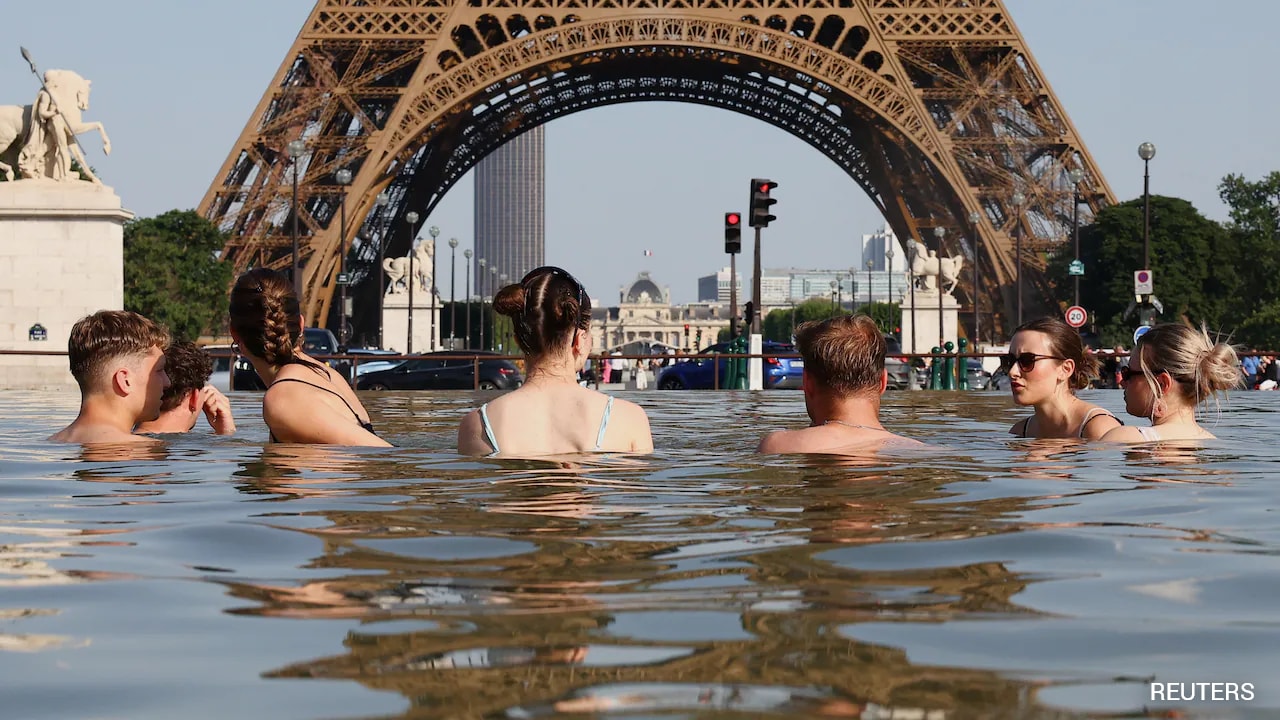
The heat is a silent killer. It drove thousands of desperate people to rivers, lakes, and canals. This panic for relief turned tragic. Prime Minister Sébastien Lecornu confirmed that at least 40 people have drowned since June 18. Most of the victims were young. They jumped into unsupervised, unauthorized waters just to escape the stifling air.
The Tragic Reality of France Hottest Day Ever
When temperatures hit 44.3°C (111.7°F) in towns like Pissos, the human body panics. People don't think clearly. They look for the nearest patch of blue on a map and dive in.
The French government placed 54 departments under a red heatwave alert. That is more than half the country. This isn't just about feeling uncomfortable. It is about survival in a nation where residential air conditioning is incredibly rare.
Look at what happened on the ground. A 13-year-old girl drowned in the River Seine near Fontaine-le-Port. She was with her family but didn't know how to swim. Near Lyon, a young professional football player ended up in critical condition. Emergency teams dragged him from a banned section of the River Rhône. He and three friends ignored the warning signs because the air felt like a furnace.
We see these numbers on a screen and detach. Do not do that. These are human lives ending in minutes because the air became unbreathable. Sports and Youth Minister Marina Ferrari didn't mince words on the radio. Swimming in unmonitored waters right now isn't a minor risk. It is a lethal gamble.
The Omega Block Trapping the Continent
Why is this happening right now? Meteorologists point to a specific atmospheric setup called an Omega block. The system gets its name because the jet stream bends into the shape of the Greek letter $\Omega$.
     _-_
    /   \
   /     \
  /       \
_/         \_
This high-pressure system acts like a massive concrete lid over western Europe. It pumps scorched air straight up from the Sahara Desert and holds it in place. There is no wind. There is no breeze. There is zero respite.
The heat builds day after day. The ground bakes. The concrete buildings in Paris absorb the thermal energy all day and radiate it back out all night. Between Monday and Tuesday, France experienced its warmest night since records began in 1947. The national average night temperature stayed at a suffocating 21.6°C.
The infrastructure is buckling. In the southwest, workers at the Golfech nuclear power plant had to shut down a reactor. Why? The cooling water they pull from the Garonne River hit 28°C. Running the plant would have pushed the river temperature past safe ecological limits. When the heat wave stops electricity generation, you know the situation is desperate.
Infrastructure Fails When the Thermometer Redlines
Public life across Europe has slowed to a crawl. The Eiffel Tower closed its gates early at 4 PM on Tuesday. The Louvre cut its hours short too. Standing in glass-walled corridors filled with thousands of tourists became too dangerous.
The UK Met Office issued its own red extreme heat warnings as the system expanded across the English Channel. Train operators canceled lines, including major routes like the Paris-Brussels express. Steel rails expand in extreme heat. They bend. They track out of alignment. If a train hits those warped tracks at full speed, it derails.
The World Health Organization estimates that over 200,000 people died from heat-related causes in Europe over the last four years. This is the fastest-warming continent on Earth. Temperatures here rise twice as fast as the global average.
How to Stay Safe in a High-Thermal Crisis
Do not look for unmonitored water. Cold water shock is real. When your body is scorching hot and you jump into a cold river, your blood vessels constrict instantly. Your heart rate spikes. You gasp involuntarily. If your head is underwater when you take that sudden gasp, you drown.
Follow these concrete steps immediately if you are trapped in a red-alert heat zone.
- Map out supervised beaches: Only enter water where a lifeguard is actively stationed.
- Create a dark zone: Close your window shutters and curtains during daylight hours. Do not let the sun hit the glass. Open windows only at night when the outside air drops below the inside temperature.
- Cool the pulse points: If you lack AC, run cold water over your wrists, neck, and the inside of your elbows. It cools the blood moving directly to your core.
- Monitor vulnerable neighbors: Check on older people living alone. They lose the ability to regulate body temperature efficiently.
The government has banned public alcohol consumption in red-alert zones. Alcohol dehydrates you faster and impairs your judgment near water. Skip the beer. Stick to water mixed with electrolytes. This heat dome will hold until the end of the week. Treat the weather like the natural disaster it is. Stay inside, keep damp towels on your skin, and stay out of the rivers.