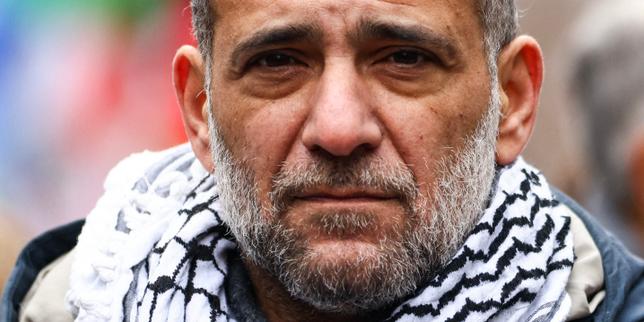
The French government wants to deport Ramy Shaath. For anyone tracking human rights in the Middle East, this move is a massive shock. Shaath is a prominent Palestinian-Egyptian activist, a former advisor to Yasser Arafat, and a man who spent nine hundred days in an Egyptian prison just for speaking his mind. He found refuge in France in 2022. Now, the French interior ministry is actively trying to kick him out, citing vague national security threats. It is a messy, high-stakes political battle that highlights a sharp shift in how European nations treat political dissidents.
This is not just about one man. The move to expel Shaath signals a broader, much more aggressive stance by French authorities against pro-Palestinian advocacy. By looking closely at the details of his case, you can see how the line between legitimate political activism and national security threats has blurred completely. You might also find this connected article useful: The Imran Khan Cable Myth and the Lazy Fantasy of the Washington Puppet Master.
The Sudden Turn Against Ramy Shaath
Ramy Shaath arrived in Paris in January 2022 after intense diplomatic lobbying forced Egypt to release him. He had been locked up in Cairo since 2019 under arbitrary terrorism charges, a common tactic used by the Egyptian regime to silence critics. France welcomed him. He was a symbol of resistance.
Things changed fast. The French Interior Ministry recently issued an expulsion order against him. The state claims his presence on French soil poses a threat to public order. They point to his public statements, his political organizing, and his stance on the Israeli-Palestinian conflict. As reported in latest coverage by NPR, the results are notable.
The defense team, led by high-profile human rights lawyers, calls the accusation absurd. Shaath has always advocated for peaceful resistance and international law. He has not called for violence. He has not broken French laws. The government is using administrative powers to bypass the standard judicial process, making it incredibly difficult for Shaath to defend himself in an open court.
Understanding the Legal Weapon Used by France
The French state is relying on a specific legal tool known as the obligation de quitter le territoire français (OQTF) combined with a ministerial expulsion order. These orders are usually reserved for individuals suspected of severe radicalization or direct ties to terror networks. Applying this to a well-known political figure is a major escalation.
Human rights organizations like Amnesty International and Human Rights Watch have slammed the decision. They argue that France is setting a dangerous precedent. If a globally recognized activist who enjoys significant international backing can be targeted for expulsion, then no political refugee is truly safe.
The process happens behind closed doors. The interior ministry uses "white notes"—anonymous intelligence reports from domestic security agencies. These reports don't have to present hard, verifiable evidence that would stand up in a criminal trial. They just need to convince a panel that the person is a risk. It is an uphill battle for the defense.
The Political Math Behind the Decision
Why now? The timing isn't accidental. French domestic politics have shifted heavily toward security and immigration control. The current administration faces intense pressure from right-wing factions to show a tough stance on immigration and potential security threats.
Furthermore, France's foreign policy interests complicate the situation. The French state maintains complex diplomatic and economic ties with both Egypt and Israel. Shaath is a vocal critic of both governments. He co-founded the Boycott, Divestment, Sanctions (BDS) movement in Egypt, which infuriated authorities in Cairo and Tel Aviv. By removing Shaath, France quietly removes a political headache that complicates its alliances in the Mediterranean and the Middle East.
It is a calculated play. The government calculates that the public outcry over a single foreign activist will fade quickly, while the political benefits of looking tough on security will stick around.
What This Means for Free Speech and Asylum
This case fundamentally changes the rules for activists living in exile. For decades, Europe, and France specifically, positioned itself as a safe haven for political dissidents fleeing authoritarian regimes. Shaath's situation proves that this safety is entirely conditional.
If advocating for Palestinian rights under international law is now classified as a threat to French national security, the boundaries of acceptable speech have shrunk dramatically. Activists from all backgrounds are watching this closely. They realize that the same legal mechanisms used against Shaath can easily be turned against them if their political causes become inconvenient for the host government.
Fighting an Expulsion Order in France
Defending against a ministerial expulsion order requires a very specific legal strategy. If you or someone you know faces a similar administrative threat in France, the response must be immediate and aggressive.
First, file an urgent suspensive appeal (référé-liberté) before the administrative court. This must happen within forty-eight hours of receiving the notification. This legal move pauses the deportation process until a judge reviews the case.
Second, gather extensive character references from established institutions, politicians, and human rights bodies. The goal is to create a massive contrast between the anonymous state intelligence reports and the public, verifiable reality of the individual's work.
Finally, leverage international media and public campaigns. In cases driven by political motives, public pressure is often the only thing that forces a government to back down. The state hates prolonged, embarrassing media coverage that exposes flaws in its security arguments.