Curfews clear the streets at night. They don't fix why hundreds of thousands of people walked out in the first place.
When French Prime Minister Sébastien Lecornu called for "very limited" and "localized" curfews in cities after the explosive weekend of October 17, 2026, he was reaching for a familiar tool in a moment of genuine panic. Over that single weekend, marches over the cost of living, fuel prices, education, and strained public services spiraled into some of France's worst rioting in years. Around 1,500 shops were severely damaged, roughly 3,000 more were looted, and flames tore through the 19th-century City Hall in Limoges, collapsing its roof and bell tower.
If you're wondering whether targeted curfews actually stop looting and arson, the short answer is that they can buy breathing room—for a little while. Yet they treat the symptoms of street disorder while leaving the deeper economic and political pressure cooker untouched.
What triggered the curfews in French cities
To understand why Lecornu turned to localized curfews, you have to look at what happened between September and mid-October 2026. Demonstrations started out largely peaceful, driven by students, workers, and families squeezed by rising prices and stretched public services. By October 17, anger spilled over across 110 marches—drawing an estimated 550,000 people according to Interior Minister Laurent Nuñez, and up to 800,000 according to union organizers.
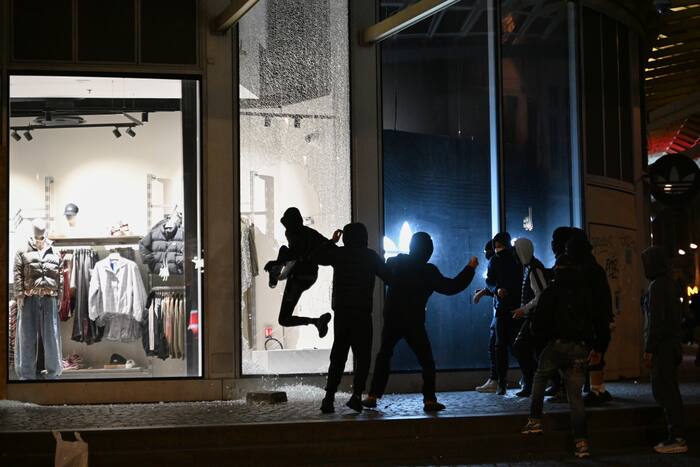
In Paris, clashes erupted near Place de la République and along Boulevard Magenta, where boutiques, banks, and mobile phone shops were smashed and ransacked, and Métro stations near sensitive landmarks were shut at police request. In Marseille, protesters broke into city hall and vandalized a municipal police station. In Lyon, a tourist office was torched. Across the country, more than 1,500 vehicle and public equipment fires were reported, around 60 buildings suffered fire damage, and over 1,000 police officers, gendarmes, and firefighters were injured alongside hundreds of civilians.
Police unions warned forces were stretched thin, with UNSA stating officers across France were facing "breaking point" conditions amid relentless clashes.
When Lecornu convened crisis talks at the Interior Ministry and instructed prefects to roll out targeted curfews and gathering bans—such as daytime assembly restrictions in Marseille and overnight curfews in Paris—the goal was containment. Officials wanted to stop nighttime looting crews from exploiting dark streets and give exhausted officers a chance to regroup.
Why localized curfews work in theory but struggle in practice
On paper, a localized curfew makes complete sense. Instead of locking down an entire country or declaring a sweeping state of emergency under France's 1955 law right away, authorities narrow the net to hot spots and peak trouble hours. Nighttime curfews in Paris and targeted restrictions elsewhere did produce quieter nights right after they were announced.
Still, anyone who watches crowd dynamics closely knows curfews carry real friction.
First, displacement happens fast. When one neighborhood or time window is locked down, opportunistic looters and agitators don't just go home and read a book. They shift to adjacent districts, push actions earlier into the day, or test police lines where coverage looks thinner. In fact, during parliamentary testimony on November 16, 2026, Paris Mayor Emmanuel Grégoire raised concerns about perceived policing disparities on October 17, noting that heavier intervention in western Paris left eastern areas more exposed.
Second, curfews blur the line between peaceful dissent and street violence. When authorities impose broad gathering bans or heavy-handed crowd control, ordinary students, union marchers, and even bystanders get caught in the crossfire. On October 17 in Paris, members of the 400-piece Orchestre du Nouveau Monde warming up near Place de la République ended up retreating as tear gas canisters landed near their feet. Once peaceful demonstrators feel criminalized or pushed aside, trust with authorities erodes even further.
Third, enforcement requires manpower France already lacks. A curfew on paper means very little without officers on every corner checking movement and deterring arsonists. With police unions warning of exhaustion and hundreds of officers injured over a single weekend, stretching patrols night after night carries a steep operational cost.
The fiscal squeeze behind the unrest
Here's the part a lot of surface-level coverage misses: Lecornu wasn't just fighting rioters on the pavement. He was governing with a tight budget.
When high school students and workers protest over school funding, public services, and the cost of living, governments historically try to cool tempers with spending promises. That option is much harder when borrowing costs are rising and fiscal space is cramped. As analysts at the European Policy Innovation Council and commentators like Lionel Laurent noted in October 2026, earlier student grievances were allowed to fester partly because the state had limited room to simply throw money at every demand.
At the same time, bond markets pay close attention to street disorder. Following the October 17 riots, French government bonds saw renewed selling pressure as investors weighed political instability, rising security costs, and France's political calendar ahead of the 2027 presidential election. President Emmanuel Macron condemned those who "sought to bring down the Republic" while distinguishing peaceful protesters from destroyers, yet political division across the left, center, and right complicated any quick consensus.
While the government put forward education proposals and moved up a planned minimum-wage increase, student leaders and major unions argued those steps didn't go far enough, keeping pressure alive into late October and early November.
How French curfews compare with broader European unrest
France wasn't an isolated island in October 2026. Clashes, road blockades, and looting concerns also flared in places like Brussels and Milan, prompting early shop closures and debates across Europe over youth economic anxiety. A 2026 TUI Foundation youth survey across seven European countries found 52% of 16-to-26-year-olds expected to be worse off than their parents, compared with just 25% who expected to do better.
That number explains why a curfew alone can't settle the mood. You can enforce a 9 p.m. or 10 p.m. boundary on a street corner, yet you can't curfew away rent anxiety, fuel costs, or a 20-year-old's fear that adulthood looks harder than the generation before it. Political leaders across Europe quickly seized on the images to argue their own playbooks—from tougher border and security rhetoric to warnings about extremism and policing tactics—but the underlying frustration remains stubbornly local.
What happens next for travelers, locals, and businesses
If you're following the situation closely—or planning travel, business operations, or study in France while tensions flare around major marches and strikes—don't rely on old assumptions or viral social media rumors. Fake posts and screenshots spread rapidly during French unrest, including false claims about university arsons in mid-October.
- Check official prefecture orders before moving at night: During periods of unrest, prefects and police headquarters in cities like Paris and Marseille can issue short-notice curfews, protest bans, or Métro station closures. Always check official municipal or prefecture announcements rather than unverified social clips.
- Plan extra buffer time on protest and strike days: Even when a march starts peacefully, clashes or transit disruptions near squares like Place de la République or major rail hubs can tie up streets for hours.
- Protect storefronts and inventory early if operating locally: Small shops, pharmacies, and chain stores in high-foot-traffic districts have repeatedly borne the brunt of opportunistic looting when crowds fracture. Physical shutters, early closing hours on high-risk days, and documented inventory records matter far more than last-minute scrambling.
- Watch policy and budget signals, not just police deployments: Big police numbers and curfews can calm a given night, yet lasting calm in France depends on whether unions, students, and the government find workable compromises on wages, schooling, and public services.
Curfews can quiet a restless street tonight, and honest leadership starts with admitting that quiet streets aren't the same thing as a solved crisis.