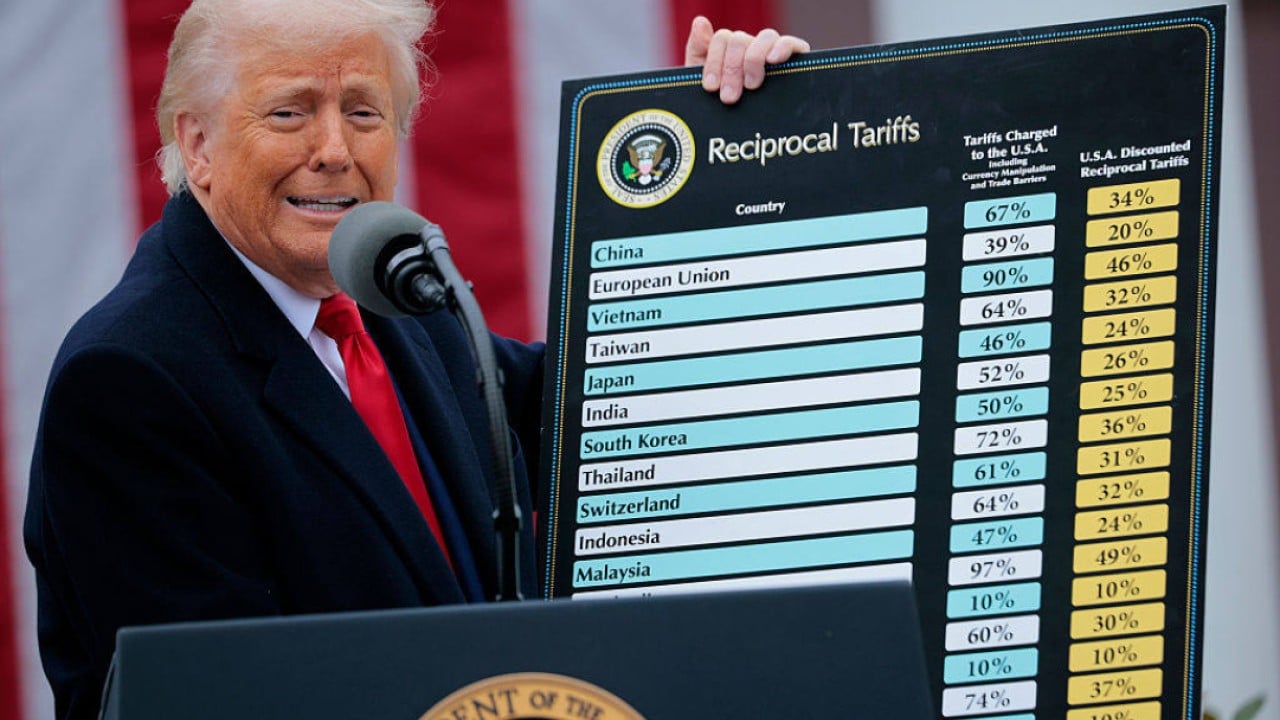
The federal government's attempt to reconcile its balance sheet after the Supreme Court's strike-down of the International Emergency Economic Powers Act (IEEPA) tariffs has run into an operational and legal wall. While Senior Judge Richard Eaton of the U.S. Court of International Trade (CIT) demands an immediate acceleration of the $166 billion refund process, the actual mechanics of capital restitution reveal a severe systemic mismatch. This friction is not merely administrative inertia; it is a structural collision between universal judicial mandates, the operational limits of U.S. Customs and Border Protection (CBP), and the strategic delays weaponized by the Department of Justice (DOJ).
Understanding this bottleneck requires analyzing the operational mechanics of the refund system, the legal maneuvers of the executive branch, and the asymmetrical impact on corporate supply chains.
The Dual-Track Refund System and Operational Asymmetry
The primary bottleneck is an operational division within the customs architecture: the separation of unliquidated entries from finally liquidated entries. When an importer brings goods into the United States, they pay an estimated duty. The entry remains open, or unliquidated, until CBP reviews and finalizes the transaction—a process known as liquidation, which routinely takes up to one year.
To handle the massive influx of restitution claims following the February Supreme Court ruling, CBP deployed the Consolidated Administration and Processing of Entries (CAPE) digital platform. CAPE was architected exclusively for "Phase 1" entry types:
- Unliquidated Entries: Open transactions where duty assessments have not been finalized.
- Recent Liquidations: Volatile entries settled within 90 days of the filing window.
Because these entries reside within the active operational ledger of CBP, the agency accepted $85 billion in claims and successfully directed the Treasury to disburse $20.6 billion.
The structural failure occurs at the boundary of finally liquidated entries. These are historical transactions settled past the statutory 90-day protest window. Under normal customs protocols, final liquidation acts as a permanent ledger lock. Judge Eaton’s March 4 universal order demanded that the government unlock this historical ledger and issue refunds universally to all 330,000 affected importers, regardless of whether they filed active lawsuits.
The CAPE platform possesses zero native capability to process or verify these legacy transactions automatically. Reversing a finalized liquidation requires manual audit, asset matching, and custom accounting work. This manual dependency creates a sharp operational divergence between two tiers of corporate entities:
[Systemic Restitution Choke Point]
       │
       ├─► Tier 1: Multinational Enterprise (Enterprise Scale)
       │     └─ Dedicated Customs Brokers ──► CAPE Architecture ──► Rapid Cash Restitution
       │
       └─► Tier 2: Mid-Market & SMB (Fragmented Infrastructure)
             └─ Manual Historical Audit ──► Legacy Ledger Lock ──► Working Capital Freeze
Large enterprise importers use institutional customs brokers and automated trade software to continuously map entry numbers to historical bills of lading. This setup allows them to exploit the CAPE portal immediately. Mid-market and small businesses lack this data infrastructure. They are forced to undergo manual, backward-looking audits to prove their eligibility, transforming a judicial victory into an operational cash freeze.
The Executive Strategy of Jurisdictional Attrition
The administration’s resistance to Judge Eaton’s orders is a deliberate legal strategy designed to limit cash outflows and buy time to implement replacement revenue mechanisms. This strategy relies on two distinct legal maneuvers.
1. The Separation-of-Powers Defense
The DOJ has fought aggressively against judicial overreach, specifically contesting the court's authority to depose senior leadership. When Judge Eaton ordered CBP Commissioner Rodney Scott to testify regarding the operational delays of the CAPE portal, the DOJ filed an emergency motion with the U.S. Court of Appeals for the Federal Circuit to block the mandate.
From an agency standpoint, forcing an agency head to testify sets a dangerous precedent that disrupts regular administration. By escalating this issue, the executive branch effectively pauses the lower court's enforcement capability, using procedural delays to slow down judicial oversight.
2. Universal vs. Party-Specific Injunctions
The core legal dispute centers on whether a specialized court has the authority to grant nationwide relief. The DOJ argues that based on the Supreme Court's ruling in Trump v. CASA, Inc., federal courts cannot issue universal injunctions that benefit non-litigants. The government contends that the CIT only has jurisdiction over the specific plaintiffs named in the 485 active lawsuits before it. Under this theory, the $166 billion liability drops significantly, as only companies that paid for active litigation would receive immediate refunds.
Judge Eaton’s counter-thesis rests on 2 U.S.C. § 1581, which grants the Court of International Trade exclusive, nationwide jurisdiction over trade disputes, combined with the U.S. Constitution’s Uniformity Clause. Because trade policy must remain uniform across all states, the CIT argues its remedies must apply universally to protect market equilibrium. By appealing this specific point to the Federal Circuit, the DOJ has introduced long-term legal uncertainty, giving them a valid reason to halt the development of legacy refund features within the CAPE system.
Fiscal Substitution and Corporate Cash Flow Realities
The executive branch's reluctance to speed up these refunds becomes clear when looking at the broader federal budget. The Supreme Court's ruling invalidating the IEEPA tariffs wiped out an estimated $1.7 trillion in projected federal revenue through Fiscal Year 2036.
To offset this massive shortfall, the administration is using the refund delay as an economic bridge while it rolls out alternative trade barriers. The Office of the U.S. Trade Representative (USTR) has already proposed a sweeping new tariff framework under Section 301 of the Trade Act of 1974, targeting 60 global economies under the justification of foreign forced labor practices.
| Tariff Regime | Statutory Authority | Fiscal/Revenue Projection (Through FY 2036) | Legal Vulnerability |
|---|---|---|---|
| Defunct Global Tariffs | IEEPA (1977 Act) | -$1.7 Trillion (Due to SCOTUS Invalidation) | High; Struck down by Supreme Court |
| Temporary Replacement | Section 122 | +$35 Billion | High; Already ruled illegal by CIT |
| Proposed Replacement | Section 301 | +$980 Billion | Moderate; Subject to 4-year structural reviews |
The Section 301 strategy aims to reclaim $980 billion over ten years, effectively replacing half of the lost IEEPA revenue. Because Section 301 investigations do not carry statutory time limits, they provide a permanent revenue stream that bypasses the emergency limitations of the IEEPA. The administration's legal strategy is clear: delay the $166 billion cash outflow via appeals until the new Section 301 tariffs are finalized in late July, allowing the government to offset the incoming refund claims with fresh import taxes.
Tactical Playbook for Enterprise Supply Chains
Importers cannot treat this situation as a passive legal matter. The overlap of ongoing appeals, manual system backlogs, and incoming Section 301 tariffs requires an active treasury and supply chain strategy.
Companies should immediately separate their import portfolios by liquidation status. All entries settled within the last 90 days must be routed through the CAPE portal to secure Phase 1 liquidity before any potential court-ordered pauses take effect.
For historical, finally liquidated entries, relying on the court's universal refund mandate is a high-risk strategy. Given the DOJ's focus on Trump v. CASA, Inc., the Federal Circuit may likely strike down the universal nature of the refund order. To mitigate this risk, corporate counsel should look at filing protective individual actions or formal administrative protests. This preserves the company's status as an active litigant, ensuring they remain eligible for refunds even if the universal mandate is overturned.
Finally, supply chain executives must prepare for a significant wave of new tariffs in late July. Treasury teams should plan for an upcoming working capital squeeze. The refunds hitting corporate bank accounts today are not found money; they are a temporary liquidity runway that will soon be consumed by the incoming 10% to 12.5% Section 301 duties.