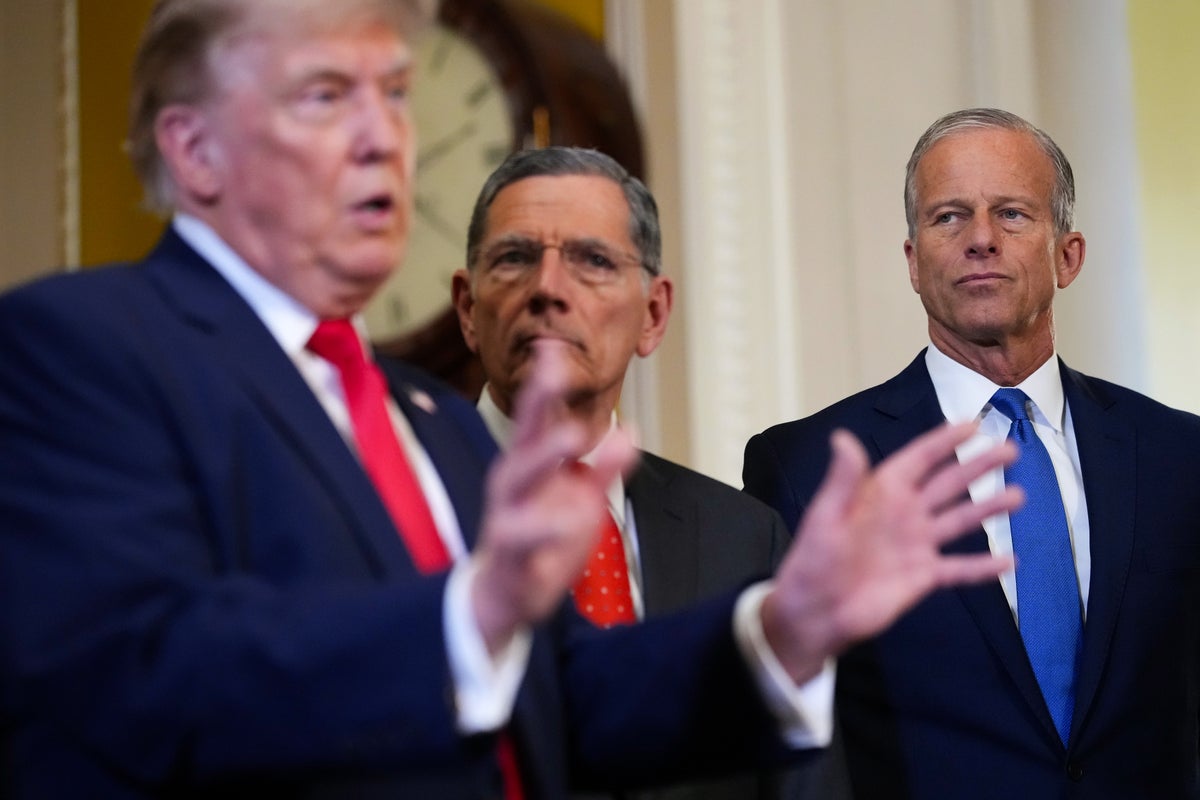
Executive mandates routinely collapse when forced through the structural bottleneck of the upper chamber. The recent dispute between White House Press Secretary Karoline Leavitt and Senate Majority Leader John Thune regarding the passage of the Safeguard American Voter Eligibility (SAVE) America Act offers a clear demonstration of institutional misalignment. When an executive administration issues public ultimatums to congressional leaders, it exposes a fundamental misunderstanding of parliamentary arithmetic, procedural thresholds, and intra-party incentive structures.
To evaluate why high-profile public pressure campaigns consistently fail to alter legislative outputs in the United States Senate, we must analyze the structural mechanics governing the chamber, the limits of executive influence, and the mathematical reality of vote procurement.
Executive Pressure Cycle:
[Executive Priority defined] ➔ [House Passage via Simple Majority] ➔ [Senate Filibuster Threshold (60 Votes)] ➔ [Public Ultimatum Execution] ➔ [Institutional Resistance / Gridlock]
The Mathematical Constraint of the Senate Floor
Public narrative frequently frames legislative delays as failures of political will or personal negotiation skills. In structural terms, however, legislative velocity in the Senate is bounded by rigid rules that cannot be overridden by executive irritation.
The Filibuster Threshold and Chamber Ratios
The baseline math of the upper chamber dictates legislative outcomes. In a 119th Congress where Republicans hold a tight 53-47 majority, the primary constraint on any non-reconciliation measure is the 60-vote cloture threshold required under Senate Rule XXII.
To advance the SAVE America Act—which mandates national photo identification and documentary proof of citizenship for voter registration—the majority leader requires seven Democratic votes, assuming absolute unity within his own caucus.
Total Senate Seats:           100
Current Majority:             53 (GOP)
Filibuster Cloture Threshold: 60
Required Defections Needed:   7
Internal GOP Defections:      4 (Reduces base to 49)
The mathematical bottleneck deepens when accounting for internal caucus variance. At least four Republican senators have expressed reservations about federalizing election standards or modifying the legislative filibuster. Consequently, the actual base support for the measure stands at 49 votes, creating an 11-vote deficit to achieve cloture.
The Limits of Executive Phone Banking
The executive position—articulated by the White House assertion that Senate leadership must simply "get on the phone and get the votes"—operates under a transaction model of persuasion. This model assumes three false premises:
- Identical Incentive Structures: Senators answer to statewide electorates rather than national presidential coalitions. A senator representing a moderate or blue-leaning state faces a terminal electoral penalty for supporting federal voting overhauls, one that cannot be offset by executive endorsements.
- Fungible Political Capital: Executive pressure applied through public rallies or press briefings creates a reactionary dynamic, hardening the position of dissenting senators whose brand depends on demonstrating independence from executive control.
- Zero-Sum Procedural Costs: Indiscriminately bringing failed cloture votes to the floor consumes limited floor time. Every day spent on a doomed procedural vote is a day lost for judicial confirmations, executive appointments, and statutory appropriations.
The Three Pillars of Intra-Party Friction
The tension between the executive branch and Senate leadership stems from three structural divergence points in the policymaking framework.
+-----------------------------------------------------------------------------------+
|                            STRUCTURAL DIVERGENCE MATRIX                           |
+--------------------------+----------------------------------+---------------------+
| Variable                 | Executive Branch                 | Senate Leadership   |
+--------------------------+----------------------------------+---------------------+
| Operational Horizon      | Short-Term (August Recess)       | Six-Year Terms      |
| Procedural Priority      | Policy Outcome                   | Institutional Rules |
| Risk Exposure            | Base Mobilization                | Majority Protection |
+--------------------------+----------------------------------+---------------------+
1. The Operational Horizon Asymmetry
The White House operates on an expedited political calendar anchored by upcoming recess deadlines and immediate campaign messaging goals. In contrast, Senate leadership must manage a multi-year strategy focused on preserving chamber majorities and protecting vulnerable incumbents facing competitive reelection cycles.
Forcing vulnerable senators to cast difficult votes on non-viable bills serves the executive's short-term messaging strategy while actively threatening the party's long-term legislative majority.
2. The Filibuster Protection Imperative
Executive demands to pass major legislation frequently imply a secondary choice: alter or abolish the traditional 60-vote filibuster threshold. Senate leaders understand that procedural changes are permanent. Eliminating the legislative filibuster to pass an election integrity bill yields short-term policy wins at the cost of total legislative vulnerability whenever control of the chamber inevitably flips.
Institutionalists within the Senate caucus treat the protection of Rule XXII as a core strategic asset, making them immune to executive threats regarding single-issue legislation.
3. The Limits of Federalization
The SAVE America Act requires voters to show documentary proof of citizenship, such as a passport or birth certificate, and forces states to verify voter rolls using federal Department of Homeland Security databases. This centralization introduces a philosophical fracture within conservative ranks.
Constitutional conservatives who prioritize federalism object to shifting the locus of election administration from the states to the federal government. This ideological divide means the failure to unify the caucus is a structural disagreement over state sovereignty, not a tactical negotiation error.
The Strategic Options for Senate Leadership
When facing executive pressure to pass high-barrier legislation, a Senate Majority Leader has three distinct operational plays, each carrying clear trade-offs and structural risks.
Options Matrix:
- Path A: Floor Exposure Play ➔ High Conflict, High Attrition
- Path B: Reconciliation Integration ➔ Moderate Feasibility, High Legal Risk
- Path C: Incremental Unbundling ➔ High Feasibility, Low Executive Satisfaction
Path A: The Floor Exposure Play
Leadership can call for a series of failed cloture votes to demonstrate the political reality to the White House.
- Mechanism: Schedule floor debate on the SAVE America Act, force a recorded vote on cloture, and let the bill fail publicly.
- Strategic Purpose: Offloads political responsibility back to the executive and highlights specific Democratic opposition for public messaging campaigns.
- Structural Failure Point: Exposes internal party fractures, damages moderate incumbents, and consumes precious legislative calendar days without advancing the policy goal.
Path B: The Reconciliation Integration Play
Leadership can attempt to dismantle the bill and insert its core operational elements into a broader budget reconciliation package.
- Mechanism: Frame voter identification mechanisms and citizenship verification checks as fiscal requirements linked to federal funding disbursements for state election administration.
- Strategic Purpose: Bypasses the 60-vote filibuster threshold, allowing the package to pass with a simple 51-vote majority under the provisions of the Congressional Budget Act of 1974.
- Structural Failure Point: Subjugates the legislative text to the Senate Parliamentarian under the Byrd Rule. Non-budgetary provisions that are purely incidental to fiscal outlays will be excised, stripping the policy of its key enforcement mechanics.
Path C: The Incremental Unbundling Play
Leadership can isolate consensus components of the broader bill and attach them to must-pass federal funding measures or defense authorization packages.
- Mechanism: Extract widely supported measures—such as basic federal standards for photo identification verification—while setting aside contentious mandates regarding state voter roll purges.
- Strategic Purpose: Forces bipartisan negotiation, achieves incremental policy adjustments, and protects vulnerable members from extreme political exposures.
- Structural Failure Point: Triggers immediate public backlash from the executive branch and political action committees that demand absolute compliance with the primary bill text.
Strategic Execution Framework
To resolve the impasse without eroding caucus unity or sacrificing institutional leverage, Senate leadership must execute a precise three-stage recalibration.
Phase 1: Legal Audit (Byrd Rule Analysis) ➔ Phase 2: Statutory Unbundling ➔ Phase 3: Bipartisan Floor Strategy
- Conduct a Byrd Rule Audit: Direct the Committee on Rules and Administration alongside the Budget Committee to isolate every revenue- and outlay-neutral clause in the SAVE America Act. Identify elements that can survive a Byrd Rule challenge for inclusion in upcoming fiscal measures.
- Unbundle Federal and State Mandates: Separate the requirement for state-level administrative compliance from federal agencies' obligations to share verification databases. Allowing states voluntary access to federal citizenship databases requires a far lower legislative lift than mandating federal oversight of state voting processes.
- Deploy Targeted Pressure on Bipartisan Coalitions: Shift pressure from internal caucus members to moderate opposition members by framing targeted components—such as basic ID standards—around existing state-level consensus norms.
Senate leadership must decline to bring non-viable, whole-bill text to the floor under threat of executive sanction. Directing legislative energy into procedural reconciliation mechanisms remains the only viable mechanism for delivering structural policy changes through a tightly divided upper chamber.