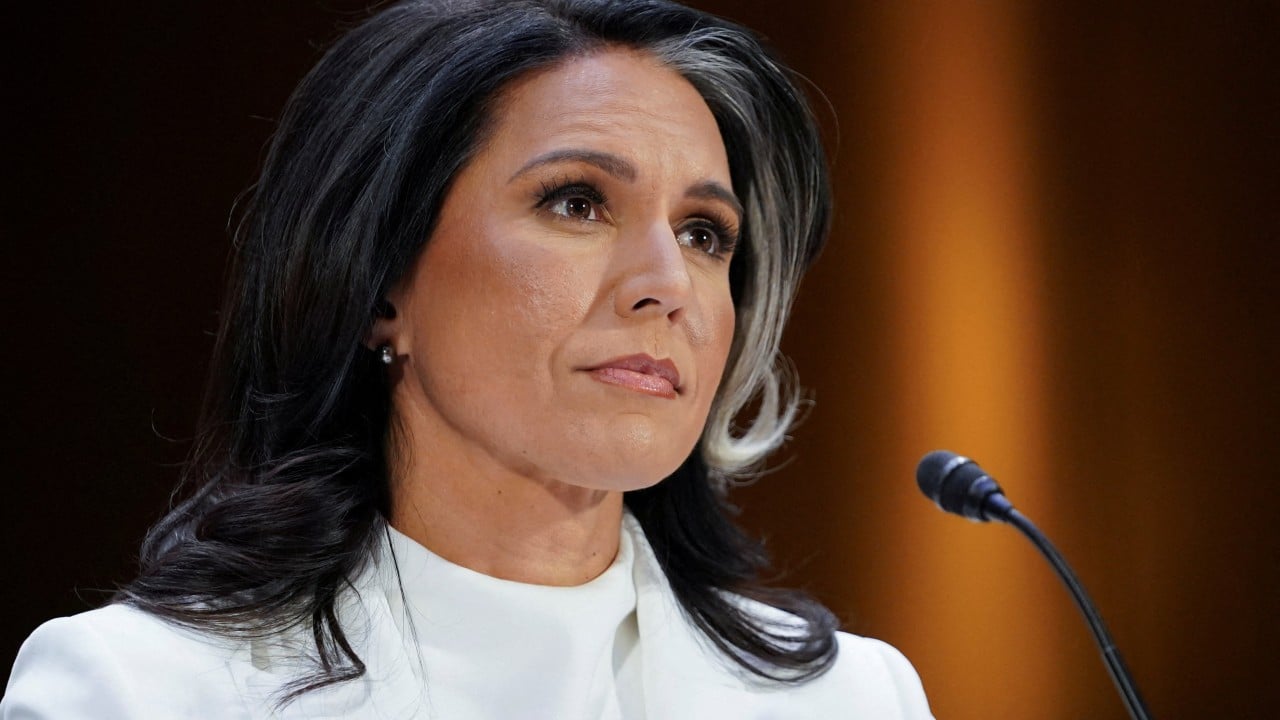
The departure of Tulsi Gabbard as Director of National Intelligence (DNI) represents more than an isolated executive transition; it is an empirical case study in the structural limits of ideological misalignment within a centralized executive branch. Outwardly attributed to pressing personal circumstances involving her husband’s health, the timeline and operational context of Gabbard’s departure point to a severe functional bottleneck. In executive management systems, the longevity of an atypical appointment is governed by a strict cost-benefit function: the political capital generated by appointing an ideological outsider must exceed the operational friction created by their systemic resistance to institutional directives.
When applied to national security apparatuses during active military operations, this cost function shifts rapidly. The outbreak of conflict with Iran introduced an unmanageable divergence between the DNI's core ideological stance and the White House’s operational demands. The resignation of Gabbard—following the departures of Attorney General Pam Bondi, Homeland Security Secretary Kristi Noem, and Labor Secretary Lori Chavez-DeRemer—establishes a clear pattern regarding the attrition rate of non-traditional executives when an administration transitions from a political movement to wartime execution. Meanwhile, you can read similar developments here: The NATO Command Myth and Why Marine Le Pen Actually Left Globalists a Massive Gift.
The Strategic Divergence Matrix
The structural failure of Gabbard's tenure as DNI can be analyzed through two distinct structural pillars: ideological friction and operational exclusion. The Office of the Director of National Intelligence was established post-9/11 to serve as an objective clearinghouse, synthesizing data from 18 separate intelligence agencies to present a unified factual baseline to the President. This role demands absolute alignment regarding threat recognition, even if policy choices differ.
Pillar One: The Threat Assessment Gap
The primary structural fracture occurred when Gabbard’s underlying foreign policy model collided with the administration’s tactical justifications for military action. In congressional testimony earlier this year, Gabbard stated explicitly that Iran had made no substantive efforts to rebuild its nuclear program following the previous year's June strikes. This assessment fundamentally undermined the primary strategic rationale used by the White House for its subsequent military actions. To see the bigger picture, check out the detailed report by The Guardian.
When the head of an intelligence community publicly maintains an empirical model that invalidates the administration's casus belli, the organizational friction reaches a critical failure point. This creates an institutional bottleneck where the intelligence product is no longer viewed by the executive as a tool for decision-making, but as an internal political obstacle.
Pillar Two: Operational Marginalization and Information Isolation
The consequence of this threat assessment gap was an immediate shift in information flow. In centralized command structures, when an executive is deemed a liability to policy execution, the organization rarely utilizes formal termination immediately due to the political costs involved. Instead, the system deploys a strategy of operational isolation.
Reports indicating that Gabbard was systematically excluded from high-level deliberations regarding the Iran conflict demonstrate this mechanism in action. The mechanics of information isolation operate as a feedback loop:
- An executive expresses fundamental skepticism regarding core operations.
- The central command isolates the executive to prevent internal leaks or policy delays.
- The executive’s access to real-time, actionable intelligence decreases.
- The executive's utility to the organization drops to zero, rendering the position tenable in name only.
This structural reality was compounded when Deputy Counterterrorism Official Joe Kent resigned over explicit policy disagreements regarding the war. Gabbard’s refusal to publicly denounce Kent signaled to the inner circle that her institutional loyalty lay with her anti-interventionist network rather than the executive command structure.
Measuring the Attrition Coefficient in High-Turnover Administrations
To evaluate the broader strategic impact, this departure must be examined within the wider ecosystem of cabinet turnover. Gabbard’s exit marks the fourth high-profile departure of a female cabinet member in rapid succession. Rather than relying on superficial sociological explanations, a data-driven analysis looks at the structural variables these positions shared.
| Cabinet Official | Former Role / Core Competency | Structural Point of Friction | Operational Consequence |
|---|---|---|---|
| Pam Bondi (Attorney General) | State-level litigation, political defense | Federal institutional norms vs. rapid executive mandates | Early exit / replacement |
| Kristi Noem (Homeland Security) | Domestic governance, border rhetoric | Execution of complex, multi-agency mass deportation logistics | Operational breakdown and exit |
| Lori Chavez-DeRemer (Labor) | Traditional labor balancing, legislative negotiation | Rapid deregulation mandates vs. institutional labor protections | Structural misalignment and exit |
| Tulsi Gabbard (DNI) | Non-interventionist geopolitics, legislative oversight | Inter-agency synthesis during active warfare vs. executive war narrative | Complete operational exclusion and resignation |
The data reveals that positions requiring highly coordinated, systemic execution (DNI and Homeland Security) suffer the highest friction when filled by populist disruptors. During peacetime or initial administrative phases, the political utility of these figures is high because they signal a break from institutional norms to the administration's base. However, during a transition to active foreign conflict, the premium placed on disruption drops sharply, replaced entirely by a demand for absolute executive compliance and seamless bureaucratic output.
Institutional Limitations of the Acting Director Mechanism
The designation of Aaron Lukas, the current Principal Deputy Director of National Intelligence, to assume the role in an acting capacity on June 30 reveals the administration's immediate tactical playbook. Transitioning to career bureaucrats or highly aligned deputies in an "acting" status provides distinct operational advantages while carrying long-term systemic risks.
Short-Term Operational Efficiency
An acting director drawn from the internal hierarchy immediately removes the communication bottleneck. Lukas understands the existing bureaucratic machinery of the ODNI and lacks the independent political profile that enabled Gabbard to publicly challenge executive intelligence narratives. Information flows resume, internal friction drops, and the intelligence product can be rapidly calibrated to support the operational requirements of the ongoing conflict with Iran.
Long-Term Statutory Vulnerability
The long-term limitation of this strategy rests within the legal and structural boundaries of federal vacancy laws. Acting officials lack the statutory weight and permanent mandate required to execute sweeping structural reforms or defend the intelligence community's budget and priorities on Capitol Hill.
Furthermore, relying on unconfirmed acting heads to manage the nation's covert operations during an active war weakens the legal durability of executive orders. Congressional oversight committees are highly likely to increase scrutiny, capitalizing on the vacancy to challenge the legitimacy of intelligence products generated under temporary leadership.
Immediate National Security Implications
The immediate consequence of this leadership transition will be an acceleration of the administration's military objectives in the Middle East. With the primary internal voice of caution removed from the intelligence loop, the friction holding back expanded kinetic operations against Iranian assets has dissolved.
The strategic play for defense contractors, international intelligence partners, and regional state actors is clear. Expect a tightening of the executive decision-making circle. The intelligence assessments presented to the White House moving forward will show significantly higher homogeneity, removing the divergent variables that Gabbard introduced. This minimizes internal debate but exponentially increases the risk of systemic confirmation bias, wherein the intelligence community selectively gathers data to validate a predetermined executive policy.
Organizations operating in volatile international markets must adjust their risk indices. The departure of the administration's primary anti-interventionist voice means that diplomatic off-ramps have narrowed significantly, making an escalation of hostilities the baseline scenario for the remainder of the quarter.