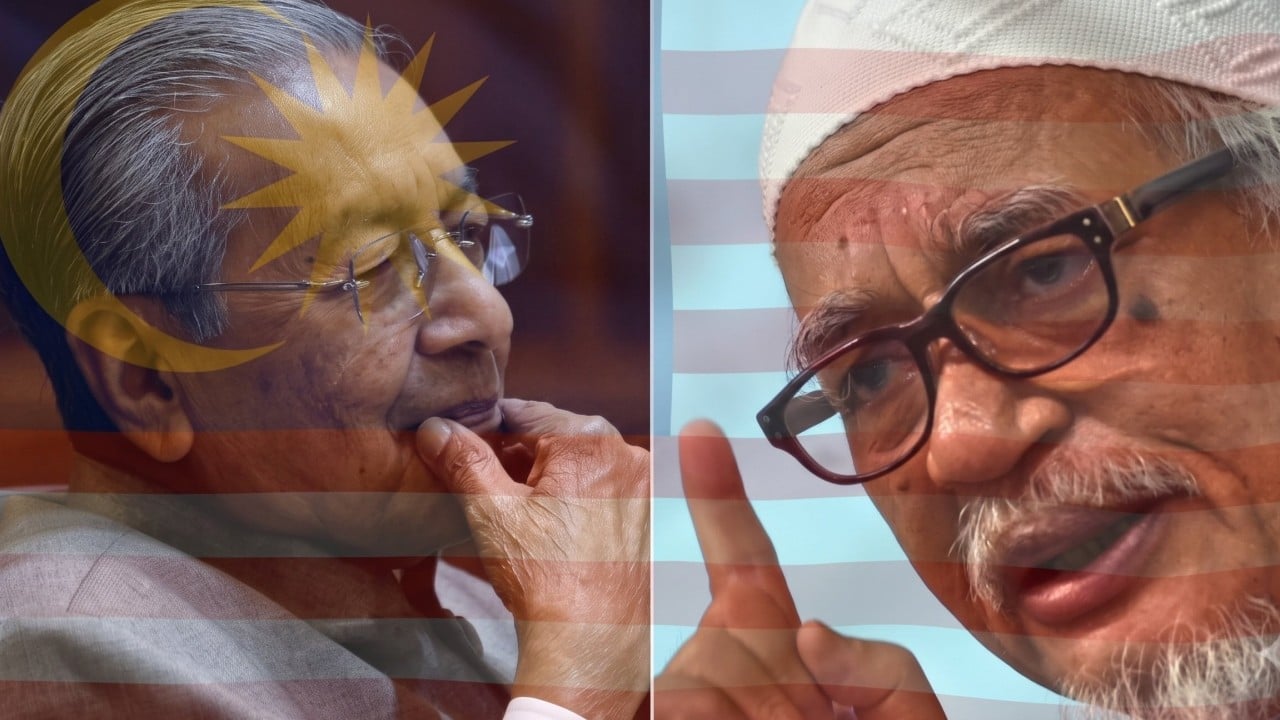
Political rhetoric surrounding the concept of Malay unity frequently treats ethnic consolidation as a frictionless, linear objective. When high-profile elder statesmen and conservative religious entities like Tun Dr. Mahathir Mohamad and the Parti Islam Se-Malaysia (PAS) issue synchronized demands for ethnic solidarity during electoral cycles, conventional media narratives interpret these moves as a straightforward consolidation of conservative voter bases. This assumption fails to survive a structural analysis of the sub-national electoral market. The call for Malay unity is not an operational political reality; it is a tactical mechanism deployed to offset specific structural deficits, minimize seat-splitting transaction costs, and attempt market arbitrage against entrenched incumbents.
To understand the operational realities of the Johor state election, analysts must look past ideological platitudes and measure the structural bottlenecks, demographic variance, and mathematical incentives that govern electoral mechanics in Malaysia's southern gateway.
The Structural Drivers of Electoral Demographics
Johor does not conform to the political patterns seen in the northern or eastern coastal states of Peninsular Malaysia, where high ethnic homogeneity allows for pure identity-driven messaging. The state presents a complex demographic matrix that alters the return on investment for purely ethno-religious rhetoric.
Johor Electoral Market Complexity Matrix:
[Demographic Heterogeneity] -> Dilutes absolute efficiency of ethno-religious branding
[Enlarged Youth Voter Cohort] -> Increases volatility and unpredictability of baseline turnouts
[Incumbency Machinery (BN/UMNO)] -> Raises structural barriers to entry for external coalitions
The Heterogeneity Factor
Unlike states like Kelantan or Terengganu, where Malay demographic density regularly exceeds 85%, Johor features highly diverse urban and peri-urban corridors. The presence of significant non-Malay voter concentrations in strategic southern economic zones means that any coalition aiming for a governing majority must calculate the net marginal loss of non-Malay support when escalating conservative rhetoric. A highly visible alignment with hardline religious factions yields diminishing returns in multi-ethnic seats, creating a distinct strategic dilemma for mainstream Malay parties.
The Undecided Youth Cohort
The introduction of automatic voter registration and the lowering of the voting age to 18 drastically expanded the state's voter registry. This structural expansion introduced a highly volatile segment of the electorate characterized by weak partisan alignment and low baseline participation rates. Because this cohort cannot be easily modeled using traditional machinery-driven turnout assumptions, the demand for Malay unity acts as an imprecise, aggregate attempt to capture unaligned ethnic voters who lack historical loyalty to legacy party structures.
The Strategic Logic of Joint Proclamations
When fringe or geographically displaced political entities align on a single rhetorical platform, the move is driven by structural necessity rather than ideological convergence. The partnership between Mahathir-aligned nationalist remnants and the machinery of PAS reflects a calculated effort to solve two distinct operational vulnerabilities.
The Machinery Deficit Function
Electoral performance requires a functional distribution of resources, localized branches, and mobilization personnel. Minor nationalist factions frequently possess high media visibility but lack the grassroots infrastructure required to execute get-out-the-vote (GOTV) operations across dozens of state constituencies. Conversely, PAS possesses a highly disciplined, deeply institutionalized grassroots machinery but faces a low ceiling of acceptance among modern, southern Malay electorates who historically favor a more secular development model.
Through this alliance, the involved entities attempt to execute a resource swap:
- Nationalist Components: Provide ideological legitimacy to urban and moderate center-right voters who are wary of clerical governance.
- Religious Components: Deploy an active, low-cost volunteer base capable of managing polling-district logistics and sustaining long-term campaign operations.
Eliminating the Seat-Splitting Penalty
Under Malaysia’s first-past-the-post (FPTP) electoral system, the fragmentation of a specific voter demographic across multiple ideologically similar candidates introduces a severe mathematical penalty. When multiple opposition parties contest the same ethnic base against a single well-entrenched incumbent—such as Barisan Nasional (BN)—they split the opposition pool, lowering the absolute victory threshold for the incumbent.
The structural impact of this fragmentation can be expressed through a basic pluralistic victory model:
$$\text{Victory Threshold} = \frac{V_{\text{Total}} - V_{\text{Non-Incumbent}}}{N} + 1$$
Where $V_{\text{Total}}$ represents total cast ballots and $N$ represents the number of competing opposition entities. As $N$ increases, the required winning vote share for a disciplined incumbent with a highly loyal core base drops significantly. The demand for unity is an explicit admission that unless $N$ is artificially reduced to one, the opposition faces structural elimination across multi-cornered contests.
Incumbency Advantage and Localized Value Propositions
The calls for cross-party ethnic unity face a significant barrier in Johor: the specific brand architecture of the incumbent Barisan Nasional, led by the United Malays National Organisation (UMNO). The localized political market in Johor features unique structural characteristics that insulate it from external political waves.
The Johor UMNO Exceptionalism Brand
Unlike northern chapters of the party, Johor UMNO positions itself as the historical birthplace of Malay nationalism, emphasizing institutional stability, economic modernization, and a distinct regional identity centered around the state monarchy. This localized narrative emphasizes economic performance and administrative competence over existential cultural anxieties.
Because the incumbent can claim credit for physical infrastructure development and direct investment inflows into the southern economic corridors, abstract appeals to save the ethnic group lose their persuasive power among middle-class, trade-dependent constituencies.
The Cost-Benefit Realities of Patronage Networks
Incumbency carries the distinct advantage of managing active local resource streams. Rural and semi-rural voter segments often rely on established local governance networks for agricultural support, welfare distribution, and communal infrastructure maintenance. For an unaligned voter, switching allegiance to an untested opposition alliance presenting a vague platform of unity involves a high structural risk with no guaranteed returns. The opposition’s inability to offer immediate material security means their value proposition remains purely prospective, limiting its conversion rate among risk-averse demographics.
Long-Tail Risks and Institutional Bottlenecks
Any strategy relying on an ideological coalition of convenience faces severe long-term operational challenges. The primary limitation of the Malay unity model is its lack of structural durability beyond the immediate campaign cycle.
Post-Election Governance Friction
If an alliance built purely on a shared opposition identity succeeds in capturing seats, it immediately encounters friction when tasked with policy formulation. The ideological gap between secular, state-led development nationalists and advocates for clerical, theological governance cannot be resolved by campaign rhetoric. The absence of a shared economic manifesto or administrative framework creates internal instability, a vulnerability that sophisticated incumbents exploit by highlighting the coalition's structural unpredictability to capital markets and foreign direct investment.
Core Voter Alienation
When distinct political brands merge their messaging too rapidly, they risk alienating their traditional core supporters.
- Moderate Nationalists: Voters who favor pragmatic governance may withdraw active support if they perceive their leaders are capitulating to clerical influence.
- Hardline Religious Loyalists: Activists driven by theological purity may reduce their campaign output if they feel their identity is being diluted to serve the secular ambitions of legacy politicians.
This internal friction dampens absolute turnout, neutralizing the exact mathematical advantage the alliance was designed to achieve.
Tactical Execution Matrix
To evaluate the actual competitive strength of this ideological campaign, analysts must monitor concrete operational indicators rather than media declarations. The electoral outcome will be determined by three measurable factors:
| Performance Metric | Operational Indicator | Strategic Consequence |
|---|---|---|
| Volumetric Ticket Split | Percentage of multi-cornered contests successfully reduced to direct head-to-head fights. | A high reduction rate concentrates anti-incumbent votes; a low reduction rate ensures an incumbent victory. |
| Youth Turnout Velocity | Total participation rate among registered voters aged 18 to 25 in rural districts. | High turnout favors anti-establishment forces; low turnout solidifies the incumbent machinery's structural advantage. |
| Cross-Ethnic Leakage | The shift of moderate, middle-income voters toward pragmatic local alternatives. | High leakage cap options for the opposition, preventing them from achieving a viable governing path. |
The true test of the campaign lies in the configuration of candidate nominations. If the calls for unity fail to produce a single, unified opposition candidate in key battleground seats, the rhetoric remains a marginal narrative. The underlying structural realities of Johor's political landscape demand localized economic solutions and clear administrative roadmaps. Ideological alliances that rely on abstract sentiment without structural depth will consistently find their ambitions checked by disciplined party machinery and a diverse, pragmatic electorate.