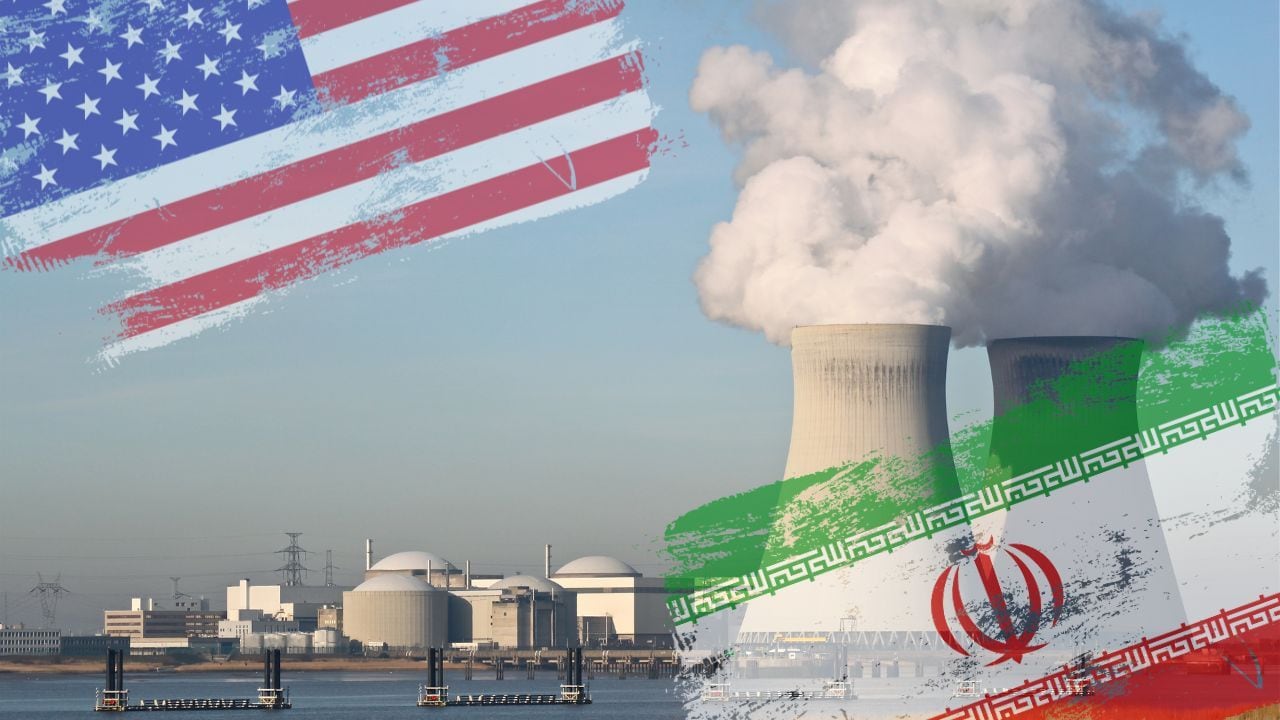
The prevailing narrative in Western media often suggests that the United States and Israel move in a seamless military lockstep regarding the Islamic Republic of Iran. Public statements from the Rose Garden or the Prime Minister’s Office in Jerusalem frequently emphasize an "unbreakable bond" and "shared strategic objectives." However, beneath the surface of diplomatic pleasantries lies a fundamental, structural divergence in how both nations define a "win" against Tehran. While both powers view a nuclear-armed Iran as a threat, their thresholds for military action, their definitions of regional stability, and their ultimate endgames are increasingly at odds. This gap is not merely a matter of tactical disagreement. It is a profound difference in national survival calculus.
Director of National Intelligence Tulsi Gabbard has recently spotlighted this rift, noting that the war aims of the two allies are not synonymous. This observation cuts through the typical bipartisan rhetoric in Washington. For the United States, Iran is a significant regional challenge that must be managed to prevent a global energy crisis or a massive Middle Eastern conflagration that would suck American resources away from the Pacific. For Israel, Iran is an existential shadow. This distinction changes everything from the selection of targets to the timing of an engagement.
The Buffer vs The Brink
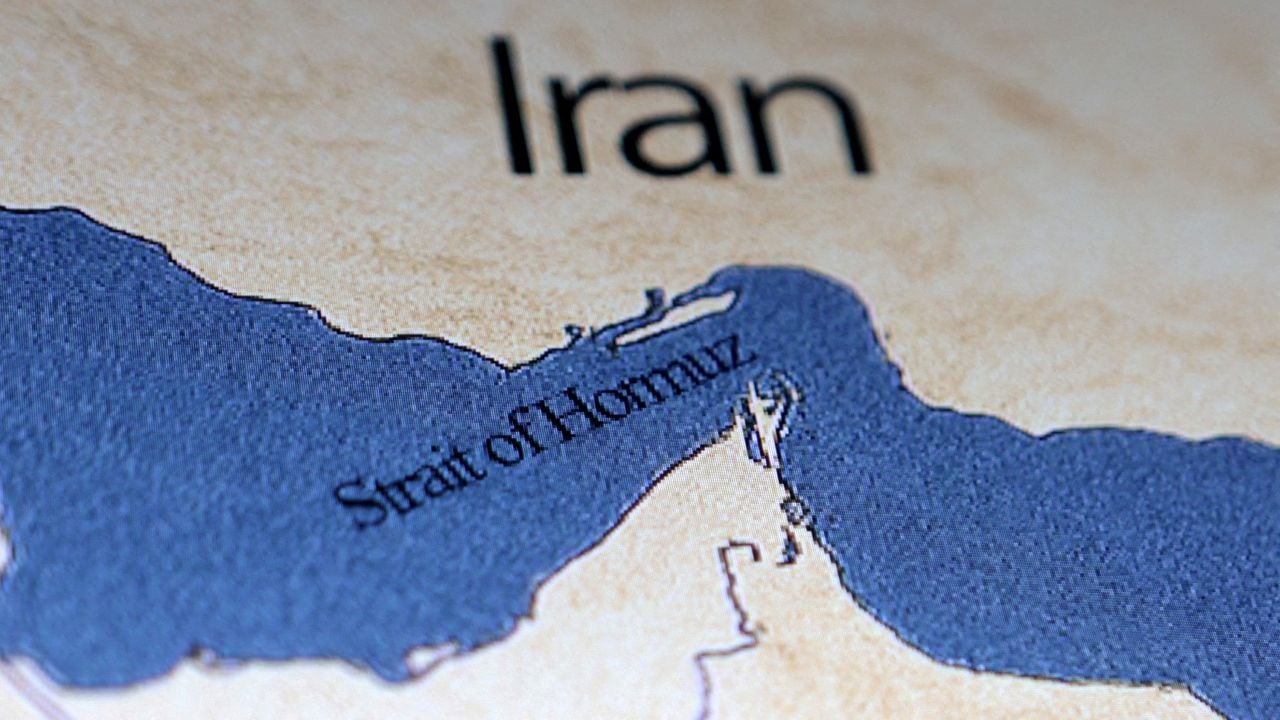
Washington’s primary objective since the 1979 revolution has been containment. The U.S. seeks to maintain the status quo—a delicate balance where Iran is influential enough to require American "protection" for Gulf allies, but not powerful enough to actually close the Strait of Hormuz. Success for the Pentagon looks like a Persian Gulf where the oil flows and the regional players are too busy staring each other down to challenge American hegemony.
Israel does not have the luxury of a 7,000-mile buffer.
Jerusalem views the "Ring of Fire"—the network of Iranian proxies including Hezbollah, Hamas, and the Houthis—as a slow-motion strangulation. While the U.S. might be satisfied with a "freeze for freeze" nuclear deal that kicks the can down the road by five or ten years, Israel sees such delays as a window for Iran to fortify its underground facilities beyond the reach of conventional bunker-busters. When the U.S. talks about "de-escalation," Israeli security hawks hear "acquiescence to a nuclear-capable neighbor."
Red Lines and Ghost Lines
The technical definition of a "red line" is where the most friction exists. For years, the U.S. red line has been the actual assembly of a nuclear warhead. This is a high bar. It requires intelligence agencies to catch the Iranian leadership making a specific, irreversible decision. It allows Tehran to sit at the "threshold"—possessing the centrifuges, the enriched uranium, and the delivery systems, but stopping just short of the final "click."
Israel’s red line is much further back. It focuses on "breakout capability." If Iran has the means to produce enough weapons-grade material for a bomb within weeks, Israel considers the line already crossed.
This discrepancy creates a dangerous intelligence gap. If Israel decides to strike Iranian nuclear sites like Natanz or Fordow based on their "threshold" math, they may do so without the full backing of a U.S. administration that believes there is still time for a diplomatic "off-ramp." This isn't just theory. We have seen this tension play out in the aftermath of various "mysterious" explosions at Iranian industrial sites. Washington often reacts with a mix of quiet frustration and public distancing, fearing that Israeli "kinetic" actions will force the U.S. into a war it hasn't budgeted for.
The Proxy Paradox
American strategy often treats Iranian proxies as a series of separate, localized problems to be solved via regional diplomacy or limited retaliatory strikes. The U.S. wants to degrade the Houthis enough to stop them from hitting ships, or strike Kata'ib Hezbollah in Iraq just enough to stop drone attacks on U.S. bases. It is a strategy of "proportionality."
Israel has moved past proportionality.
Following the events of the last two years, the Israeli military establishment has shifted toward a "decapitation" strategy. They are no longer interested in pruning the branches of the Iranian proxy tree; they are targeting the roots. This was evidenced by the strike on the Iranian consulate building in Damascus, which eliminated senior IRGC leadership. That move caught the Biden-Harris administration off guard and forced a direct Iranian retaliatory strike on Israel—a scenario the U.S. had spent decades trying to avoid.
The U.S. goal is to keep the "Cold War" in the Middle East from turning "Hot." Israel, conversely, feels it is already in the middle of a hot war and that the U.S. insistence on restraint is actually a recipe for long-term disaster.
The Economic Shield vs The Military Sword
There is also a significant disagreement on the efficacy of sanctions. Washington loves sanctions. They are a low-cost, high-visibility tool that allows politicians to claim they are "taking action" without risking American lives. The U.S. Treasury Department has become the primary weapon of choice against Tehran, freezing assets and targeting shipping networks.
Jerusalem, however, has grown cynical regarding the "maximum pressure" campaign. They have watched Iran build a "resistance economy," leveraging black-market oil sales to China and developing domestic industries that bypass Western financial systems. From the Israeli perspective, every day spent waiting for sanctions to work is another day Iran spends perfecting its missile precision.
The U.S. views the military option as a "last resort," something so catastrophic that it should stay on the shelf indefinitely. For the Israeli cabinet, the military option is a "perpetual necessity," a tool that must be used regularly to reset the "deterrence clock."
The Shadow of the Pacific
We cannot ignore the role of China in this split. The U.S. military is currently undergoing a massive "Pivot to Asia." Every carrier group stationed in the Eastern Mediterranean is one less carrier group patrolling the South China Sea. For Washington, the "Iran problem" is a distraction from the real existential threat: the rise of a peer competitor in Beijing.
Israel does not care about the South China Sea.
This creates a situation where the U.S. is incentivized to accept a "bad deal" or a "messy peace" with Iran just to clear its desk. Israel knows this. They understand that as the U.S. looks East, the security guarantees that have held for seventy years might start to fray. This leads to a more "independent" Israeli foreign policy—one that is more likely to take unilateral risks that could drag the U.S. into a conflict against its will.
The Endgame Problem
What does a post-conflict Iran look like? This is perhaps the most overlooked area of disagreement.
Washington, perhaps scarred by the nation-building failures in Iraq and Afghanistan, has no desire for regime change. They want a "behaved" regime. They want a version of the Islamic Republic that stops exporting revolution and starts playing by international rules. There is a deep-seated fear in the State Department that a collapsed Iran would create a power vacuum far more dangerous than the current government.
Israel, however, sees the current regime as inherently unchangeable. The "doctrine of the periphery," which once saw Israel seeking alliances with non-Arab states like Iran, is dead. In its place is a cold realization that as long as the current clerical establishment is in power, Israel will never be safe. While Jerusalem doesn't explicitly call for regime change in every diplomatic meeting, their actions suggest they are aiming for the total systemic collapse of the IRGC's power structure.
Navigating the Split
This divergence leaves the U.S.-Israel relationship in a state of constant, managed crisis. The challenge for future policy makers is not to pretend that the aims are the same, but to figure out how to coordinate while they are different.
If the U.S. continues to push for a diplomatic solution that Israel views as a death warrant, Israel will eventually act alone. If Israel acts alone, the U.S. will be forced to choose between abandoning its closest ally or entering a war it is desperate to avoid. This is the "Alliance Trap." It is the most volatile dynamic in modern geopolitics, and it is being fueled by a fundamental misunderstanding of what each side actually wants.
The U.S. wants a quiet Middle East so it can focus on China. Israel wants an Iran that is physically incapable of threatening its borders. Those two goals are increasingly mutually exclusive. As the enrichment levels in Iranian facilities climb toward 90 percent, the time for "managing" this disagreement is running out. The friction is becoming heat.
Watch the skies over the Eastern Mediterranean. The next time an "unidentified" aircraft strikes a sensitive site in Isfahan or Tehran, do not look for a joint press release. Look for the silence between the two allies. That silence is where the true story lives.
Would you like me to analyze the specific military capabilities of the Israeli Air Force compared to Iran’s air defense networks?