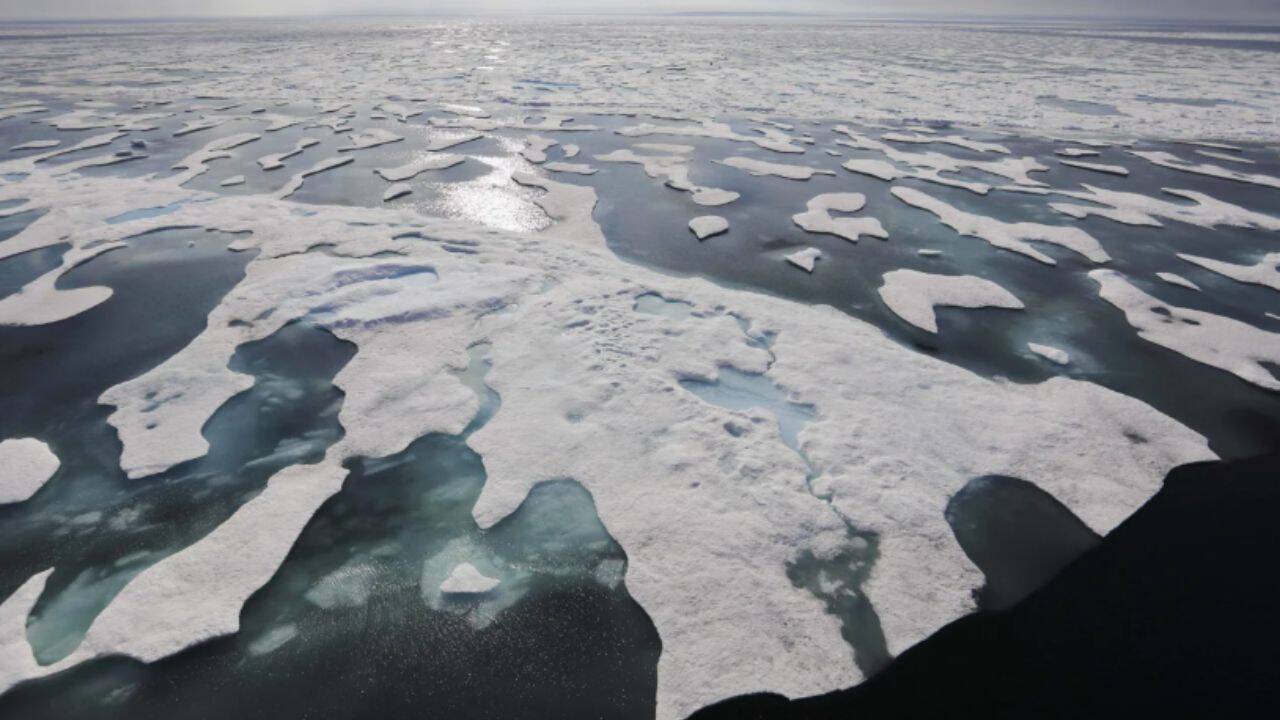
In early 2024, a team of researchers in the Canadian Arctic attempted to save the polar ice cap by pumping seawater onto the existing ice pack. The logic seemed simple: freeze more water on top, build a thicker shield, and reflect more sunlight back into space. The experiment succeeded in making the ice thicker and brighter. However, this localized success masks a devastating thermodynamic trap. Flooding the ice actually insulates the ocean below, accelerates sub-surface melting, and introduces salt that fundamentally compromises the structural integrity of the ice sheet.
Climate hacking is no longer a fringe theory. It is a desperate, multi-million-dollar industry. But as tech startups and academic institutions rush to deploy these regional fixes, they are colliding with the unforgiving laws of physics.
The Thermodynamics of a False Shield
To understand why flooding the Arctic is a flawed strategy, one must look beneath the surface. The Arctic ice sheet does not just melt from the top down; it is under constant assault from relatively warm ocean currents below.
When researchers pump liquid seawater onto the surface of thin ice during the freezing depths of winter, that water does indeed freeze rapidly. It creates a bright, dense layer of new ice. This is the metric that geoengineering proponents point to as a victory. The ice is measurably thicker.
But physics demands a tradeoff.
Seawater is highly saline. When it freezes on top of an existing ice sheet, it does not form the tough, interlocking crystalline structure of older, multi-year sea ice. Instead, it creates a slushy, brine-heavy layer. This salty top layer acts as a massive thermal blanket. By trapping the ocean's heat beneath the ice pack, the artificial layer prevents the natural, deep-winter thickening that occurs when cold air penetrates down through clean ice.
[ Arctic Air: -30°C ]
         |
         v
+-----------------------+ <-- Artificial Brine Ice (High Salt, Insulating)
|                       |
+-----------------------+ <-- Original Ice Sheet
|                       |
+-----------------------+
         ^
         |
[ Trapped Ocean Heat: Accelerates Bottom Melting ]
The result is an engineering paradox. You gain a few inches of fragile, salty ice on top while sacrificing the thick, stable base underneath.
The Salt Water Sabotage
The presence of salt changes everything. Multi-year sea ice is resilient precisely because, over time, gravity drains the highly concentrated salt pockets out of the ice, leaving behind a nearly pure, rock-solid freshwater matrix. This natural desalination process takes years.
When engineers bypass this timeline by spraying thousands of gallons of ocean water onto the surface, they are deliberately injecting massive quantities of salt into the very structure they want to reinforce.
- Lower Melting Point: Saline ice melts at a significantly lower temperature than pure freshwater ice. As spring approaches, this artificially thickened layer is the first to degrade.
- Structural Weakness: High-brine ice is porous and structurally brittle. It lacks the tensile strength to withstand the mechanical shearing forces of ocean swells and wind currents.
- The Albedo Deception: While the new ice looks brighter and more reflective (a high albedo rating) in the short term, its rapid degradation in spring creates melt ponds faster than natural ice. These dark pools of water absorb more solar radiation, ultimately accelerating the net melting cycle.
A hypothetical scenario illustrates this risk. Imagine a structural engineer trying to reinforce a weakening concrete bridge by spraying a quick-drying, salt-laden plaster over the top. The bridge might look thicker from a distance, but the internal chemistry is compromised, and the foundation degrades faster under the weight.
The Unchecked Capital of Climate Hacking
The rush to fund these Arctic interventions is driven by a mix of genuine desperation and corporate opportunism. Silicon Valley venture funds and climate tech accelerators are actively scouting for scalable planetary fixes. The allure is obvious: a company that can provably restore polar ice could unlock billions in carbon offset markets or government geoengineering subsidies.
But the governance of these projects exists in a legal vacuum.
Most of these experiments take place in remote territorial waters or international zones where regulatory oversight is minimal. Indigenous communities, who have lived on and read the ice for generations, are rarely consulted with any real veto power. Instead, they are treated as bystanders to high-tech field trials conducted by western academics and tech entrepreneurs.
The danger is not just that these projects will fail; it is that they will create a false sense of security. If policymakers believe that a fleet of automated pumps can simply rebuild the ice cap every winter, the pressure to curb global carbon emissions vanishes.
The Scalability Nightmare
Even if the thermodynamics worked perfectly, the sheer scale required to alter the Arctic trajectory makes the enterprise practically impossible.
The Arctic Ocean covers upwards of 14 million square kilometers. To thicken even a fraction of this area would require an infrastructure footprint of staggering proportions. Millions of pumps, powered by wind turbines or fossil-fuel-burning generators, would need to be deployed across the most hostile environment on Earth.
The logistics alone present an environmental threat. The carbon footprint of manufacturing, transporting, deploying, and maintaining millions of mechanical units across the ice pack would likely offset any local cooling benefits. Furthermore, mechanical failures would leave the Arctic littered with industrial debris, heavy metals, and plastic components as the ice shifts and breaks apart.
We are trying to cure a systemic circulatory disease with a localized cosmetic treatment. The Arctic is not melting because it lacks pumps; it is melting because the global atmosphere contains over 420 parts per million of carbon dioxide. Forcing seawater onto the surface of a dying ice sheet ignores the root cause while introducing a host of unpredictable, dangerous feedback loops.
The physics are clear. You cannot manipulate the thermostat of the planet by tricking the surface while destabilizing the foundation. Until we address the industrial emissions driving the global thermal imbalance, pumping water onto the ice is merely rearranging the deck chairs on an iceberg that has already begun to capsize.