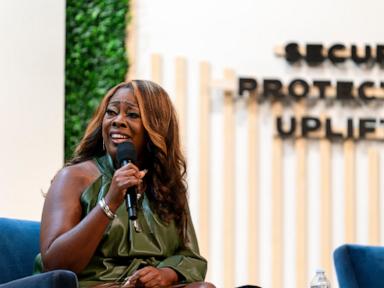
Philanthropy has a massive spending problem. If you look at the American South, over half of the Black population lives there, yet organizations explicitly dedicated to Black women and girls receive less than one percent of the region's $4.8 billion in philanthropic investments. It is a staggering gap. It is also exactly why the Southern Black Girls and Women's Consortium just announced a new $350,000 round of funding for two dozen grassroots groups across 13 states.
This funding drops at a moment when grassroots organizations face severe financial crunches. The current federal environment has put diversity, equity, and inclusion initiatives on defense. With federal agencies actively targeting civil rights frameworks under the guise of investigating anti-white bias, corporate and traditional institutional donors are quietly retreating.
The Reality of the Southern Funding Freeze
Corporate backsliding is real. Chanceé Lundy, the executive director of the Southern Black Girls and Women's Consortium, openly acknowledges how difficult it has become to sustain traditional funding partnerships. The political climate makes race-conscious and gender-conscious giving a target for conservative backlash.
When institutional dollars dry up, local groups on the ground feel the squeeze first. The $350,000 grant pool specifically targets small, community-led organizations operating under tight budgets. These groups handle the essential, messy work that massive national charities rarely touch. We are talking about maternal health access in medical deserts, local gender-based violence prevention, and direct educational support for girls who are routinely pushed out of underfunded school systems.
LaTosha Brown, the prominent organizer and co-founder of the Black Voters Matter Fund, points out that Black women's historic role in driving progressive social movements makes them an immediate target when the political pendulum swings. The South has a long history of relying on the unpaid or underfunded labor of Black women to sustain its economy and culture while simultaneously denying them institutional protection.
Moving Money via the Joy and Justice Tour
Instead of hosting a stuffy, corporate gala in Washington or New York to hand out checks, the consortium is taking the money directly to the streets. The grant announcement coincides with their multi-city Joy and Justice tour. The tour covers nine cities across eight Southern states, setting up stages and resource drives directly at schools and community centers in majority-Black neighborhoods.
There is a strategic reason for this approach. Traditional philanthropy forces small non-profits to jump through endless bureaucratic hoops, writing multi-page proposals just to secure a few thousand dollars. This tour flips that power dynamic. By showing up physically in these communities, the consortium combines direct financial backing with immediate, visible community building.
One notable stop includes a rally at the Virginia Capitol. The goal there is clear. Organizers are working alongside local agency leaders to protect what remains of diversity initiatives within state governance. It is a direct confrontation with the broader national push to dismantle equity programs.
Where the Money Goes
The consortium operates through the Black Girls Dream Fund, an ambitious initiative aiming to raise $100 million over a decade. Since launching in 2020, they have managed to move $11.4 million to over 250 organizations.
The money from this specific $350,000 cycle is divided among two dozen partners. These partners operate across 13 states, including Alabama, Mississippi, Georgia, and Texas. The funding cap for individual resistance and resilience grants typically hovers around $20,000. For a grassroots group with an annual operating budget under $1 million, a $20,000 cash injection determines whether they keep their doors open through the winter.
Flipping the Victim Narrative
The most compelling aspect of this Southern tour is its explicit rejection of trauma-based fundraising. Most non-profit marketing relies heavily on displaying poverty or suffering to extract dollars from wealthy donors. Lundy and her team reject that framework entirely.
They argue that Black girls are not victims who need saving. They are the actual solutions to the systemic issues plaguing their communities. When you fund a local maternal health initiative run by Black women in rural Alabama, you are not just funding a service. You are funding the expertise of people who know the local community because they live there.
Navigating the current legal environment requires serious resilience. Non-profits are learning to restructure their language, shield their programming, and rely more heavily on trusted, aligned networks rather than fickle corporate sponsors who vanish at the first sign of a legal threat.
If you run a local community group or want to support this ecosystem, look closely at your funding streams. Diversify away from standard corporate grants that carry restrictive DEI clauses. Lean into regional giving circles and mutual aid networks that prioritize direct action over corporate optics. Check out the Southern Black Girls and Women's Consortium to see their regional networking schedules and find out how to align your local organizing work with their upcoming state-level coalition meetings.