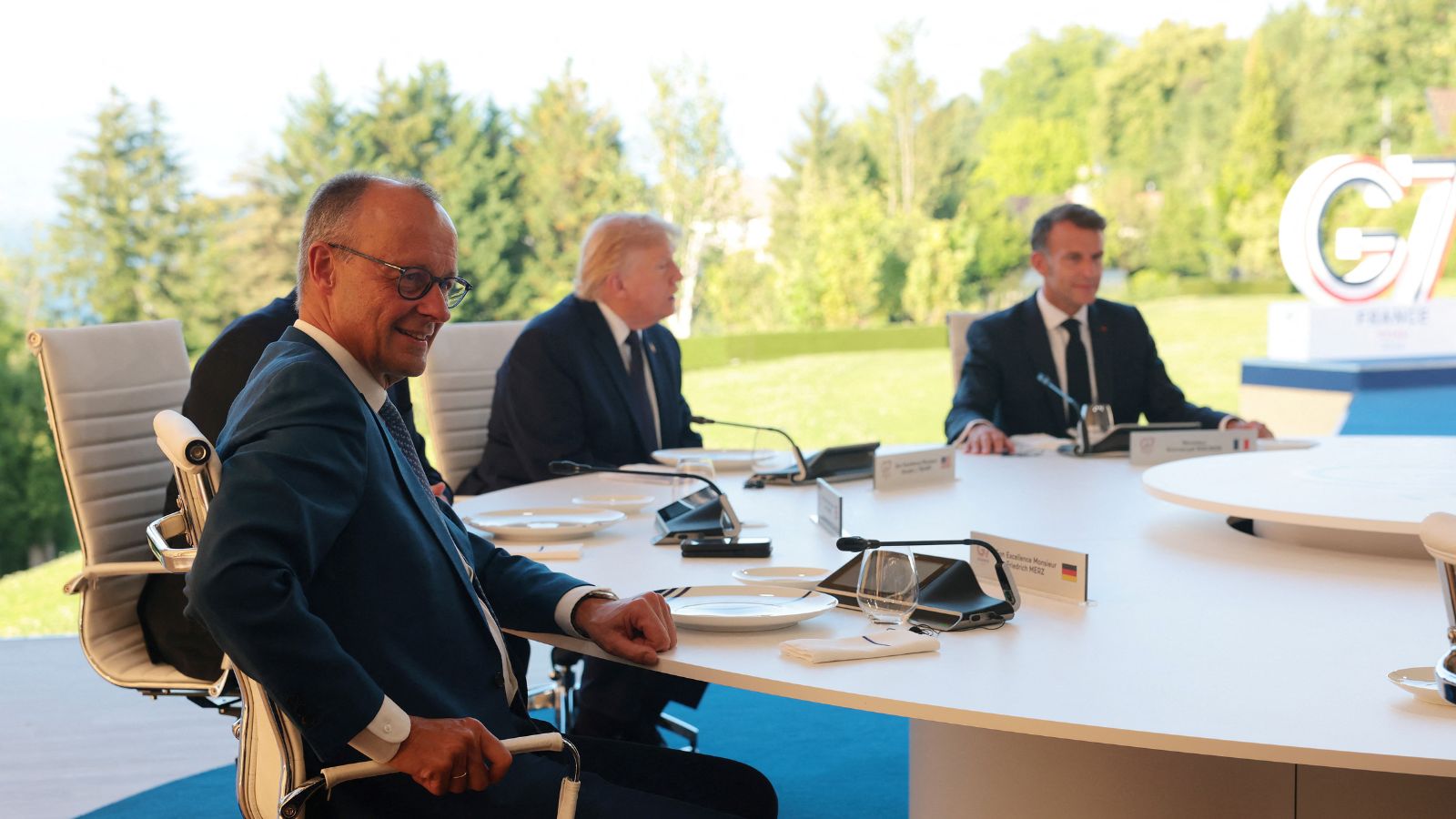
The headlines out of the G7 summit in Evian read like a script from a political thriller that went straight to DVD.
The media wants you to look at the optics. Donald Trump confidently declaring that "Iran is finished" while shifting the entire Western spotlight onto Ukraine. Emmanuel Macron playing the master conductor, pulling Volodymyr Zelenskyy into the frame for a high-stakes photo-op. The consensus among the chattering classes is clear: the West is consolidating its power, narrowing its focus, and preparing to deliver a decisive geopolitical checkmate.
It is a comforting narrative. It is also completely wrong.
What we witnessed on Day 1 in Evian was not a masterclass in strategic alignment. It was an exercise in collective delusion. By treating global flashpoints like a game of whack-a-mole—declaring one crisis resolved so resources can be funneled into another—the G7 leaders demonstrated a fundamental misunderstanding of modern asymmetric warfare and economic reality.
I have spent years analyzing capital flows and state-sponsored economic coercion in high-risk zones. If there is one thing the data proves, it is that lines on a map do not contain modern conflicts, and declarations of victory are usually just previews of a larger crash.
The Myth of the Finished State
Let’s start with the most glaring piece of political theater: the assertion that Iran is "finished" and can be safely ignored while the West doubles down on Eastern Europe.
This is a dangerous miscalculation built on outdated twentieth-century metrics. In the minds of traditional policymakers, a nation is neutralized if its currency is tanking, its internal politics are fractured, and its conventional military is contained. But that is not how modern rogue states operate.
The Reality Check: You cannot declare a state "finished" when its primary leverage exists entirely outside its official borders.
Iran's power has never been tied to its GDP or the strength of its conventional army. Its strength lies in its network of asymmetric proxies, its ability to disrupt critical maritime choke points like the Bab-el-Mandeb strait, and its deep integration into the shadow energy markets that keep major Asian economies running.
To say Iran is no longer a priority because of domestic pressures ignores the basic mechanics of regional escalation. Historically, when isolated regimes face severe internal or economic stress, they do not quietly fade into the background. They export stability-ending chaos to survive.
Imagine a scenario where Western intelligence shifts its surveillance assets, naval deployments, and cyber-defenses entirely away from the Middle East to maximize support for Ukraine. The result isn't a neutralized Iran; it is an invited invitation for a massive, uncoordinated surge in proxy attacks on global shipping lanes, driving oil prices past $120 a barrel and instantly crippling the very Western economies trying to fund the Ukrainian war effort.
The Ukraine Funding Trap
The second pillar of the Evian consensus is that a hyper-focus on Ukraine, validated by Zelenskyy’s presence at the Macron-led summit, is the fastest route to global stability.
The strategy currently being pushed by Washington and Paris relies on a flawed premise: that infinite financial and material injections can overcome a structural deficit in industrial manufacturing capacity.
Let's look at the hard data that the summit communiqués conveniently gloss over:
| Metric | The G7 Assumption | The Industrial Reality |
|---|---|---|
| Ammunition Production | Financial pledges can instantly scale output. | Lead times for raw chemical components exceed 18 months. |
| Sanctions Effectiveness | Isolation breaks state resolve. | Parallel supply chains through third-party nations neutralize blockades. |
| Economic Consensus | Unified Western resolve dictates global market trends. | The Global South is actively building alternative financial clearing systems. |
Western leaders speak as though money is a direct substitute for industrial throughput. It isn't. You can pledge tens of billions of dollars in a afternoon on the French Alps, but you cannot manifest artillery shells or air defense missiles out of thin air when your domestic defense industrial base has been hollowed out by decades of peacetime outsourcing.
By framing the conflict as a problem that can be solved simply by shifting focus and cash away from other regions, the G7 is setting up an expectation that reality cannot meet. It is a strategy built on public relations, designed to appease domestic voters rather than achieve a sustainable macroeconomic or military equilibrium.
Dismantling the PAA Fallacies
Whenever these summits occur, the public asks the wrong questions because they are fed the wrong premises. Let's correct the record on the two most common inquiries surrounding the Evian summit.
Is the G7 successfully cutting off funding for rogue states?
No. The question assumes that Western financial dominance remains absolute. The truth is that aggressive sanctions packages have acted as an accidental catalyst for the creation of a highly sophisticated, parallel global economy.
When you boot major players out of the SWIFT banking system, they don't stop trading; they build alternative mechanisms. The volume of dark-market oil trading and non-dollar denominated transactions has created an economic ecosystem completely immune to G7 dictates. The sanctions aren't starving these states; they are just rendering them invisible to Western regulatory oversight.
Will a unified G7 focus bring a swift end to the conflict in Europe?
Absolutely not. Believing that a shift in rhetorical focus will yield a quick victory ignores the logic of attrition. Attrition is not a matter of political will; it is a cold mathematical equation involving demographic depth, manufacturing capacity, and resource availability. By signaling that they are willing to ignore other global threats to gamble everything on a single theater, G7 leaders are telling their adversaries exactly where the structural breaking point lies.
The True Cost of Strategic Tunnel Vision
The real danger of the Evian summit is the illusion of choice. Leaders behave as if they have the luxury of prioritizing one threat over another, choosing between the European theater and the Middle Eastern theater like a consumer picking a streaming service.
Global stability does not operate on a menu. The moment you publicly declare that you are looking away from one threat to focus on another, you cede the initiative. You give up the chessboard.
The contrarian truth is that the West cannot afford the strategy laid out in Evian. The financial plumbing of the world is too interconnected, and the manufacturing capabilities of the G7 are too strained to sustain a single-focus doctrine without triggering systemic failures elsewhere.
Instead of celebrating the optics of unity in a picturesque resort town, market participants and realistic observers should be preparing for the inevitable blowback. When you tell the world you are ignoring the fire in the kitchen to put out the fire in the living room, don't be surprised when the house burns down.
Stop buying the narrative of strategic focus. Start preparing for the multi-theater volatility that this naive consensus is about to unleash.