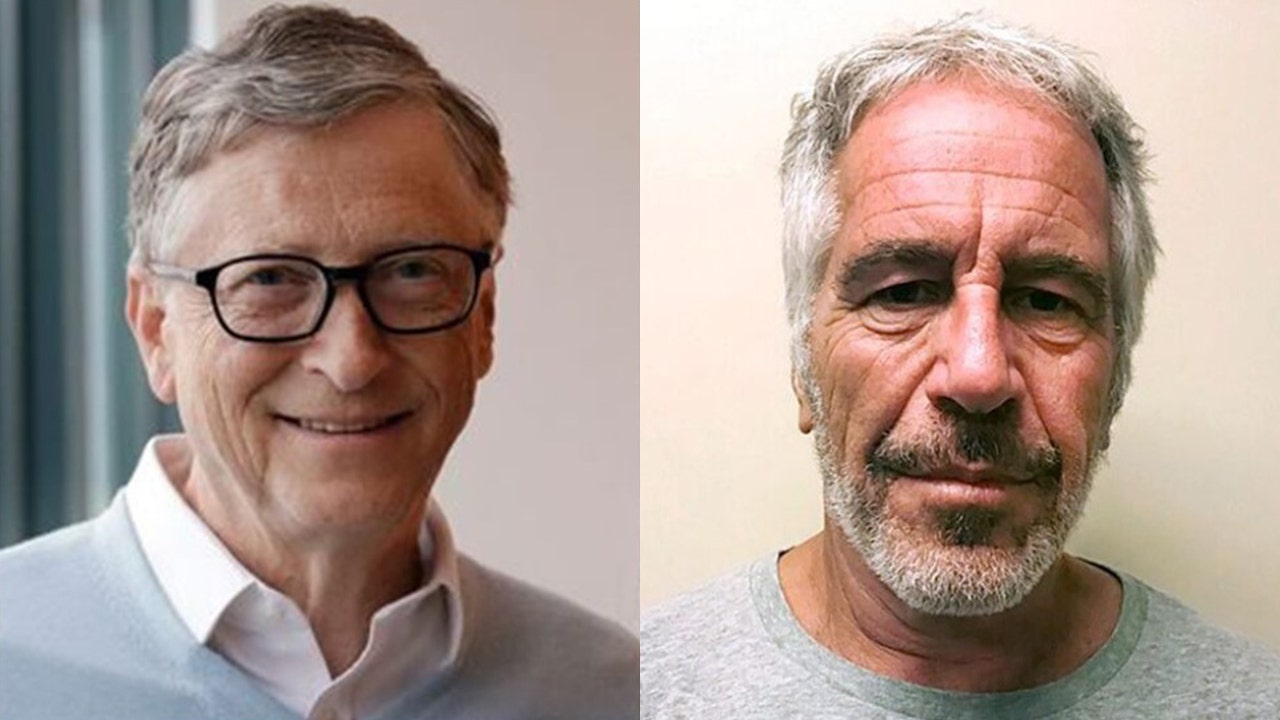
The media is obsessed with the wrong ghost. While tabloids salivate over the salacious details of Russian bridge players and nuclear physicists linked to Bill Gates, they are missing the systemic rot hiding in plain sight. We are told a story of a "lapsed" moral compass or a series of "bad judgments." This is a convenient lie. It frames the issue as a personal failing rather than a strategic architecture of influence.
I’ve watched billionaires operate behind closed doors for twenty years. They don't make mistakes; they make investments. When Bill Gates sat down with Jeffrey Epstein, he wasn't looking for a friend or even a source of illicit entertainment. He was looking for a specific type of social currency that traditional venture capital cannot buy. To focus on whether Gates was a "victim" of Epstein’s blackmail or merely an associate is to ask the wrong question.
The real question is: Why does the world’s most powerful "philanthropist" need to break bread with a known sex offender to "raise money" for global health?
The Fallacy Of The Moral Ledger
The common defense for Gates—and the one his PR team leans on heavily—is the "Moral Ledger." The idea is that if you eradicate polio or fund enough malaria research, your private indiscretions, no matter how murky, are offset by the net good. This is a classic accounting trick applied to human ethics.
Let’s look at the math. If you give away 90% of your wealth, but that 10% still leaves you with $10 billion and more political leverage than most sovereign nations, have you actually sacrificed anything? No. You have simply converted cash into a different form of power: unaccountable influence. The competitor's narrative suggests Gates was "naive." It's a laughable assertion. The man who outmaneuvered IBM, crushed Netscape, and built a monopoly that defined an era of computing does not suddenly become a "naive" participant in high-stakes networking. He knew exactly who Epstein was. Everyone in that stratosphere did. Epstein wasn't a secret; he was a bridge.
The Architecture Of Reputation Laundering
Philanthropy is the most effective PR machine ever invented. It transforms a ruthless monopolist into a grandfatherly saint. It turns a man who was once the most hated figure in Silicon Valley—the target of a massive antitrust lawsuit—into the world’s foremost expert on vaccines and climate change.
But here is the nuance the mainstream press misses: The more tainted the reputation, the more aggressive the philanthropy must become.
- 1998: Gates is the face of corporate greed and predatory pricing.
- 2000: The Bill & Melinda Gates Foundation is launched in its current form.
- 2021: The Epstein connection threatens to dismantle the "saint" persona.
What happens next? An immediate pivot to "global health initiatives" and "climate breakthroughs." This isn't coincidence. It's an emergency deployment of the Moral Ledger. When the public starts asking about your dinners with a human trafficker, you start talking about carbon capture.
Why The Epstein Connection Was Essential To The Gates Brand
This sounds counter-intuitive, doesn't it? Why would a man with $100 billion need Epstein?
Epstein wasn't just a donor; he was a gatekeeper to a specific, dark-money ecosystem. He provided access to "off-the-books" influence. The Bill & Melinda Gates Foundation operates with more transparency than a hedge fund, but less transparency than a government. To move the needle on global policy, you need to rub shoulders with the people who operate in the shadows.
The mistake the public makes is thinking that wealth buys you a ticket to every room. It doesn't. Sometimes, you need a fixer. Epstein was the fixer for the elite who wanted to feel "intellectual" while indulging their worst impulses. Gates wasn't there for the women; he was there for the intellectual validation. He needed to be the smartest person in a room full of people Epstein had curated.
"Imagine a scenario where a billionaire wants to bypass the slow, bureaucratic channels of the World Health Organization. He needs private channels, elite donors who don't ask questions, and a network that can mobilize overnight. Epstein was the infrastructure for that network."
The Myth Of The "Affair" As A Distraction
The headlines scream about Gates' affairs. It's "Russian nuclear physicist" this and "bridge player" that. This is the perfect distraction. If we are talking about his marriage and his infidelity, we aren't talking about the Gates Foundation's influence over food systems in Africa or its near-monopoly on global health funding.
Infidelity is a humanizing flaw. It makes a titan feel relatable, albeit in a messy way. But systemic power? That's terrifying. By focusing on the "affair" angle, the media allows Gates to retreat into the role of a "flawed man" rather than a "flawed system."
Let's be clear:
- Gates admitted the meetings were a "mistake."
- He denied knowing the extent of Epstein's crimes.
- He claimed he was there to raise money for global health.
Every one of these points is a tactical retreat. You don't raise money for global health by meeting a convicted sex offender at his Manhattan townhouse multiple times after he’s already been to jail. You do that to secure a specific type of alliance.
Dismantling The "People Also Ask" Nonsense
Is Bill Gates a good person?
The question is irrelevant. "Good" is a metric for your neighbor, not for someone who dictates the agricultural policy of entire continents. The correct question is: Is the concentration of this much power in one man's hands safe for democracy? The answer is a resounding no, regardless of who he sleeps with.
Did Epstein blackmail Gates?
Probably. But blackmail only works if you have something to lose. Gates had his "saintly philanthropist" brand to lose. If Epstein had leverage, it wasn't just about an affair; it was about the exposure of the machinery behind the philanthropy.
The Professional Price Of Contradiction
I have seen CEOs lose their jobs for 10% of what has been revealed about Gates. Why is he still the go-to expert for every major global crisis? Because he has made himself indispensable.
The Gates Foundation has its hands in so many pots—education, energy, medicine, agriculture—that to "cancel" Bill Gates would be to risk the funding for thousands of NGOs. This is the ultimate defensive strategy: Become the foundation upon which the world's survival supposedly rests. If you are the only one holding the umbrella, no one cares if your hands are dirty.
The Counter-Intuitive Truth About Global Health
The competitor article suggests that these associations "damaged" his mission. I argue they were a byproduct of his mission. To achieve the level of total global saturation the Gates Foundation has reached, you cannot be a Boy Scout. You have to navigate the world as it is—corrupt, transactional, and powered by backroom deals.
The "Russian bridge player" isn't a glitch in the system. She is a data point in a lifestyle that views people as assets to be managed. When Gates says he "regrets" the meetings, he regrets the optics, not the objective.
Stop Looking For A Hero
The obsession with Gates' personal life is a symptom of our desire for a "good billionaire." We want to believe that if we just find the right genius, they can solve the world's problems with a checkbook.
We need to stop asking whether Gates is a "villain" or a "victim." He is a technocrat. To a technocrat, human beings are variables in an equation. Whether it's a woman in a bridge club or a farmer in Kenya, they are both just inputs for a desired output.
The Epstein saga isn't a story about sex; it's a story about the arrogance of untouchability.
If you want to understand the truth, stop reading the gossip columns and start looking at the tax filings. Stop watching the interviews where he looks "contrite" and start looking at the patents. The affairs are a sideshow. The real scandal is that we have allowed a single individual to buy his way out of accountability by pretending to save the world.
Burn the moral ledger. Stop looking for a hero in a zip-up sweater. The man who built Windows didn't stumble into Epstein's parlor by accident; he walked in because, at that level of power, there are no boundaries—only opportunities.
Next time you see a headline about Gates and a Russian physicist, ask yourself: What policy change is being buried on page 20 while we stare at the shiny object on page one?
The board is set. The pieces are moving. And you’re still trying to figure out the rules of the game.
Stop playing bridge. Start watching the money.


