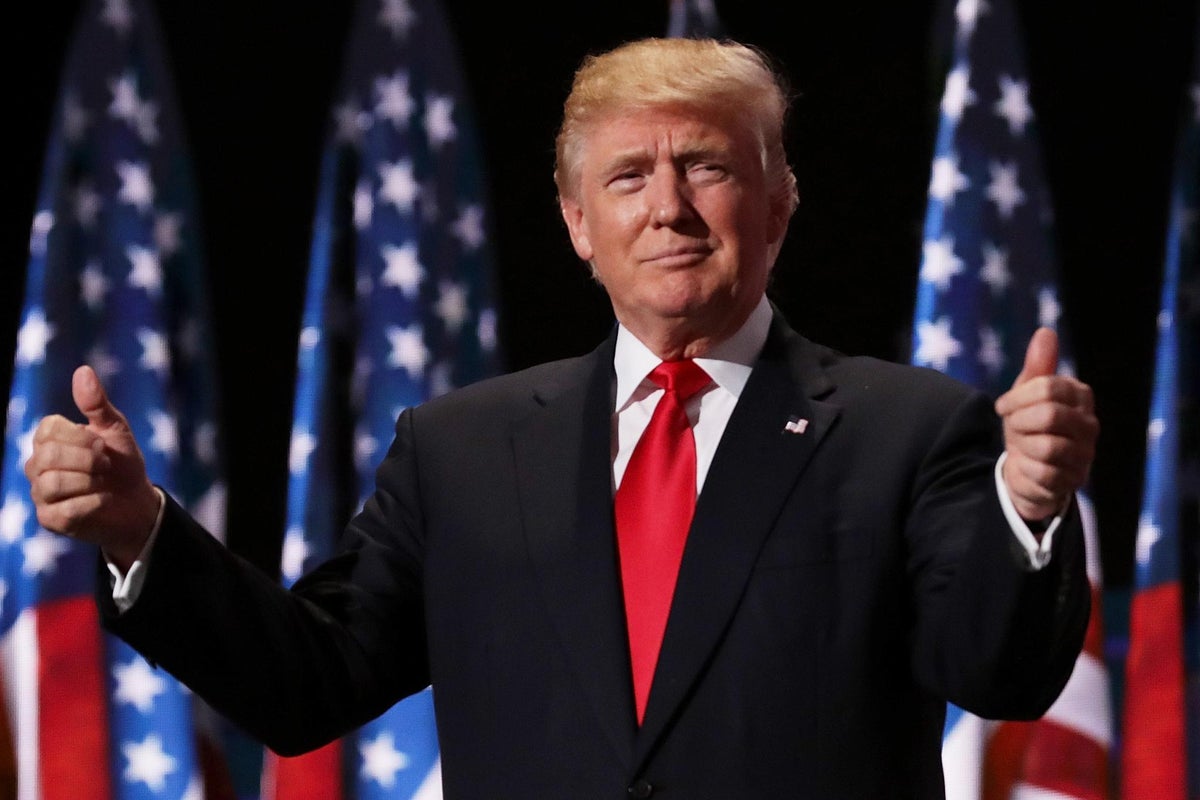
In the quiet, wood-paneled corridors of the Norwegian Nobel Institute, the air usually carries the weight of a century’s worth of idealism. Here, the names of giants like Mandela, Tutu, and King are etched into the collective memory of the world. But this year, the silence is thinner. The atmosphere is charged with a different kind of electricity. Among the 287 names resting on the official nomination list for the 2026 Nobel Peace Prize, one name acts like a lightning rod, grounding the abstract debates of international diplomacy into the visceral reality of modern populism: Donald J. Trump.
To understand why this nomination feels less like a bureaucratic footnote and more like a cultural earthquake, you have to look past the cable news chyrons. Consider a hypothetical observer—let’s call her Elena. Elena lives in a border town where the concept of "peace" isn't a high-minded theory discussed over champagne in Oslo. For her, peace is the absence of economic anxiety and the presence of a predictable life. When she hears that the 45th President is up for the world’s most prestigious award, she doesn't think about "norms" or "precedents." She thinks about the Abraham Accords. She thinks about the first time a sitting U.S. leader stepped over the granite threshold into North Korea.
This is the friction point where the Nobel Committee now finds itself.
The Math of Prestige
The number 287 is not just a digit; it is a mosaic. It represents 197 individuals and 90 organizations, each nominated by a select group of qualified sponsors—members of national assemblies, professors of law, and former laureates. The process is shrouded in a mandatory 50-year secrecy rule, yet the nominations themselves often leak, intended to serve as a signal to the world.
Donald Trump’s inclusion on this list isn't a fluke of the system. It is a reflection of a world that has shifted its definition of what a peacemaker looks like. Historically, the prize favored the "quiet diplomats," the career civil servants who moved in the shadows of the UN. But the nominators pushing for Trump argue that peace is often the product of disruption rather than consensus. They point to the reshaping of Middle Eastern alliances, where trade and shared security interests replaced decades of stagnant hostility.
Critics, of course, find the prospect jarring. They argue that the prize should recognize the spirit of international cooperation and the strengthening of global institutions—the very things the Trump administration often treated with skepticism. This creates a fascinating paradox for the five members of the Norwegian Nobel Committee. Do they reward the result or the method?
The Weight of the Medal
If you hold a Nobel medal in your hand, you aren't just holding gold. You are holding a legacy of guilt. Alfred Nobel, the inventor of dynamite, established the prize as a way to balance his own ledger with humanity. He wanted to celebrate those who had done the most for the "abolition or reduction of standing armies."
When we look at the 2026 list through that lens, the conversation changes. The 287 nominees aren't just competing against each other; they are competing against the ghost of Nobel’s intent. In a world where warfare has moved from the battlefield to the keyboard, and where trade wars can be as devastating as kinetic ones, the definition of "reducing standing armies" is under massive revision.
The nomination of a figure as polarizing as Trump forces us to confront a terrifying question: Can a person be a peacemaker and a disruptor simultaneously?
The supporters say yes. They argue that by challenging the status quo, he forced nations to the table that had ignored each other for generations. The detractors say no. They argue that peace without a foundation of shared human rights and institutional stability is merely a temporary ceasefire.
The Invisible Stakes
Behind the headlines of the 287 nominees lies a more human story. It is the story of the Committee members—citizens of Norway, a small nation with a massive responsibility—who must now sit in a room and decide what "peace" means in 2026.
They are looking at a world that feels increasingly fragmented. They see the rise of nationalism, the crumbling of old alliances, and the emergence of a new, multipolar reality. Their choice will not just name a winner; it will define the era. If they choose a traditional humanitarian, they are signaling a desire to return to the post-war order. If they were to choose a figure like Trump, they would be acknowledging that the old order is dead and that peace in the 21st century looks like a series of transactional deals.
But the list is long. Within those 287 names are likely names we won't know for decades—grassroots activists in war-torn regions, scientists fighting the next pandemic, or anonymous whistleblowers risking their lives for the truth. They are the "silent" 286.
The media focus on the former President is a double-edged sword. It brings global attention to the prize, but it also risks drowning out the work of those who have no platform. Imagine a doctor in a conflict zone, working by candlelight to save children from a forgotten fever. That doctor is on the list too. So is the lawyer defending the rights of the displaced.
The Mirror of Society
The Nobel Peace Prize has always been a mirror. It doesn't tell us who is "good" so much as it tells us what we value at any given moment. In 2009, the prize was given to Barack Obama as an "aspiration"—a hope for what he might achieve. In other years, it has been given as a "correction"—a rebuke to those in power.
The 2026 list, with its mix of populist leaders and humanitarian organizations, suggests a world that is deeply confused about its own direction. We are caught between the desire for strong, decisive leaders who can "fix" things through sheer will, and the deep-seated knowledge that lasting peace is usually built by the patient, the humble, and the many.
There is a specific kind of exhaustion that comes with following modern politics. It’s a wearying cycle of outrage and counter-outrage. The Nobel nomination list usually offers a reprieve from that, a chance to look at the best of us. But this year, the list itself has become a theater of the conflict it seeks to resolve.
Beyond the Ballot
As the months tick toward the October announcement, the debate will only intensify. There will be petitions, protests, and endless op-eds. But the actual work of the Committee happens in a room where the noise of the street cannot reach.
They will read the dossiers. They will debate the merits of the Abraham Accords against the rhetoric of the campaign trail. They will weigh the impact of 287 different lives against the singular goal of a more peaceful world.
It is easy to get lost in the celebrity of the nomination. It is easy to let the name "Trump" act as a shorthand for all our political anxieties. But if we do that, we miss the point of the prize. The Nobel isn't a popularity contest or a lifetime achievement award for "being nice." It is a tool. It is a way for a small group of people in Oslo to put their thumb on the scale of history and say, "This. This is the way forward."
Whether that way forward involves a billionaire from New York or an unknown activist from a village in the Global South remains the world's most high-stakes mystery.
The ink on the list is dry, but the story is just beginning. The 287 nominees are more than names; they are competing visions of our future. And as the Committee begins its deliberations, the world waits to see which vision will be etched in gold, and which will be left to the long, quiet archives of what might have been.
The light in the Nobel Institute stays on late into the Norwegian night. Outside, the world is loud and divided, but inside, there is only the rustle of paper and the heavy, inescapable weight of the olive branch.