Information control is not a byproduct of modern conflict. It is a weapon. When foreign journalists are barred from independently entering an active war zone, the resulting vacuum is never neutral. It is manufactured.
The Gaza information blockade represents an unprecedented total restriction on independent journalistic access. For months, international news organizations have faced a hard perimeter. Reporters cannot cross the Erez crossing independently. Local correspondents operate under catastrophic conditions, facing communications blackouts, targeted electricity cuts, and the constant threat of airstrikes while trying to transmit footage to the outside world. This barrier creates a severe accountability gap. Without continuous on-the-ground verification from neutral observers, the narrative shifts from documented fact to competing claims, leaving the public struggling to find truth through a fog of propaganda. For another look, consider: this related article.
The Mechanics of Exclusion
Governments restrict access to combat zones using predictable bureaucratic and physical levers. In this case, the strategy relies on a dual-lock mechanism. First, military authorities deny foreign press corps accreditation and transit through official checkpoints. Second, infrastructure destruction ensures that even local voices struggle to broadcast their reality.
Power grids fail because fuel deliveries are restricted or infrastructure is systematically targeted. Telecommunications towers collapse under artillery fire, and mobile networks suffer deliberate regional outages. Journalists working inside the territory must rely on sporadic satellite internet connections or dangerous journeys to specific ridge lines just to upload a single video file. Further coverage regarding this has been provided by Al Jazeera.
This systemic isolation changes how the world processes conflict. When imagery is delayed by days or filtered entirely through military-approved embeds, the urgency fades. Incidents that demand immediate investigation blur into historical arguments. The sheer difficulty of gathering primary source data gives authorities an advantage in framing events before independent verification can even begin.
Historical Precedents in Modern Warfare
Media blackouts in wartime follow a well-worn playbook. Modern military doctrine recognizes that control over perception is just as vital as control over territory.
Consider previous conflicts where independent press access was strictly managed or outright denied. During the early stages of the Falklands War, the British Ministry of Defence tightly controlled the flow of news and imagery, ensuring that dramatic events reached the public long after they occurred. Similarly, during the initial deployment phases of the 2003 Iraq invasion, the embedded media program allowed militaries to shape the perspective of the viewer by curating which units were visible and which operations were highlighted.
However, the situation in Gaza differs fundamentally in scale and permanence. Embeds are virtually nonexistent for independent foreign reporters. The restriction is absolute rather than selective. By barring international media from witnessing the ground campaign firsthand, military planners reduce the immediate friction of civilian oversight. Public opinion in democratic nations relies heavily on visual evidence and direct reporting. When that evidence is suppressed, accountability mechanisms stall.
The Cost of Local Journalism
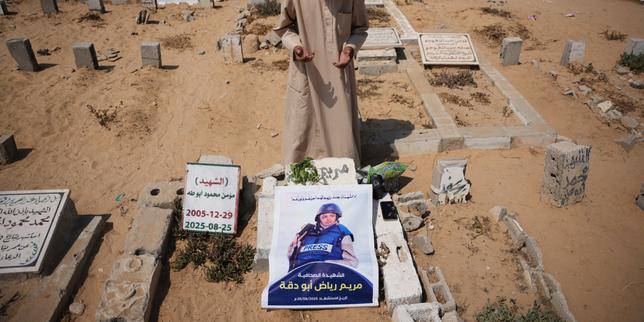
With international reporters locked out, the burden of documentation falls entirely on Palestinian journalists, photographers, and freelancers living inside the zone. This comes at an extraordinary human cost.
- Scores of local reporters have been killed while wearing press insignia.
- Family homes and makeshift press bureaus have been leveled.
- Equipment is constantly lost due to destruction and lack of replacement parts.
These individuals are not neutral observers parachuting in for a three-day assignment. They are reporting from their own neighborhoods, often while searching for food and clean water for their children. Their work provides the primary window into hospital operations, displacement camps, and urban ruins. Yet, official channels frequently attempt to discredit these local voices, labeling them biased or compromised simply because of their geographic origin. This double standard creates a convenient excuse for external audiences to dismiss vital documentation.
The Digital Echo Chamber
Social media has replaced traditional reporting channels for millions of viewers, transforming how information moves during a crisis. Without verified professional journalism setting the baseline of facts, digital platforms become battlegrounds for raw, unverified content.
Algorithmic feeds amplify emotional resonance over accuracy. Deepfakes, recycled footage from older conflicts in different regions, and deliberately manipulated clips circulate widely before fact-checkers can intervene. This noise serves the interests of those maintaining the information blockade. When the digital ecosystem is flooded with contradictory claims and synthetic media, the average observer experiences cognitive exhaustion. Confusion sets in. People retreat to preexisting tribal narratives because sorting through the wreckage of truth requires too much effort.
International newsrooms face an impossible compromise. Editors must choose between running unverified user-generated content with heavy disclaimers or ignoring unfolding events entirely. Both choices fail the public. The first risks spreading falsehoods; the second leaves a massive geopolitical crisis shrouded in silence.
Breaking the Perimeter
Challenging this information blockade requires sustained pressure from legal bodies, professional press associations, and the international community. Media organizations must stop treating access restrictions as an unfortunate logistical hurdle and start recognizing them as direct violations of press freedom and international humanitarian norms.
Legal challenges brought before international courts regarding the denial of press access are a starting point, though enforcement remains weak. Press freedom groups need to escalate their demands, moving beyond polite diplomatic statements to coordinated legal and financial advocacy. Broadcasters should pool resources to provide advanced satellite communication gear and protective equipment directly to local reporters who continue to risk their lives on the front lines.
Transparency is the foundation of any functioning democracy or international legal order. When governments go to extraordinary lengths to obscure their actions behind a wall of military censorship and communications blackouts, they are signaling that their operations will not withstand public scrutiny. The blackout must end because a society cannot claim to uphold human rights while actively blinding the world to their violation.