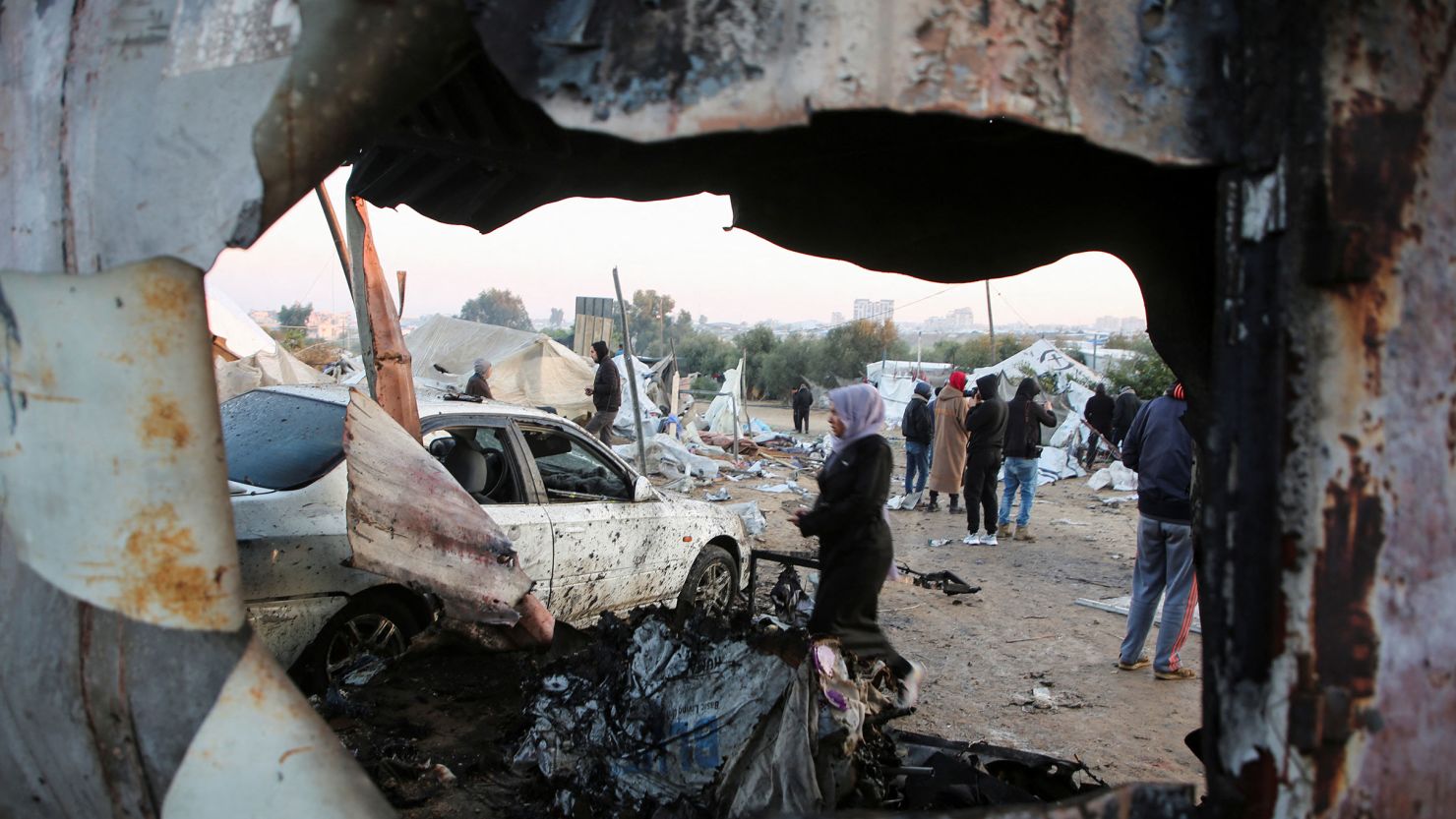
The recent Israeli airstrike on a Gaza police station has claimed the life of a young boy and left several officers wounded. This is the immediate, bloody reality on the ground. However, the event serves as a grim window into a much larger, more calculated strategic shift. Beyond the immediate casualties, these strikes represent the systematic dismantling of the last remaining pillars of domestic governance within the strip. When a police station is leveled, the explosion ripples far beyond the concrete walls; it shatters the very concept of local law enforcement, leaving a vacuum that is rarely filled by anything resembling order.
The Strategic Targeting of Civil Infrastructure
Military analysts often focus on hardware—rocket launchers, tunnels, and command centers. But in the current theater of Gaza, the infrastructure of the state has become a primary target. The police force in Gaza occupies a complex, often contradictory space. While they operate under the Hamas-led government, their daily duties involve traffic management, resolving neighborhood disputes, and guarding aid convoys.
Targeting these units creates a ripple effect. Without a visible police presence, the distribution of humanitarian aid becomes a gauntlet. We have seen a direct correlation between the destruction of police facilities and the rise of organized looting. This isn't accidental. By removing the "blue uniforms" from the streets, the operational environment shifts from managed desperation to absolute anarchy. The Israeli defense establishment argues that because the police fall under the Hamas umbrella, they are legitimate military targets. Critics and international observers, however, point out that these officers are often the only thing standing between a starving population and total social collapse.
The Human Cost of Precision Warfare
The death of a child in such a strike highlights the recurring failure of the "precision" narrative. In densely populated urban environments, there is no such thing as a surgical strike that carries zero risk to civilians. When a missile hits a municipal building in a crowded neighborhood, the "collateral" is inevitable.
The physics of an airstrike in a city like Gaza are unforgiving. Overpressure from the blast, flying debris, and structural collapse mean that anyone within a hundred-meter radius is in the kill zone. For a child nearby, the technical distinction between a "combatant" and a "civil servant" is irrelevant. The tragedy lies in the fact that these stations are often located in the heart of residential districts, integrated into the fabric of the community. This proximity is used by the IDF to justify the risk, citing the use of "human shields," while Palestinians see it as an unavoidable reality of living in one of the most crowded places on Earth.
The Vacuum and the Rise of Clan Rule
As the formal police force is degraded, power does not simply disappear. It shifts. In the absence of a centralized police authority, Gaza is seeing a resurgence of traditional clan-based justice. Large, well-armed families are increasingly taking the law into their own hands, providing security for their own members while ignoring—or exploiting—those without tribal protection.
This fragmentation is a nightmare for future governance. History shows that once a centralized state apparatus is broken and replaced by warlordism or tribalism, putting the pieces back together can take decades. We are watching the "Somalization" of Gaza in real-time. The strike on a police station is a tactical win for a military looking to degrade an enemy's administration, but it is a strategic disaster for anyone hoping for a stable, post-conflict reality.
International Law and the Gray Zone
The legal status of police in an armed conflict is one of the most debated areas of international humanitarian law. Under the Geneva Conventions, police are generally considered civilians unless they are formally incorporated into the armed forces or take a direct part in hostilities.
- The Combatant Argument: Israel contends that the Gaza police are a paramilitary wing of Hamas, trained in combat and ready to pivot to guerrilla warfare at a moment's notice.
- The Civil Function Argument: Human rights organizations argue that their primary function is domestic order, and killing them is a violation of the principle of distinction.
This legal gray zone allows for the continued targeting of municipal infrastructure with relative impunity. Yet, the cost of this ambiguity is paid by the civilian population. When the police are gone, who investigates a robbery? Who manages the chaos at a hospital entrance? Who ensures that a flour truck reaches its destination instead of being hijacked by a gang?
The Mechanics of Social Disintegration
Social order is a fragile thing. It relies on the perception of authority and the threat of consequence. When the physical symbols of that authority—the stations, the vehicles, the uniformed officers—are systematically erased, the psychological barrier against criminality vanishes.
This leads to a breakdown of trust at every level. Neighbors stop Cooperating. Markets become places of fear rather than commerce. The strike on a Gaza police station isn't just about the officers inside or the tragic death of a boy nearby. It is about the deliberate erasure of the social contract.
The military objective may be to weaken Hamas's grip on power, but the ground-level result is the destruction of the civilian's ability to survive the day. Every leveled station is another step toward a future where there is no one left to call when the world falls apart.
The strategy of dismantling the administrative state ensures that even if the bombs stop falling tomorrow, the chaos will continue. The absence of a police force doesn't just hurt the government in power; it cripples the society beneath it. We are seeing the infrastructure of daily life being traded for short-term tactical advantages, a bargain that rarely ends in favor of peace or stability.