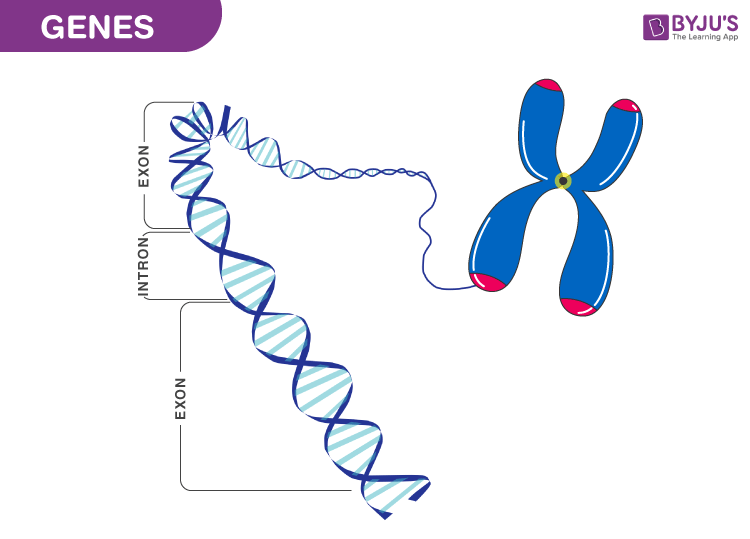
Treating aging as a decentralized failure of gene expression networks rather than a linear accumulation of molecular damage changes where intervention happens—and where it fails. A biological organism does not age simply because individual proteins wear out or DNA collects lesions; it ages as regulatory circuits drift out of coordination, transcriptional noise rises, and cells lose fidelity to their assigned identities. Reprogramming gene expression networks attempts to restore that regulatory coherence without wiping out cellular specialization. This article deconstructs the core logic of age reversal through transcriptional and epigenetic reprogramming, maps the causal bottlenecks that separate transient rejuvenation from oncogenesis or cell-identity loss, and outlines an analytical framework for evaluating interventions across biological systems.
Deconstructing the Reprogramming Thesis
Conventional summaries of cellular reprogramming often treat gene expression as a set of switches that can be flipped backward from an aged state to a youthful one. That mental model misses how biological networks actually operate. Gene expression is governed by coupled feedback loops involving transcription factors, chromatin accessibility, histone modifications, DNA methylation, non-coding RNAs, and three-dimensional genome folding. When an organism ages, these coupled layers do not merely shift by a uniform constant; their coupling weakens, creating variance across cells and instability within individual cells.
A useful way to analyze articles on age reversal is to separate three claims that frequently get conflated in popular science coverage:
- Transcriptional restoration: Shifting messenger RNA abundance profiles of aged cells toward profiles characteristic of younger cells.
- Epigenetic or regulatory reset: Altering chromatin states, DNA methylation patterns, or transcription factor activity that control which genes are accessible over time.
- Functional rejuvenation: Producing measurable improvements in physiological capacity, tissue repair, metabolic resilience, or organismal healthspan rather than mere biomarker shifts.
A common analytical error in competitor reporting is treating transcriptional restoration as proof of functional rejuvenation. Transcript levels can move toward a youthful signature under stress responses, caloric restriction, or partial factor expression without restoring mitochondrial efficiency, proteostasis, or tissue architecture. Conversely, a true functional gain can occur in a specific pathway while leaving broader network drift intact.
Consider a fibroblast population from older tissue. Even if average bulk RNA sequencing shows a shift toward younger expression averages after an intervention, individual cells may still exhibit high cell-to-cell transcriptional noise or incomplete chromatin remodeling at enhancers governing extracellular matrix production. Average recovery is not network synchronization.
The Architecture of Gene Expression Networks in Aging
To understand what reprogramming gene expression networks actually targets, view the cell as a multi-layered control system rather than a static blueprint. At the core sit gene regulatory networks where transcription factors bind cis-regulatory elements—promoters and enhancers—to regulate rates of transcription. Surrounding and constraining those circuits is the epigenome, which packages DNA into euchromatin (more accessible) and heterochromatin (more compacted) and carries chemical marks that bias transcriptional states.
In youthful tissues, two properties maintain stability:
- Canalization and attractor stability: Developmental and homeostatic pathways settle into well-defined transcriptional attractors—such as hepatocyte, neuron, or muscle satellite cell identities—resistant to minor perturbations.
- Modular decoupling: Housekeeping modules, stress-response modules, and lineage-specific modules can respond to local signals without destabilizing the rest of the transcriptome.
Aging erodes both properties through mechanisms that operate simultaneously across molecular scales. Known facts from aging biology establish that older tissues frequently show loss of heterochromatin domains, altered DNA methylation landscapes, increased transcriptional noise, splicing infidelity, and impaired chromatin remodeling. Educated hypotheses extend this into network dynamics: as repressive chromatin erodes and regulatory motifs become noisy, cells drift away from crisp identity attractors toward ambiguous or senescent-like transcriptional states.
This creates a two-way causal loop. Altered gene expression changes the abundance and activity of chromatin-modifying enzymes and metabolic cofactors (such as NAD+ derivatives, acetyl-CoA, and S-adenosylmethionine). Those metabolic and chromatin shifts then feed back onto transcription factor binding and gene expression. Reprogramming attempts to intervene in this loop, yet pulling on one lever inevitably shifts others.
Four Pillars of Transcriptional Reprogramming
When evaluating any strategy for reversing age by reprogramming gene expression networks, four operational pillars determine whether the intervention is coherent or superficial.
1. Target Selection and Network Centrality
Not every gene or regulatory node carries equal weight. Peripheral genes respond to downstream changes; hub transcription factors, pioneer factors, and master chromatin regulators sit at intersections controlling dozens or hundreds of downstream targets. Classical Yamanaka factors (Oct4, Sox2, Klf4, c-Myc) act as potent network hubs capable of rewriting cell identity. Partial or transient reprogramming protocols aim to capture youthful regulatory shifts without pushing cells all the way back to pluripotency.
A key distinction separates network hubs from phenotypic readouts. Modifying a downstream readout may alter a single biomarker while leaving upstream regulatory instability untouched. Targeting a central hub creates high leverage, but high leverage amplifies off-target consequences if dosing or duration is poorly controlled.
2. Perturbation Dynamics and Temporal Control
Gene expression networks are time-dependent dynamical systems. A brief pulse of reprogramming factors can nudge chromatin accessibility and transcriptional programs while allowing cells to retain lineage markers once the signal stops. Continuous or excessive expression pushes cells toward dedifferentiation, loss of specialized function, or tumor formation.
Temporal control is therefore an engineering problem, not a minor detail. Inducible expression systems, transient delivery vectors, or pulsed chemical/biologic regimens attempt to create a window where regulatory drift is corrected and identity is preserved. If the perturbation window is too short, the network snaps back to its prior aged state once the stimulus ends. If it is too long, lineage commitment breaks down.
3. Epigenetic and Chromatin Remodeling Fidelity
Gene expression cannot stay reset if the surrounding chromatin environment immediately re-imposes old constraints. True network reprogramming requires remodeling both active enhancers and repressive domains so that newly restored transcriptional programs can self-sustain—or at least persist longer than the intervention itself.
In practice, chromatin state transitions are uneven across the genome. CpG-dense promoters, bivalent developmental genes, and constitutive heterochromatin respond at different rates and rely on distinct enzymatic complexes. An intervention that reactivates growth or biosynthetic genes while failing to restore repressive silencing at retrotransposons or inappropriate lineage genes trades one form of dysfunction for another.
4. Tissue Context and Microenvironmental Coupling
Cells do not regulate gene expression in isolation. Paracrine signals, mechanical tension from the extracellular matrix, immune surveillance, and nutrient availability continuously shape transcriptional states in vivo. A reprogramming intervention that looks clean in isolated cultured cells can behave very differently inside an aged organ stiffened by cross-linked collagen or infiltrated by inflammatory signals.
If the surrounding niche continues sending pro-inflammatory or fibrotic cues, reprogrammed cells face constant pressure to revert. Without addressing microenvironmental signaling, cell-intrinsic transcriptional resets face strong headwinds in intact tissues.
The Cost Function of Reprogramming
Every biological intervention carries a cost function—the trade-offs incurred per unit of desired regulatory restoration. In gene network reprogramming, the primary costs cluster around fidelity, safety, and energy.
Identity erosion and oncogenesis represent the sharpest safety cost. Pathways that promote cellular plasticity, proliferation, and chromatin opening overlap heavily with oncogenic programs. Pushing a cell toward a less differentiated transcriptional state—even partially—can lower barriers to uncontrolled division if tumor-suppressive checkpoints are weakened or pre-existing mutations are present in aged tissue.
Metabolic and proteostatic strain forms the second major cost. Rewriting transcriptional programs demands high rates of RNA synthesis, protein translation, folding, and chromatin turnover. Aged cells often already operate near the limits of mitochondrial ATP production, ribosome capacity, and autophagy/proteasome clearance. Forcing a large transcriptional shift in an energy-constrained or protein-stressed cell can trigger cellular stress or senescence rather than renewal.
Incomplete durability creates the third cost. If an intervention resets gene expression transiently without repairing underlying structural or microenvironmental drivers, the system drifts back over time. Repeating interventions raises cumulative exposure risks, turning a one-time reset into an ongoing maintenance burden with compounding safety checks.
Consider a skeletal muscle stem cell (satellite cell) pool in an aged organism. If a reprogramming protocol increases expression of youthful progenitor genes and boosts proliferation capacity, the immediate gain looks promising. Yet if those cells divide without adequate genomic integrity checkpoints or fail to mature properly into functional myofibers within a fibrotic niche, net tissue function may fail to improve—or worse, increase neoplastic risk.
Cause-and-Effect Bottlenecks Often Missed in Coverage
Standard reporting on age reversal tends to follow a straight line: identify age-associated gene expression changes, apply a reprogramming factor or modulator, observe youthful shifts, and infer age reversal. Four causal bottlenecks break that linear story in real biology.
- Correlation versus causality in gene signatures: Thousands of genes change expression with age, but most are passengers or secondary responses to inflammation, cell turnover, or metabolic shifts. Changing a signature does not prove you altered a primary driver of aging.
- The dedifferentiation cliff: Plasticity is a non-linear property. Small shifts in transcriptional network state can sometimes be tolerated, while crossing a threshold causes loss of specialized cell function. There is no guarantee of a smooth, risk-free middle ground across every cell type.
- Mosaicism across aged tissues: An aged organ is a mosaic of cells with different mutation burdens, telomere histories, epigenetic drift profiles, and microenvironmental exposures. A uniform reprogramming signal applied across a mosaic tissue will not produce uniform outcomes; some cells may rejuvenate, some may remain refractory, and damaged cells may respond abnormally.
- Biomarker lag and decoupling: Epigenetic clocks or transcriptional age predictors are statistical models trained on chronological age or specific phenotypes. A drop in a predicted age score after a perturbation does not automatically equal lower disease risk, stronger organ reserve, or longer healthy lifespan.
The second limitation in translating network reprogramming into medicine lies in delivery and specificity. Getting a therapeutic agent to the right cell types at the right concentration without hitting off-target organs remains one of the hardest problems in translational biology.
This creates a bottleneck between promising mechanistic demonstrations and safe, scalable therapies. Even when the molecular logic of gene network reprogramming is sound, delivery efficiency, immunogenicity, and long-term safety monitoring determine whether an approach ever moves past proof-of-concept.
Operationalizing Evaluation for Researchers and Strategists
Anyone assessing claims about reversing age through gene expression reprogramming—whether as a life-sciences researcher, investor, or technical strategist—needs a disciplined evaluation sequence rather than headline enthusiasm.
- Map the causal level of the claim. Separate observations of mRNA or chromatin changes from measurements of protein function, metabolic output, cell behavior, and whole-tissue physiology. Ask whether the measured genes are functional drivers or passive correlates.
- Audit the perturbation window and cell-state boundaries. Check whether the intervention uses transient or inducible control, and look for explicit measurements of lineage markers, pluripotency/progenitor markers, cell-cycle activity, and genomic/cellular stress responses.
- Inspect single-cell and spatial resolution. Bulk averages hide heterogeneity. Determine whether the data show coordinated shifts across target cells or a mix of strongly shifted cells, unshifted cells, and aberrant states.
- Evaluate microenvironmental and systemic context. Look beyond isolated cell lines to in vivo models where immune cells, vasculature, extracellular matrix, and systemic metabolism interact with the reprogrammed cells.
- Weigh safety margins against functional gain. Compare the magnitude of verified functional improvement against plausible risks—such as loss of tissue specialization, inflammatory activation, or tumorigenic potential—over realistic timeframes.
A common pitfall during step three is celebrating a mean shift in a gene set while ignoring increased variance across single cells. In aging biology, increased variance is often a sign of regulatory instability; true stabilization requires tightening control, not just moving a mean.
Limitations and Boundaries of Current Knowledge
No silver bullet exists for reversing aging through gene expression reprogramming. Much of the foundational mechanistic evidence comes from controlled model organisms, engineered cell systems, or short-term experimental windows where long-term safety and multi-organ interactions are still being mapped. Furthermore, "aging" is not a single monolithic disease with one master switch; distinct tissues, stem cell compartments, and post-mitotic populations (such as mature neurons and cardiomyocytes) face different constraints around division, plasticity, and turnover.
Distinguishing established mechanisms from open hypotheses is essential for credibility. We know that gene expression networks change with age, that chromatin and transcriptional states are plastic under specific experimental interventions, and that pushing cells too far toward pluripotency carries severe risks of identity loss and tumorigenesis. We do not yet have proven, generalizable clinical protocols that safely reprogram human gene expression networks across complex organs to reverse systemic aging.
Strategic Play for Next-Generation Programs
The highest-value strategic play in gene expression network reprogramming is shifting from broad transcriptional resets to precision, state-aware circuit modulation paired with rigorous safety gating. Rather than treating every aged cell as a blank slate waiting to be rewound, programs should target specific regulatory bottlenecks within defined cell populations, use tightly bounded or reversible dosing windows, and pair transcriptional readouts with direct functional and safety endpoints from day one. Organizations that build quantitative models of network stability, cell-identity boundaries, and tissue-level trade-offs—instead of chasing single-biomarker age reversals—will define the credible frontier of this field.