Dawn arrives differently in the greenhouse. Before the rest of the world blinks awake, the air here is heavy, thick with the scent of damp earth and the sharp, sugary perfume of ripening fruit. It is a quiet world. For generations, this silence belonged exclusively to human hands. Kneeling in the dirt, fingers stained crimson, moving with a practiced, rhythmic grace that borders on muscle memory.
Then came the whir of an electric motor.
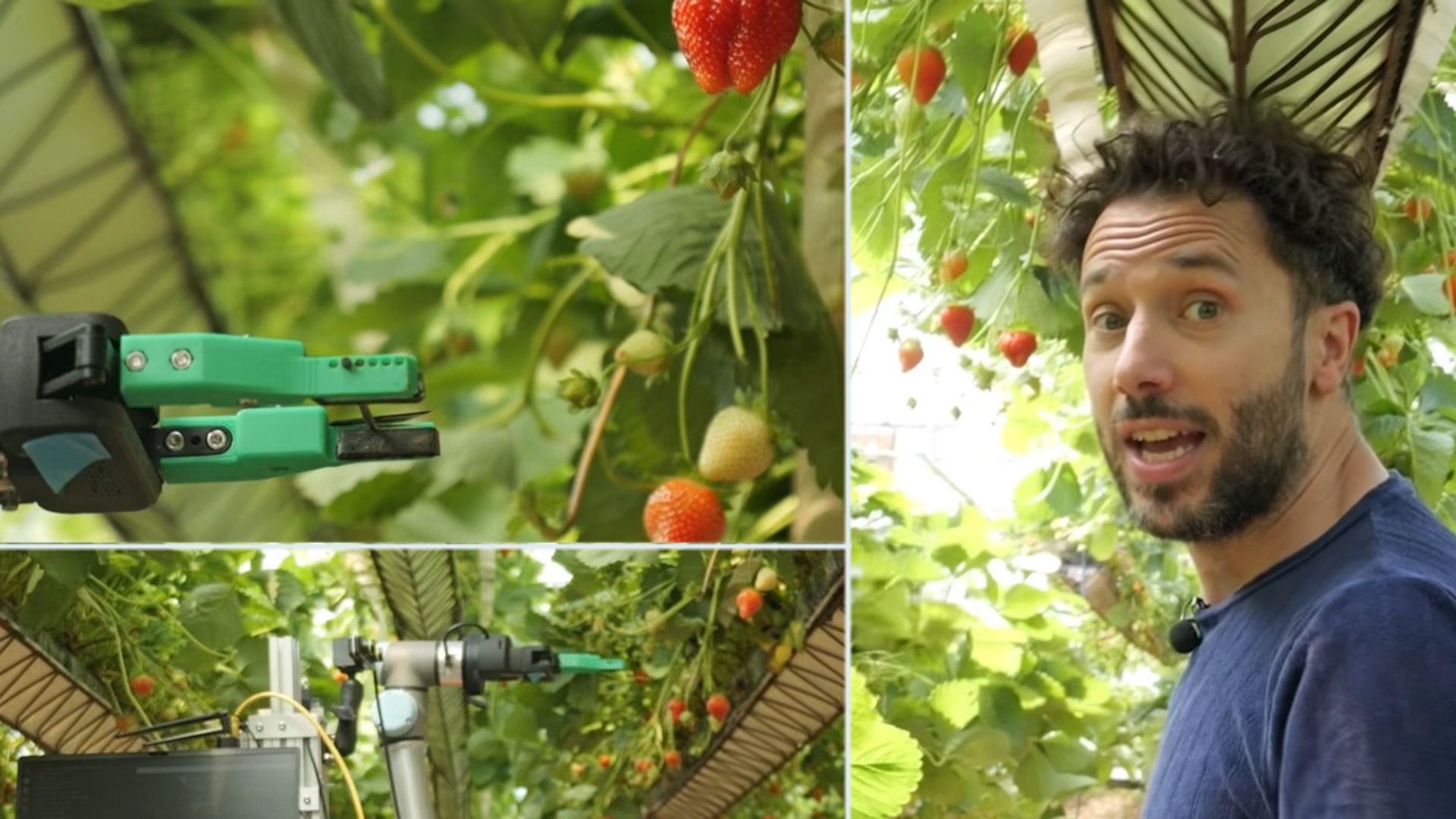
Meet the metal picker. It does not bruise the fruit. It does not complain about the humidity. It glides on rubber tracks down the narrow rows of tabletop substrate, a silent sentinel of steel, optics, and algorithms. Watch it pause. Its camera lens flares under the LED grow lights, calculating the exact hue of red, the subtle curve of the stem, the distance to the next hanging prize. A mechanical pincer extends. It clips. It places.
And just like that, the ancient contract between humanity and the harvest begins to fracture.
Strip away the marketing jargon and the silicon hype, and you are left with a raw, unsettling question. Can a machine truly replace a human? The answer is not found in a corporate slide deck or a venture capitalist's pitch. It is found in the dirt, in the economics of survival, and in the peculiar way we assign value to labor.
Let us step back for a moment. This is not just about strawberries. It is about the friction point where human necessity meets engineering ambition. Agriculture has always been a desperate race against the clock. A strawberry does not wait for market conditions to improve. It ripens, it peaks, and then it rots. The margin between profit and total ruin is measured in days, sometimes hours.
For decades, growers have relied on an invisible army of seasonal migrant workers. People with names, families, and aching backs. People who bend double for ten hours a day, enduring blistering heat and biting cold, performing a task that requires an astonishing amount of cognitive nuance. A human picker evaluates a berry not just by color, but by weight, firmness, and context within the cluster. They make split-second decisions that defy simple programming.
Yet, finding those hands has become nearly impossible.
Labor shortages ripple across the globe like a slow-moving earthquake. Borders tighten. Demographics shift. The younger generations, having watched their parents break their bodies in the rows, look elsewhere for a living. Farms sit abandoned, crops left to rot on the vine because nobody is there to gather them. The crisis is real. It is urgent.
Enter the machines.
To understand these strawberry-picking robots, you have to understand how they "see." Imagine trying to teach a blindfolded toddler to identify a ripe piece of fruit using only a robotic arm and a camera. That is what engineers face. The environment is chaotic. Leaves flutter in the draft of an automated ventilation fan. Shadows shift as the sun moves across the glass roof. No two berries grow alike. Some hide beneath a canopy of foliage. Others cluster together like tangled rubies.
Developers train neural networks on millions of images. Red means pick. Green means wait. But reality is messy. A berry can be half-red and half-white. A leaf can cast a deceiving shadow that looks like a bruise. Early iterations of these machines were clumsy, slow, and devastatingly expensive. They crushed more fruit than they harvested. They required technicians standing by with laptops, coaxing recalcitrant software back to life.
Progress, however, is relentless.
Today's models are different. They utilize advanced machine learning and stereoscopic vision. They evaluate ripeness with a precision that rivals an expert agronomist. They work through the night, guided by infrared light, never tiring, never needing a break for water.
Watch one work up close. It approaches a cluster. The mechanical fingers, lined with soft silicone to mimic the give of human skin, wrap gently around the fruit. A micro-blade snips the stem. The arm retracts with a fluid, almost hypnotic motion, depositing the berry into a clamshell container. It is mesmerizing. It is also deeply intimidating.
Let us be entirely honest here. This is not just a technological triumph. It is a displacement event.
When a machine can do the work of four human pickers, operating twenty-four hours a day without health insurance, grievance, or rest, the mathematics of farming changes forever. Growers face a stark choice. Invest heavily in capital-intensive robotics, or watch their operations wither away under the crushing weight of labor deficits. Many are choosing the iron hands.
What happens then to the human element?
We tend to romanticize physical labor from a safe distance. We talk about the dignity of work while sitting in climate-controlled rooms, tapping glass screens. But for millions of people, seasonal agricultural work is a lifeline. It funds education, builds homes, and sustains entire communities across borders. When automation arrives, it does not just cut costs; it alters the demographic fabric of rural towns.
And yet, the machines are not yet absolute conquerors.
There are limits. Capital expenditure is the first wall. These robots cost a small fortune. A small-scale family farm cannot simply drop six figures on an autonomous fleet. They are locked out, forced to compete against corporate mega-farms that can absorb the upfront costs and scale indefinitely.
Furthermore, dexterity is a stubborn thing. While robots excel in controlled hydroponic tabletop greenhouses where fruit hangs neatly at eye level, traditional open-field farming is a nightmare for automation. Mud, uneven terrain, unpredictable weather, and sprawling vines create a chaotic playground that baffles even the most sophisticated sensors. The strawberry-picking robot is brilliant, but it is currently a creature of luxury, bound to pristine, high-tech environments.
Consider what happens next: a bifurcated agricultural landscape. On one side, hyper-automated mega-greenhouses humming with silent algorithms, producing uniform fruit for global supermarket chains. On the other side, struggling traditional farms clinging to human labor, fighting a desperate rear-guard action against rising costs and scarce hands.
The comparison between human and machine is ultimately flawed. It should never have been a contest of speed or efficiency. A machine will always win the mechanical race. It does not feel pain. It does not yearn for shade.
The real question is not whether robots can replace us. It is what we choose to do with the space they clear.
Back in the greenhouse, the morning sun finally punches through the fog, casting long, geometric shadows across the rows of metal tracks. The robot keeps moving, a steady, unblinking rhythm of steel and silicon, harvesting the red gold of the earth. Outside, the world keeps spinning, largely unaware of the quiet revolution unfolding beneath the glass. A revolution measured not in battles or declarations, but in the silent click of a mechanical shear and the sweet, fading scent of morning fruit.