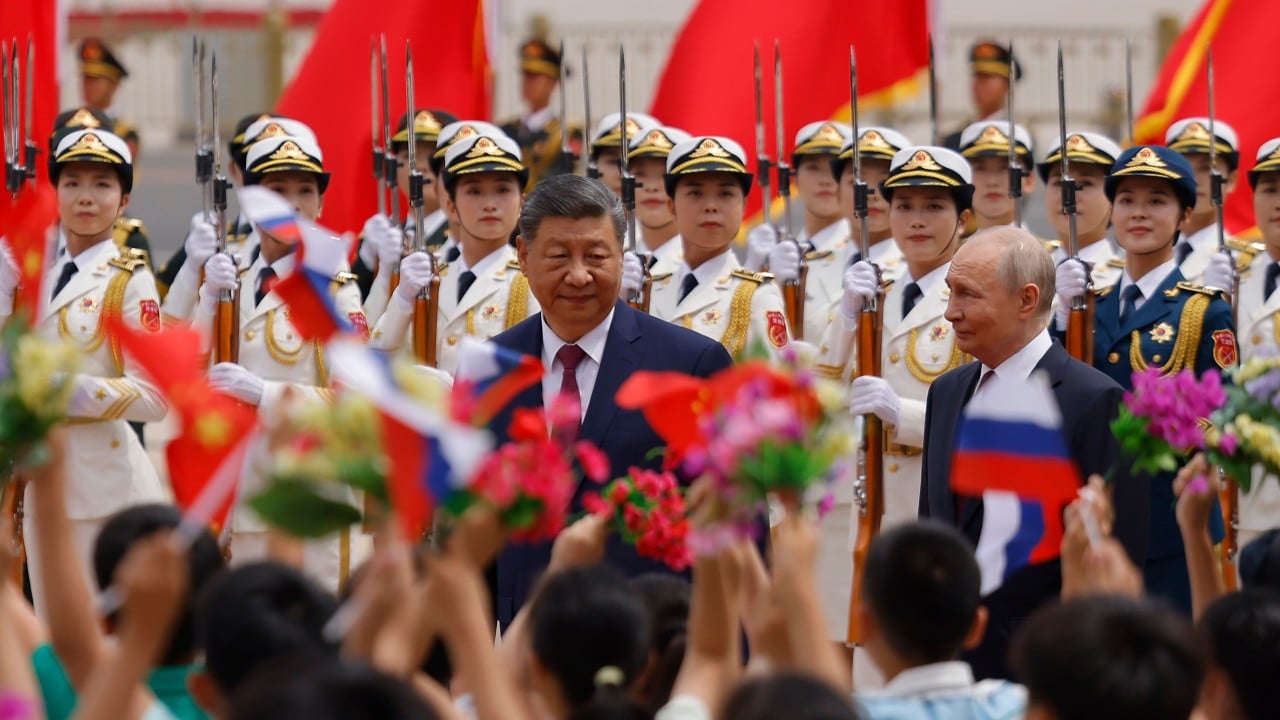
The global economic architecture is no longer governed by the principles of open market access and mutual interdependence. Instead, it has transitioned into a system of weaponized interdependence, where state-backed industrial policy, overcapacity, and targeted market access are deployed as instruments of geopolitical coercion. This structural shift is crystallized in two concurrent developments: the accelerating asymmetry of the Russia-China axis and the severe macroeconomic strain facing the European Union, colloquially termed the second China shock.
Western strategic planning has frequently mischaracterized these phenomena. The relationship between Moscow and Beijing is often viewed through the lens of a political alliance, while Europe's trade imbalances are treated as standard cyclical deficits. A clinical evaluation of the underlying capital flows, industrial bottlenecks, and trade trajectories reveals a different reality. The Sino-Russian alignment is a highly transactional, structural dependency that favors Beijing, while Europe's economic vulnerability is the direct consequence of a doctrine that decoupled economic openness from defensive deterrence.
The Mechanics of Asymmetric Interdependence: The Beijing-Moscow Axis
The political rhetoric of a "no limits" partnership between China and Russia obscures a stark divergence in economic leverage. Following extensive international sanctions on the Russian financial and industrial sectors, Moscow has experienced a rapid contraction of its strategic options, forcing it into a position of a junior partner to Beijing. This structural dependency functions across three distinct vectors: technology inputs, energy monopsony, and financial settlement channels.
The Dual-Use Supply Bottleneck
Russia’s wartime economic resilience is directly tethered to Chinese industrial inputs. Rather than supplying overt military hardware, which would trigger immediate Western secondary sanctions, Beijing serves as the primary node for dual-use technology transfers.
[Chinese Dual-Use Inputs: Semiconductors, Machine Tools, Optoelectronics]
                    │
                    ▼
[Russian Defense-Industrial Base (R製造)] ──► [Wartime Output Production]
This structural link creates an acute vulnerability for Moscow. If Beijing adjusts the flow of these inputs to manage its own diplomatic friction with Washington or Brussels, the production velocity of the Russian defense sector decreases proportionally.
Energy Monopsony and the Pricing Floor
The failure of the Power of Siberia II pipeline negotiations during the recent Beijing summit exposes the limits of Moscow's negotiating leverage. Following the loss of the European natural gas market, Russia requires massive capital investment to reorient its pipeline infrastructure toward Asia. Beijing, acutely aware of Moscow’s lack of alternative buyers, has deliberately delayed the project to enforce a pricing structure near production cost.
China’s energy strategy operates on a risk-mitigation framework. It seeks to secure discounted hydrocarbons to insulate its domestic economy while refusing to over-index on Russian supply at the expense of maritime diversification. Russia faces a structural monopsony where its primary commodity export is subject to a price ceiling dictated entirely by its buyer.
Financial Architecture Segregation
Sanctions have effectively excluded Russian financial institutions from the SWIFT network, creating a high-friction environment for cross-border settlements. To maintain bilateral trade flows, the partnership relies heavily on the Renminbi (RMB) and China’s Cross-Border Interbank Payment System (CIPS). This transition has transformed the RMB into Russia’s primary de facto reserve and settlement currency.
This financial architecture benefits Beijing by accelerating the internationalization of the RMB without requiring China to open its capital account. For Russia, it introduces a severe currency risk and locks its capital surpluses within the Chinese financial ecosystem, preventing diversification into more liquid global assets.
Quantifying the Second China Shock in Europe
While Russia manages its dependency, the European Union faces a profound macroeconomic distortion. The EU trade deficit with China has expanded rapidly, driven by deep structural imbalances rather than a temporary drop in European competitiveness.
+-------------------------------------------------------------------------+
|                  THE MACROECONOMIC SQUEEZE ON THE EU                    |
+-------------------------------------------------------------------------+
|  EUROPEAN UNION                                 PEOPLE'S REPUBLIC OF    |
|  (Asymmetric Costs)                             CHINA (Deflation Export)|
|                                                                         |
|  ┌────────────────────────┐                     ┌────────────────────┐  |
|  │ Post-2022 Energy Shock │                     │ Real Estate Capital|  |
|  │  (High Input Costs)    │                     │   Misallocation    │  |
|  └───────────┬────────────┘                     └─────────┬──────────┘  |
|              │                                            │             |
|              ▼                                            ▼             |
|  ┌────────────────────────┐                     ┌────────────────────┐  |
|  │ High Producer Price    │                     │ State-Subsidized   │  |
|  │      Index (PPI)       │                     │ Manufacturing Surge│  |
|  └───────────┬────────────┘                     └─────────┬──────────┘  |
|              │                                            │             |
|              └───────────────────►◄───────────────────────┘             |
|                                    │                                    |
|                                    ▼                                    |
|                      ┌───────────────────────────┐                      |
|                      │ Severe Market Share Loss  │                      |
|                      │ inside the EU & Globally  │                      |
|                      └───────────────────────────┘                      |
+-------------------------------------------------------------------------+
The mechanics of this structural imbalance are driven by a sharp divergence in production costs and domestic demand profiles:
- The Cost Asymmetry: The 2022 energy crisis structurally elevated Europe’s Producer Price Index (PPI), permanently increasing the cost of energy-intensive manufacturing. Simultaneously, China entered a prolonged domestic deflationary phase, driven by a real estate contraction and weak domestic consumer demand.
- The Investment Divergence: Instead of allowing a market-led contraction, the Chinese state redirected capital away from real estate and into advanced manufacturing sectors, specifically clean technology, electric vehicles (EVs), and precision machinery.
- The Currency Adjustment Failure: Standard economic theory dictates that a massive trade surplus should trigger an appreciation of the surplus nation's currency, restoring equilibrium. However, the Renminbi has remained stable or depreciated relative to the Euro, exacerbating the price advantage of Chinese exports.
This combination allows Chinese manufacturers to export their excess domestic capacity at price points that European producers, burdened by high input costs and strict regulatory overhead, cannot match. The result is a direct threat to the core industrial sectors of the European economy.
The Strategic Limits of Western Countermeasures
Western efforts to address these interlocking challenges are constrained by institutional fragmentation and misaligned strategic priorities.
The Myth of the Sino-Russian Split
A persistent line of thought in some Western policy circles suggests that targeted diplomatic or economic incentives could decouple Moscow from Beijing. This hypothesis miscalculates China’s core security baseline.
A total Russian economic collapse or regime change would be viewed by Beijing as an unacceptable strategic vulnerability, potentially installing a pro-Western government on its long northern border and shifting the global balance of power back toward Washington. Consequently, while Beijing will limit its support to avoid catastrophic secondary sanctions, it will consistently provide an economic floor to prevent a systemic Russian collapse. The relationship is structurally locked.
The Transatlantic Policy Divergence
The European Union and the United States approach the challenge of Chinese industrial overcapacity with fundamentally different strategies. Washington operates on a framework of explicit geoeconomic decoupling, utilizing sweeping unilateral tariffs, targeted technology blockades, and domestic industrial subsidies like the Inflation Reduction Act.
The European Union, by contrast, is an export-driven economy that relies on global supply chains and access to the Chinese market for its premium industrial goods. This creates a severe policy bottleneck. If Europe mirrors Washington’s aggressive tariff posture, it risks immediate retaliatory measures from Beijing against its core export sectors, such as German automotive manufacturing or French luxury goods. If Europe remains passive, it becomes the default dumping ground for the Chinese manufacturing surplus diverted away from the protected US market.
From Openness to Reactive Assertiveness: A Blueprint for the EU
To survive this dual-front geoeconomic pressure, the European Union must transition from an outdated doctrine of unconditional openness to a strategy of reactive assertiveness. This transformation requires shifting away from slow, ad-hoc anti-subsidy investigations toward a permanent, systemic deterrence infrastructure.
Implementing a Transversal Defensive Framework
The traditional European trade defense toolkit is slow, often taking months to implement targeted tariffs after an industry has already suffered structural damage. The EU requires an agile mechanism modeled on comprehensive economic security principles. This system must be capable of evaluating threats simultaneously across trade, technology, and national security domains.
The establishment of a dedicated European Economic Security Council would centralize these capabilities, allowing the Union to coordinate rapid, cross-sectoral responses rather than relying on fragmented, department-by-department actions.
Market Access Architecture and Asymmetrical Costs
Europe’s primary strategic asset is access to its €16 trillion Single Market. Beijing remains dependent on this consumer base to absorb its industrial surplus and generate the foreign exchange necessary to offset its weak domestic demand. The EU must systematically link market access to structural reciprocity and geopolitical restraint.
                      EUROPEAN SINGLE MARKET ACCESS
                                    │
           ┌────────────────────────┴────────────────────────┐
           ▼                                                 ▼
[Condition 1: Supply Chain Reciprocity]        [Condition 2: Geopolitical Restraint]
(Verifiable ending of market distortions)     (Zero supply of dual-use goods to Russia)
The European Union should deploy its upcoming regulatory frameworks, including the Industrial Accelerator Act, to enforce these strict conditions. If a foreign power continues to supply critical dual-use technology to state actors threatening European security, or persists in dumping state-subsidized overcapacity into the Single Market, access must be systematically restricted. This strategy shifts the policy calculus for competitor states by transforming economic coercion from a low-cost tactical tool into an expensive strategic liability.